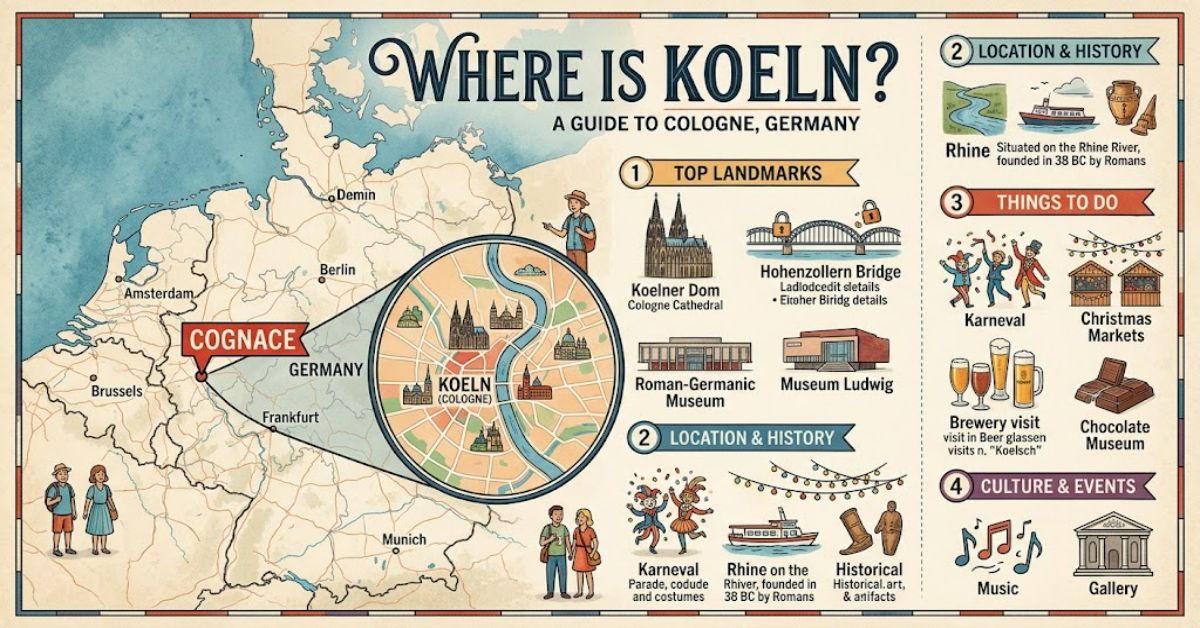
If you are wondering where Koeln is, the answer is Cologne, one of Germany’s largest and most historically significant cities. The name Koeln is an alternative spelling of Köln, the German name for Cologne. Located in the western part of Germany, the city lies along the Rhine River in the state of North Rhine-Westphalia.
Cologne is widely recognised for its magnificent cathedral, historic old town, museums, lively shopping districts and annual Carnival celebrations. Its location also makes it an important destination for international travellers, business visitors and students.
The city combines centuries of European history with modern urban life. Roman archaeological remains sit alongside contemporary buildings, while traditional breweries and riverside promenades contribute to its distinctive character. Whether you are planning a holiday, researching German geography or considering a visit for business, understanding Cologne’s location helps explain its importance.
Where Is Koeln Located in Germany?
Koeln is situated in western Germany, within the federal state of North Rhine-Westphalia. It is one of the state’s major urban centres and forms part of the densely populated Rhine-Ruhr metropolitan region.
The city is positioned on the Rhine River, which flows through western Germany before continuing towards the Netherlands and eventually reaching the North Sea through its wider river system. This location historically supported trade, transport and cultural exchange.
Cologne is approximately 34 miles (55 kilometres) north of Bonn and around 25 miles (40 kilometres) south of Düsseldorf, although exact distances depend on the starting point and route. Both cities are easily accessible by train.
Germany shares borders with countries including Belgium and the Netherlands to the west. Cologne’s position makes it a practical base for travellers wishing to explore western Germany and nearby European destinations.
Understanding the Name Köln
The spelling difference between Koeln, Köln and Cologne can cause confusion for international visitors.
Köln is the city’s official German name. The letter ö is a German umlaut, representing a vowel sound that does not have an exact equivalent in standard English. When the character is unavailable, German spelling conventions commonly allow it to be represented as oe. Therefore, Koeln is a recognised alternative spelling.
Cologne is the English name traditionally used for the city. Visitors may encounter all three versions on travel websites, railway information, maps and booking documents.
When searching for transport, entering either Köln or Cologne will generally help identify the correct destination. At German railway stations, however, Köln is the form most commonly displayed.
Cologne and the Rhine River
The Rhine River is one of the most important geographical features of Cologne. It divides the city into eastern and western sections, connecting neighbourhoods through bridges, roads and railway routes.
The western side includes the historic city centre and Cologne Cathedral, while the eastern side contains residential districts, commercial areas and entertainment venues. The two sides are linked by several bridges, including the Hohenzollern Bridge, which is particularly famous for its railway tracks and views of the cathedral.
The river has influenced Cologne’s development for centuries. Historically, it facilitated the movement of goods, supported commercial activity and connected the city with other European trading centres.
Today, the Rhine remains central to the city’s identity. Visitors can enjoy riverside walks, sightseeing cruises and views of the historic skyline. The riverbanks are popular gathering places during warm weather and major city celebrations.
Major Landmarks in Cologne
Cologne offers a mixture of historical attractions, cultural institutions and modern entertainment.
Cologne Cathedral
Cologne Cathedral, known as Kölner Dom, is the city’s most recognisable landmark. This impressive Gothic cathedral stands beside the central railway station and dominates the surrounding skyline. Its construction began in 1248, although the building was completed in the nineteenth century. It is recognised as a UNESCO World Heritage Site.
Cologne Old Town
The Old Town features narrow streets, traditional buildings, historic squares and breweries serving local Kölsch beer. It provides an opportunity to experience the city’s architecture, regional food and social traditions.
Hohenzollern Bridge
This bridge is an important railway crossing over the Rhine. Pedestrians can use designated walkways to enjoy views of the river and cathedral. Its rail connections also make it an essential part of the city’s transport network.
Museum Ludwig
Museum Ludwig houses a significant collection of modern and contemporary art, including works associated with Pop Art and other major artistic movements. Its location near the cathedral makes it convenient for visitors exploring the city centre.
Rhine Promenades
The riverfront promenades provide open views, walking routes and access to sightseeing cruises. They are especially appealing for visitors who want to experience Cologne at a relaxed pace.
How to Reach Koeln
Cologne is well connected to German and international transport networks.
| Transport option | Main advantage |
| Train | Frequent connections with major German cities and international destinations |
| Air travel | Cologne Bonn Airport serves domestic and international routes |
| Road | Motorways connect Cologne with Düsseldorf, Bonn and other regional centres |
| Local transport | Trams, underground services, buses and suburban trains serve the city |
Cologne Central Station, known as Köln Hauptbahnhof, is one of the city’s principal transport hubs. It sits immediately beside Cologne Cathedral and offers convenient access to the city centre.
Cologne Bonn Airport is located southeast of the city. Travellers can reach central Cologne using regional rail services, with journey times varying according to the service and destination.
For visitors arriving from other European cities, high-speed and international rail services can provide a comfortable alternative to flying. Once in Cologne, public transport makes it possible to visit many attractions without renting a car.
Nearby Cities Worth Visiting
Cologne’s location makes regional exploration straightforward.
Düsseldorf, known for its fashion, business districts and riverside setting, is a short journey north. Bonn, the former capital of West Germany, lies south of Cologne and offers museums, historical attractions and cultural venues.
Aachen, near the Belgian and Dutch borders, is another interesting destination, particularly for its historic cathedral and association with Charlemagne. Travellers can also explore smaller towns along the Rhine, where castles, traditional architecture and scenic river landscapes create a different experience from the larger cities.
Journey times vary with the route, train service and traffic conditions, so checking current transport schedules before departure is advisable.
The Best Time to Visit Cologne
Cologne can be visited throughout the year, but the best time depends on personal preferences.
Spring generally brings milder temperatures and opportunities to explore parks and riverside areas. Summer is popular for outdoor dining, walking tours and river cruises, although major attractions can become busy.
Autumn offers seasonal events and comfortable conditions for sightseeing. Winter brings Christmas markets, which attract visitors with festive decorations, food stalls and seasonal gifts.
Cologne Carnival is another major event. Celebrations typically take place around February or March, depending on the Christian calendar. The festivities include parades, costumes, music and street celebrations. Travellers planning to attend should arrange accommodation early because demand can increase significantly.
Why Cologne Is Important
Cologne is more than a tourist destination. It is a major centre for commerce, media, education, culture and international events. Its strategic position in the Rhine-Ruhr region supports business connections and access to a large metropolitan population.
The city also has a long historical background. Founded as a Roman settlement, Cologne developed into an important medieval trading centre and later became a significant industrial and cultural city.
Its combination of historical architecture, economic activity and transport infrastructure helps explain why Cologne remains influential in Germany today.
Conclusion
Koeln, also known as Köln or Cologne, is located in western Germany in the state of North Rhine-Westphalia. Its position along the Rhine River has shaped its history, commercial development and cultural identity.
From Cologne Cathedral and the Old Town to its museums, bridges and riverside promenades, the city offers a broad range of attractions. Strong railway connections, an international airport and accessible public transport make it easy to reach and explore.
For travellers, Cologne provides a useful starting point for discovering western Germany and nearby European destinations. For anyone studying German geography, its location and historical importance make it one of the country’s most notable cities.
Frequently Asked Questions
1. Where is Koeln located?
Koeln is located in western Germany, in the federal state of North Rhine-Westphalia. It stands on the Rhine River and forms part of the wider Rhine-Ruhr metropolitan region.
2. Is Koeln the same as Cologne?
Yes. Koeln, Köln and Cologne refer to the same German city. Köln is the official German spelling, Koeln is an alternative spelling used when the umlaut is unavailable, and Cologne is the English name.
3. Is Cologne near Düsseldorf?
Yes. Düsseldorf is approximately 25 miles (40 kilometres) north of Cologne, depending on the route. The cities are connected by frequent regional and long-distance train services.
4. Which river runs through Cologne?
The Rhine River runs through Cologne, separating the city into eastern and western sections. Several bridges connect the two sides.
5. What is Cologne famous for?
Cologne is famous for its Gothic cathedral, Roman heritage, museums, traditional Kölsch beer, historic Old Town and Carnival celebrations.
6. Does Cologne have an international airport?
Yes. Cologne Bonn Airport serves Cologne and the surrounding region, offering domestic and international flights as well as rail connections to the city.
7. How many days should you spend in Cologne?
Two or three days are usually sufficient to explore the main attractions, including the cathedral, Old Town, museums and Rhine waterfront. Additional time allows for day trips to nearby cities.
References
- UNESCO World Heritage Centre — Cologne Cathedral.
- City of Cologne — Official city information and visitor resources.
- Cologne Bonn Airport — Airport and passenger transport information.
- Deutsche Bahn — German railway services and regional travel information.
- Encyclopaedia Britannica — Historical and geographical information about Cologne.