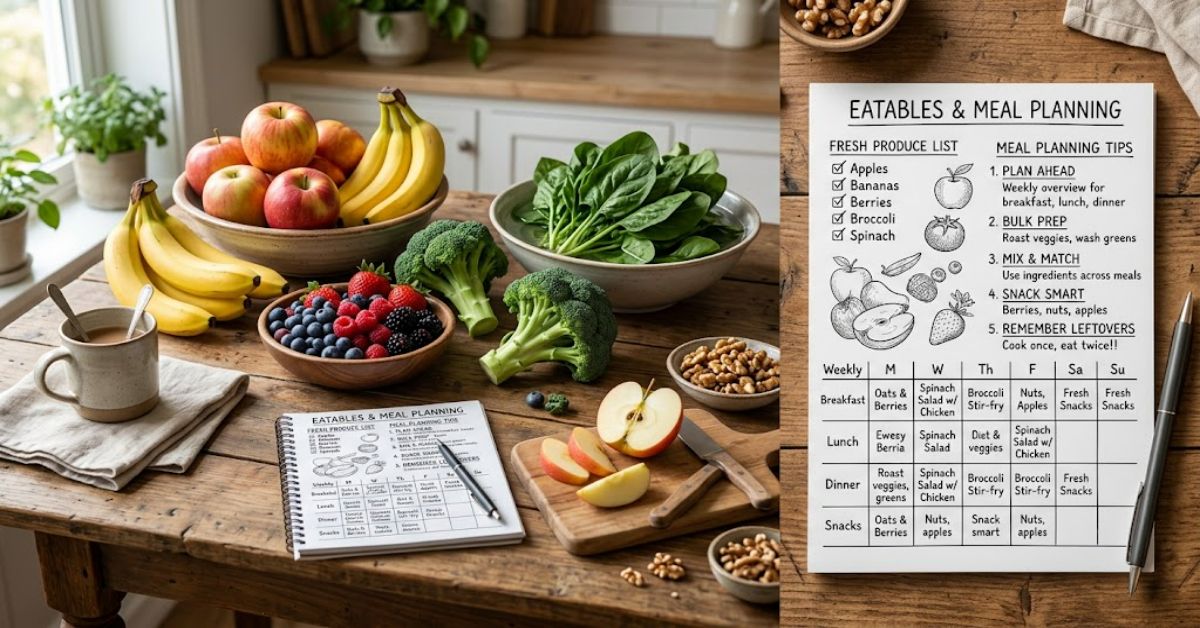
An eatables list is a practical way to organise foods for everyday meals, grocery shopping and healthy eating. When the focus is fruits and vegetables, it becomes easier to identify fresh ingredients that provide essential nutrients and add variety to a balanced diet.
Common fruits include apples, bananas, oranges, strawberries, blueberries and avocados. Vegetables such as broccoli, carrots, spinach, kale, tomatoes, cucumbers, bell peppers and potatoes offer a wide range of flavours, textures and nutrients. Although people often group these foods together, each has a different nutritional profile. Citrus fruits provide vitamin C, leafy greens supply folate and vitamin K, while potatoes are useful sources of carbohydrates and potassium.
A well-planned list also helps households make sensible purchasing decisions. Rather than buying the same ingredients every week, shoppers can combine fresh, frozen and suitable canned produce according to their budget, cooking habits and storage space. This approach can reduce waste while keeping meals interesting.
The aim is not to eat every fruit and vegetable every day. It is to build a varied selection that fits individual needs and preferences. People who plan meals in advance can use a simple list to prepare breakfasts, lunches, dinners and snacks without relying on a narrow range of ingredients. Understanding the benefits of different foods makes that process easier.
Fruits to Include in Your Eatables List
Fruits provide natural sweetness, dietary fibre, water and a variety of vitamins and minerals. Whole fruit is generally a useful choice for everyday snacks because it offers fibre alongside its natural sugars.
1. Apples
Apples are convenient, widely available and easy to carry. They provide dietary fibre, including pectin, which supports normal digestive function. Eating apples with their skin, after washing them properly, also helps retain more of their fibre.
They can be eaten fresh, added to porridge or sliced into salads.
2. Bananas
Bananas provide carbohydrates for energy and contain potassium, which supports normal muscle and nerve function. Their soft texture makes them convenient for children, older adults and people who prefer easy-to-eat snacks.
Bananas work well in smoothies, breakfast bowls and homemade snacks.
3. Oranges
Oranges are known for their vitamin C content. This vitamin supports normal immune function, collagen formation and iron absorption from plant foods.
Whole oranges also provide fibre and water. Eating the fruit rather than relying only on juice is a practical way to retain more of its fibre.
4. Strawberries
Strawberries contain vitamin C, fibre and naturally occurring plant compounds. Their fresh flavour makes them suitable for fruit salads, yoghurt and breakfast dishes.
Choose berries that are firm and free from visible mould. Refrigerate them and wash them shortly before eating.
5. Blueberries
Blueberries contain anthocyanins, plant pigments responsible for their blue-purple colour. They also provide fibre and vitamin C.
They can be added to porridge, smoothies or yoghurt. Frozen blueberries are a useful alternative when fresh berries are expensive or unavailable.
6. Avocados
Avocados differ from many other fruits because they contain substantial amounts of unsaturated fat. They also provide fibre and potassium.
They can be spread on toast, mixed into salads or used in dips. Their calorie content is higher than that of many watery fruits, so portion size may matter for people managing their overall energy intake.
Vegetables to Include in Your Eatables List
Vegetables help add variety, fibre and essential nutrients to meals. Eating different colours and types can help provide a broader mix of vitamins, minerals and plant compounds.
1. Broccoli
Broccoli provides vitamin C, vitamin K, fibre and folate. It can be steamed, roasted or added to soups and stir-fries.
Light cooking helps preserve texture and flavour. Avoid overcooking it until it becomes excessively soft if you prefer a firmer vegetable.
2. Carrots
Carrots contain beta-carotene, which the body can convert into vitamin A. Vitamin A supports normal vision, immune function and skin health.
Carrots can be eaten raw, roasted, grated into salads or added to stews. Both raw and cooked carrots can fit into a balanced diet.
3. Spinach
Spinach provides folate, vitamin K and other nutrients. It is easy to add to omelettes, curries, soups and cooked vegetable dishes.
Spinach contains oxalates, which can affect calcium absorption from the vegetable. People with particular kidney-stone concerns may need individual dietary advice.
4. Kale
Kale is a leafy green that provides vitamins C and K, as well as fibre. Its sturdy leaves work well in soups, salads and roasted vegetable dishes.
Massaging finely chopped kale with a small amount of dressing can soften its texture for salads.
5. Tomatoes
Tomatoes provide vitamin C and contain lycopene, a plant compound associated with their red colour. They are botanically fruits but are commonly used as vegetables in cooking.
Fresh tomatoes work well in salads and sandwiches. Cooking tomatoes with a little oil can increase the availability of lycopene from the food.
6. Cucumbers
Cucumbers have a high water content and provide a refreshing addition to meals. They contain smaller amounts of several nutrients compared with some leafy vegetables, but their texture and versatility make them useful everyday ingredients.
Add them to salads, sandwiches or yoghurt-based side dishes.
7. Bell Peppers
Bell peppers come in several colours, including green, yellow, orange and red. They provide vitamin C, while red peppers also contain carotenoids.
They can be eaten raw, roasted, stuffed or cooked with other vegetables. Different colours add visual variety without requiring complicated preparation.
8. Potatoes
Potatoes provide carbohydrates, potassium and vitamin C. Their nutritional value depends partly on how they are prepared.
Boiled or baked potatoes can fit into balanced meals. Deep-frying them regularly adds more fat and energy, so preparation methods are worth considering when planning everyday meals.
Fruits and Vegetables Compared
| Food | Notable nutrients or components | Simple way to eat it |
| Apples | Fibre, including pectin | Fresh or sliced into porridge |
| Bananas | Carbohydrates, potassium | Breakfast or snack |
| Oranges | Vitamin C, fibre | Whole fruit |
| Strawberries | Vitamin C, fibre | Yoghurt or fruit salad |
| Blueberries | Anthocyanins, fibre | Porridge or smoothies |
| Avocados | Unsaturated fat, fibre | Toast or salads |
| Broccoli | Vitamins C and K, folate | Steamed or roasted |
| Carrots | Beta-carotene, fibre | Raw or cooked |
| Spinach | Folate, vitamin K | Curries or omelettes |
| Kale | Vitamins C and K | Soups or salads |
| Tomatoes | Vitamin C, lycopene | Salads or sauces |
| Cucumbers | Water, small amounts of micronutrients | Salads or sandwiches |
| Bell peppers | Vitamin C, carotenoids | Stir-fries or raw snacks |
| Potatoes | Carbohydrates, potassium | Boiled or baked |
How to Organise a Balanced Grocery List
A useful list should reflect how food will be eaten during the week, rather than simply collecting a long selection of ingredients.
| Shopping group | Examples | Planning tip |
| Everyday fruits | Apples, bananas, oranges | Choose fruit for breakfasts and snacks |
| Berries | Strawberries, blueberries | Buy fresh or frozen according to price |
| Leafy vegetables | Spinach, kale | Plan dishes that use them early |
| Cooking vegetables | Broccoli, carrots, potatoes | Select ingredients for several meals |
| Salad vegetables | Tomatoes, cucumbers, peppers | Buy quantities that can be used promptly |
Three practical principles make this approach more effective.
First, buy according to planned meals. A household that purchases spinach should have a realistic plan for using it before it wilts. Second, compare fresh and frozen options. Frozen produce can reduce spoilage and may retain much of its nutritional value. Third, consider the entire meal. Vegetables provide valuable nutrients, but a balanced diet also needs suitable sources of protein, fats and carbohydrates.
Storage and Food Safety
Proper storage can protect quality and reduce waste. Different produce requires different conditions, so avoid assuming that every fruit or vegetable belongs in the refrigerator.
- Store leafy greens in the refrigerator and use them while fresh.
- Keep potatoes in a cool, dark, well-ventilated place rather than in direct sunlight.
- Refrigerate cut fruit and vegetables in clean, covered containers.
- Wash produce under clean running water before preparation.
- Remove damaged portions where appropriate and discard produce with extensive mould or signs of spoilage.
Some fruits, including bananas, continue to ripen at room temperature. Refrigeration can slow ripening, although it may affect the texture or skin appearance of certain varieties.
The Future of Eatables List Planning in 2027
By 2027, practical food planning is likely to continue emphasising affordability, convenience, reduced food waste and access to varied produce. These priorities are relevant to households managing food costs as well as people trying to improve dietary quality.
Frozen fruits and vegetables may remain useful because they allow shoppers to keep ingredients available for longer without depending entirely on fresh deliveries. Seasonal purchasing can also help people adapt their lists to local availability.
Digital grocery lists and meal-planning tools can make shopping more organised, but they cannot guarantee that a diet is nutritionally adequate. Their usefulness depends on the quality of the information entered, household preferences and realistic meal planning.
The most dependable approach is to choose a variety of foods, use ingredients before they spoil and adjust purchases to local prices and seasonal supply. Specific future prices and availability will depend on weather, transport, production and market conditions.
Key Takeaways for Everyday Eating
- Choose different fruits and vegetables throughout the week rather than relying on one or two favourites.
- Include leafy greens, colourful vegetables and whole fruits to broaden nutrient intake.
- Use frozen produce when fresh alternatives are costly or likely to spoil.
- Match grocery quantities to meals planned for the coming days.
- Prepare vegetables in different ways to maintain variety and enjoyment.
- Remember that no single fruit or vegetable supplies every nutrient needed for good health.
Conclusion
An eatables list can make healthy food choices simpler by helping people organise shopping, plan meals and include a wider variety of fruits and vegetables. Apples, bananas, oranges, berries and avocados offer different benefits, while broccoli, carrots, spinach, kale, tomatoes, cucumbers, bell peppers and potatoes provide useful ingredients for everyday cooking.
The best list is not necessarily the longest or most expensive. It is one that fits the household’s budget, cooking habits, dietary needs and access to fresh produce. Combining fresh ingredients with suitable frozen options can improve flexibility and reduce waste.
Preparation matters as well. Washing produce properly, storing it according to its needs and planning meals around ingredients that spoil quickly can help preserve quality. A balanced diet also requires other food groups, so fruits and vegetables should form part of a varied eating pattern rather than the entire diet.
With a little planning, this simple list can support more varied meals and make grocery shopping more purposeful.
Frequently Asked Questions
What is an eatables list?
An eatables list is a collection of foods organised for grocery shopping, meal preparation or dietary planning. It can include fruits, vegetables, grains, pulses, dairy products and protein sources.
Which fruits should be included in an eatables list?
Apples, bananas, oranges, strawberries, blueberries and avocados are useful choices. Each offers a different combination of fibre, vitamins, minerals or healthy fats.
Which vegetables are best for everyday meals?
Broccoli, carrots, spinach, kale, tomatoes, cucumbers, bell peppers and potatoes provide variety. The best choices depend on taste, availability, budget and individual dietary needs.
Are frozen fruits and vegetables healthy?
Yes. Frozen produce can retain many important nutrients and is often convenient. Check labels for added sugar, salt or sauces when buying processed varieties.
How can I keep fruits and vegetables fresh for longer?
Store produce according to its needs, refrigerate cut items promptly and plan meals around ingredients that spoil quickly. Keep potatoes in a cool, dark place.
How many fruits and vegetables should I eat daily?
UK guidance commonly recommends at least five portions of a variety of fruits and vegetables each day. Portion sizes vary by food, and variety matters more than relying on one type.
References
- NHS. (n.d.). 5 A Day: What counts? National Health Service.
- NHS. (n.d.). Eating a balanced diet. National Health Service.
- United States Department of Agriculture. (n.d.). FoodData Central.
- Food Standards Agency. (n.d.). How to wash fruit and vegetables.
Methodology
This article uses the supplied list of six fruits and eight vegetables as its starting point, with general nutrition and food-handling information used to explain their practical uses. It does not report original laboratory testing, clinical research or firsthand product evaluations. Nutrient levels vary by variety, ripeness, growing conditions and preparation. Readers with specific medical or dietary needs should seek advice from an appropriately qualified health professional.