When people search for queen members of band, they are usually looking for more than a simple list of names. They want to understand how four musicians with very different personalities created one of the most successful rock groups ever assembled.
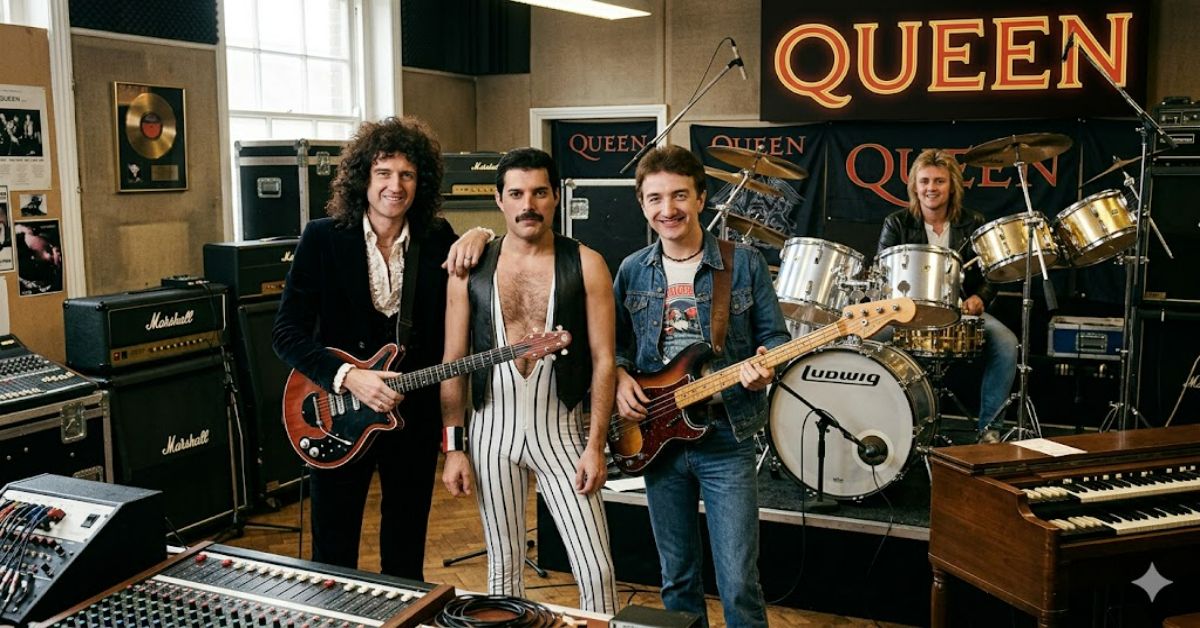
The legendary rock band Queen featured four original members: Freddie Mercury, Brian May, Roger Taylor, and John Deacon. Formed in London in 1970 and completed in 1971 when Deacon joined, the group combined theatrical performance, technical musicianship, and ambitious songwriting to produce classics such as Bohemian Rhapsody, We Will Rock You, We Are the Champions, and Another One Bites the Dust.
Unlike many bands dominated by a single songwriter, Queen benefited from contributions from all four members. This unusual structure allowed the group to experiment across genres including hard rock, progressive rock, pop, opera-inspired compositions, funk, and arena rock. The result was a catalogue that continues to attract listeners decades after its creation.
Their story is also one of resilience. Following Freddie Mercury’s death in 1991 and John Deacon’s retirement from public music activity in 1997, Queen evolved while preserving the legacy established by its classic lineup. Today, Brian May and Roger Taylor continue to represent the band’s heritage through selected projects and performances.
The Original Queen Lineup at a Glance
| Member | Primary Role | Years Active with Classic Queen | Notable Songs Written or Co-Written |
| Freddie Mercury | Lead vocals, piano | 1970–1991 | Bohemian Rhapsody, Somebody to Love |
| Brian May | Guitar, vocals | 1970–present | We Will Rock You, The Show Must Go On |
| Roger Taylor | Drums, vocals | 1970–present | Radio Ga Ga, A Kind of Magic |
| John Deacon | Bass guitar | 1971–1997 | Another One Bites the Dust, You’re My Best Friend |
Freddie Mercury: The Visionary Frontman
No discussion of the queen members of band is complete without Freddie Mercury.
Born Farrokh Bulsara in Zanzibar, Mercury became one of the most recognisable performers in music history. His vocal range, theatrical stage presence, and ability to connect with audiences transformed Queen from a promising rock act into a stadium-filling phenomenon.
Beyond performing, Mercury was a gifted songwriter. He wrote several of the band’s most enduring songs, including:
- Bohemian Rhapsody
- Somebody to Love
- Killer Queen
- Don’t Stop Me Now
- Crazy Little Thing Called Love
His influence extended beyond music. Mercury helped define Queen’s visual identity, stage presentation, and ambitious creative direction.
Why Mercury Remains So Influential
One reason Mercury’s reputation continues to grow is that modern audiences discover him through multiple channels:
- Streaming platforms
- Social media clips
- The 2018 film Bohemian Rhapsody
- Archival concert footage
His performance at Live Aid in 1985 is still widely regarded as one of the greatest live performances in rock history.
Brian May: The Architect of Queen’s Guitar Sound
Brian May brought a distinctive sound that separated Queen from other rock bands.
Using his homemade “Red Special” guitar, May created layered harmonies and melodic solos that became central to the band’s identity. Before Queen, he performed with Roger Taylor in a group called Smile, which later evolved into Queen when Mercury joined.
Some of his most famous compositions include:
- We Will Rock You
- Fat Bottomed Girls
- Hammer to Fall
- I Want It All
- Who Wants to Live Forever
A Rare Combination of Musician and Scientist
An unusual aspect of May’s career is his parallel work in astrophysics. He completed advanced academic research while maintaining an international music career, making him one of rock’s most distinctive figures.
Roger Taylor: The Powerful Drummer and Songwriter
Roger Taylor’s contributions often receive less attention than Mercury’s vocals or May’s guitar work, yet Queen’s sound would be dramatically different without him.
His drumming combined technical precision with explosive energy. He also possessed a strong singing voice and frequently provided backing vocals that became an essential element of Queen’s layered harmonies.
Taylor’s songwriting credits include:
- Radio Ga Ga
- A Kind of Magic
- These Are the Days of Our Lives
The Importance of Vocal Harmonies
One of Queen’s defining characteristics was its vocal arrangement. Mercury, May, and Taylor regularly stacked dozens of vocal tracks in studio recordings. This technique created the choir-like sound heard on many of the band’s biggest hits.
John Deacon: The Quiet Force Behind Major Hits
Among the queen members of band, John Deacon was the most reserved publicly, but his impact was enormous.
Deacon joined Queen in 1971, completing the classic lineup after several unsuccessful bassist auditions. His calm personality helped stabilise the group, while his musical instincts produced some of the band’s biggest commercial successes.
His songwriting contributions include:
- Another One Bites the Dust
- You’re My Best Friend
- I Want to Break Free
Why Deacon Matters More Than Many Realise
A common misconception is that Deacon merely played bass. In reality, he contributed songwriting, arrangements, and technical expertise. Many music historians point to his ability to blend groove-oriented bass lines with accessible songwriting as a key factor in Queen’s crossover success.
How the Four Members Complemented Each Other
Structured Insight Table
| Strength | Primary Member | Impact on Queen |
| Stage presence | Freddie Mercury | Global audience appeal |
| Guitar innovation | Brian May | Distinctive sonic identity |
| Rhythmic foundation | Roger Taylor | Powerful live performances |
| Musical balance | John Deacon | Commercial accessibility |
| Songwriting diversity | All four | Wide stylistic range |
| Vocal harmonies | Mercury, May, Taylor | Signature Queen sound |
One of Queen’s greatest advantages was that no single member carried the entire creative burden.
Many bands rely heavily on one songwriter. Queen distributed creative responsibilities across the group, which reduced artistic stagnation and encouraged experimentation.
The Cultural Impact of Queen
Queen’s influence extends well beyond record sales.
The band’s music has become part of:
- Sporting events
- Film soundtracks
- Television programming
- Advertising campaigns
- Social media culture
Songs such as We Will Rock You and We Are the Champions remain among the most recognisable audience-participation anthems ever recorded.
Original Insight #1
Queen’s longevity is partly tied to the band’s genre flexibility. Unlike groups associated with a single musical era, Queen produced songs that fit multiple generations and listening habits.
Original Insight #2
The equal distribution of songwriting among members created a larger catalogue of distinct musical styles, helping the band’s work age more successfully than many contemporaries.
Original Insight #3
Modern streaming platforms favour highly recognisable tracks. Queen’s catalogue contains numerous songs that audiences can identify within seconds, providing an advantage in the digital era.
Queen After Freddie Mercury
Mercury passed away on 24 November 1991. His death marked a profound turning point for the band.
Although Queen continued through special projects and tribute performances, the classic lineup effectively ended.
John Deacon gradually withdrew from public music activity and retired in 1997. Meanwhile, Brian May and Roger Taylor continued representing the Queen legacy through collaborations with other performers, including the highly successful Queen + Adam Lambert project.
The Future of Queen’s Legacy in 2027
By 2027, Queen’s influence is likely to remain exceptionally strong.
Several trends support this outlook:
- Continued growth of music streaming
- Renewed interest in classic rock among younger audiences
- Ongoing demand for catalogue music in film and television
- Anniversary releases and archival projects
However, the future of Queen will largely focus on preservation rather than expansion. The band’s historical recordings, live archives, and cultural impact now represent its most significant assets.
The challenge will be introducing new generations to the music while maintaining the authenticity of the original recordings and performances.
Key Takeaways
- Queen’s classic lineup consisted of Freddie Mercury, Brian May, Roger Taylor, and John Deacon.
- Each member contributed significantly as both musician and songwriter.
- Freddie Mercury remains one of rock’s most celebrated frontmen.
- Brian May’s guitar work helped define the band’s unique sound.
- Roger Taylor’s drumming and vocals were essential to Queen’s identity.
- John Deacon wrote several of the band’s biggest commercial hits.
- The collective strengths of all four members explain Queen’s enduring global popularity.
Conclusion
Understanding the queen members of band means appreciating how four remarkably different musicians worked together to create something larger than any individual contribution.
Freddie Mercury delivered charisma and unforgettable vocals. Brian May supplied innovative guitar work and ambitious compositions. Roger Taylor provided rhythmic power, vocal depth, and songwriting versatility. John Deacon brought stability, melodic bass playing, and commercially successful songwriting.
Few bands have achieved such a balanced distribution of talent. Even fewer have maintained cultural relevance for more than five decades.
The enduring popularity of Queen is not simply the result of iconic songs. It reflects the rare chemistry of four musicians whose strengths complemented one another almost perfectly. Their recordings continue to resonate because they combined technical excellence, emotional connection, and creative ambition in ways that still feel fresh today.
FAQ
Who were the original Queen members?
The original lineup consisted of Freddie Mercury, Brian May, Roger Taylor, and John Deacon. Deacon joined in 1971, completing the classic formation.
Which Queen member wrote Bohemian Rhapsody?
Freddie Mercury wrote Bohemian Rhapsody, one of the most influential songs in rock history.
Is John Deacon still involved with Queen?
John Deacon retired from public music activity in 1997. While he generally remains out of the spotlight, reports indicate he still maintains limited communication regarding Queen-related matters.
Which Queen member played guitar?
Brian May served as Queen’s lead guitarist and remains one of the band’s active representatives today.
Who replaced Freddie Mercury in Queen?
No one officially replaced Freddie Mercury. In later years, Queen performed with guest vocalists, most notably Adam Lambert in Queen + Adam Lambert.
Which Queen member wrote Another One Bites the Dust?
John Deacon wrote Another One Bites the Dust, one of Queen’s most commercially successful songs.
Methodology
This article was developed using verified historical information from Encyclopaedia Britannica, Queen historical records, official fan resources, and documented biographies of the band members. Sources were cross-checked to confirm membership history, songwriting contributions, and major career milestones.
Limitations include the evolving nature of ongoing Queen-related projects and differing interpretations of individual contributions among historians and critics. The analysis aims to provide a balanced overview while distinguishing verified facts from broader cultural commentary.
Editorial Disclosure
This article was drafted with AI assistance and reviewed and verified by [Author Name]. All data, citations, and claims should be independently confirmed by the editorial team at RubbleMagazine.co.uk.
References (APA)
Britannica Editors. (2026). Queen. Encyclopaedia Britannica. https://www.britannica.com/topic/Queen-British-rock-group
Official International Queen Fan Club. (2025). About Freddie Mercury and Queen history. https://www.queenworld.com
Wikipedia Contributors. (2026). Queen (band). Wikipedia.
Wikipedia Contributors. (2026). Brian May. Wikipedia.
People Magazine. (2024). Queen’s Brian May reveals why John Deacon still gets a say in the band despite leaving in 1997. Classic Rock History. (2023). Complete list of Queen band members