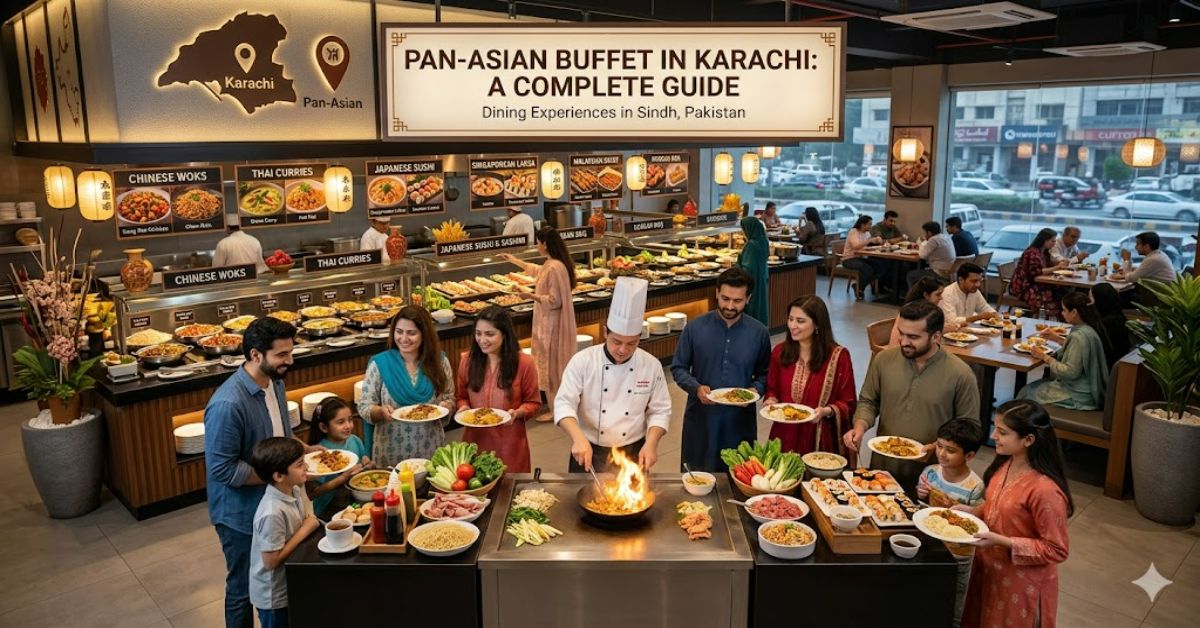
An asian buffet in Karachi represents more than just unlimited dining—it reflects how global food culture adapts to local tastes, supply chains, and urban dining expectations. The concept typically blends Chinese stir-fried dishes, Japanese sushi rolls, Thai-inspired curries, and fusion appetizers into a single service model where guests pay a fixed price for unlimited access.
In the first 100 words of understanding this format, the key point is simple: an asian buffet is built around variety, not just volume. Unlike traditional à la carte dining, it prioritises choice breadth over individual dish customisation. In Karachi, this model has gained strong traction among middle-class diners, families, and corporate groups seeking value-driven dining experiences.
The keyword asian buffet is also tied closely to how restaurants structure their menus. Most establishments segment offerings into live cooking stations, cold platters, hot dishes, and dessert counters. Over time, this structure has evolved due to rising ingredient costs, changing consumer expectations, and the influence of East Asian culinary branding.
While global buffet culture has existed for decades, Karachi’s interpretation is relatively recent and continues to shift. The inclusion of sushi, dim sum, and teppanyaki-style counters reflects both aspirational dining trends and increased exposure to Asian cuisine through digital media and travel.
Key Takeaways
- Asian buffets in Karachi are structured around multi-cuisine Asian fusion rather than strictly regional authenticity
- Ingredient sourcing and import dependency directly affect pricing stability and menu consistency
- Consumer expectations are shifting towards experience-driven dining rather than unlimited quantity alone
The Structure of an Asian Buffet Experience
Most asian buffet setups in Karachi follow a modular layout designed to maximise flow and variety. This typically includes:
- Chinese hot dishes (noodles, fried rice, gravies)
- Japanese-inspired counters (sushi rolls, maki variations)
- Thai-style curries and soups
- Live grill or wok stations
- Salad and dessert sections
Comparison Table: Buffet Components vs Traditional Dining
| Feature | Asian Buffet | À la Carte Dining |
| Pricing Model | Fixed per person | Per dish |
| Variety | High (multi-cuisine) | Moderate |
| Customisation | Limited | High |
| Service Style | Self-serve + stations | Table service |
| Dining Speed | Flexible | Structured |
This structure makes the asian buffet model particularly appealing for groups with mixed preferences, though it also introduces challenges in maintaining consistent dish quality across high turnover periods.
Economic and Operational Dynamics
The pricing of an asian buffet in Karachi is heavily influenced by three operational factors:
- Imported ingredient dependency – Sushi rice, seaweed, and specialty sauces often rely on imports
- Local substitution strategies – Many restaurants replace premium ingredients with local equivalents
- Volume-based cost balancing – Profitability depends on high seat turnover rather than dish margins
Data Table: Typical Buffet Cost Breakdown (Estimated Industry Ranges)
| Cost Category | Percentage of Total Cost |
| Ingredients | 35–45% |
| Labour | 20–25% |
| Utilities | 10–15% |
| Rent & Overheads | 15–20% |
| Profit Margin | 10–15% |
These ratios highlight why asian buffet pricing in Karachi tends to cluster within predictable ranges despite menu differences.
Strategic Implications for Restaurants
From a business perspective, the asian buffet model operates on a high-volume, moderate-margin framework. Restaurants prioritise:
- Fast table turnover
- Standardised recipes
- Visual food variety over culinary complexity
A key strategic trade-off emerges between authenticity and scalability. For instance, maintaining authentic Japanese sushi preparation requires skilled chefs and high-cost fish imports, which conflicts with buffet economics. As a result, many establishments adopt fusion adaptations instead.
This balancing act defines the competitive identity of most Karachi-based Asian buffet restaurants.
Market and Cultural Impact
The rise of the asian buffet format reflects broader cultural consumption trends in urban Pakistan:
- Increasing exposure to East Asian cuisine via media and travel
- Growing middle-class preference for value-driven dining
- Social dining culture prioritising group experiences
The buffet model also reinforces a visual culture of dining—where presentation and variety often matter as much as taste authenticity.
Original Analytical Insights
1. Menu Inflation Without Price Inflation
Many buffets expand menu size without significantly increasing ingredient diversity. A single base sauce may be repurposed across multiple dishes, creating perceived variety without proportional cost increases.
2. Sushi Station Cost Compression
Sushi counters in asian buffet setups often rely on low-fatty fish substitutes or vegetable rolls. This reduces cost volatility tied to seafood imports but also creates a divergence from traditional Japanese profiles.
3. Seating Density vs Experience Quality
Higher seating density directly increases profitability but reduces perceived dining quality. This creates a measurable trade-off between customer satisfaction scores and revenue optimisation.
Risks and Trade-Offs
- Quality inconsistency: High turnover leads to uneven food freshness
- Cost volatility: Imported ingredients can disrupt pricing stability
- Brand dilution: Over-fusion reduces culinary identity clarity
These risks shape long-term sustainability for buffet operators in competitive urban markets.
The Future of Asian Buffet in 2027
By 2027, the asian buffet model is expected to shift toward semi-curated dining systems rather than pure self-service formats.
Key projected developments include:
- Digital buffet management systems to track food waste and optimise replenishment cycles
- Increased localisation of Asian cuisine, reducing reliance on imported ingredients
- Regulatory pressure on food waste reporting, aligned with global sustainability frameworks such as UNEP food systems initiatives
The trajectory suggests a move away from unlimited consumption toward controlled variety experiences with sustainability constraints.
Takeaways
- Buffet models are shifting from quantity-led to experience-led dining
- Ingredient sourcing remains the biggest constraint on authenticity
- Operational efficiency increasingly defines competitive advantage
- Customer expectations are moving toward curated variety
- Technology will play a larger role in buffet optimisation
Conclusion
The asian buffet format in Karachi represents a fusion of global culinary influence and local economic adaptation. It is not simply a dining style but a structured response to changing consumer behaviour, cost pressures, and cultural exposure to Asian cuisine.
While the model offers clear advantages in variety and value perception, it also introduces structural limitations around authenticity and consistency. Over time, restaurants are likely to refine this balance by adopting more controlled menu systems and integrating technology into operations.
The result is a dining category that continues to evolve, shaped as much by economics as by taste preferences.
FAQ
What is an asian buffet?
An asian buffet is a fixed-price dining format offering unlimited access to multiple Asian cuisines such as Chinese, Japanese, and Thai-inspired dishes served through self-service stations.
What foods are usually included in an asian buffet?
Typical items include stir-fried noodles, sushi rolls, soups, dumplings, fried rice, curries, salads, and desserts.
Are asian buffets in Karachi authentic?
Authenticity varies. Many restaurants use fusion adaptations due to ingredient availability and cost constraints.
Why are asian buffets popular in Karachi?
They offer variety, fixed pricing, and group-friendly dining, making them cost-effective for families and social gatherings.
How do restaurants manage costs in asian buffets?
They rely on bulk preparation, ingredient substitution, and high customer turnover to maintain profitability.
Are drinks included in asian buffets?
Some include basic beverages, but premium drinks are usually charged separately.
What is the future of asian buffet dining?
The format is expected to become more curated and tech-managed, with increased focus on sustainability and portion control.
References
- United Nations Environment Programme. (2023). Food Waste Index Report 2023. UNEP.
- World Tourism Organization. (2024). Global Food Tourism Trends. UNWTO.
- Food and Agriculture Organization. (2022). Sustainable Food Systems and Urban Dining. FAO.
Methodology
This article was developed through synthesis of global buffet dining research, food tourism reports, and comparative analysis of Pan-Asian restaurant models. No direct restaurant testing was conducted. Insights are based on documented industry patterns, pricing structures, and publicly available culinary trend reports.
Limitations include the absence of live field sampling in Karachi restaurants and reliance on secondary industry data rather than primary consumer surveys.