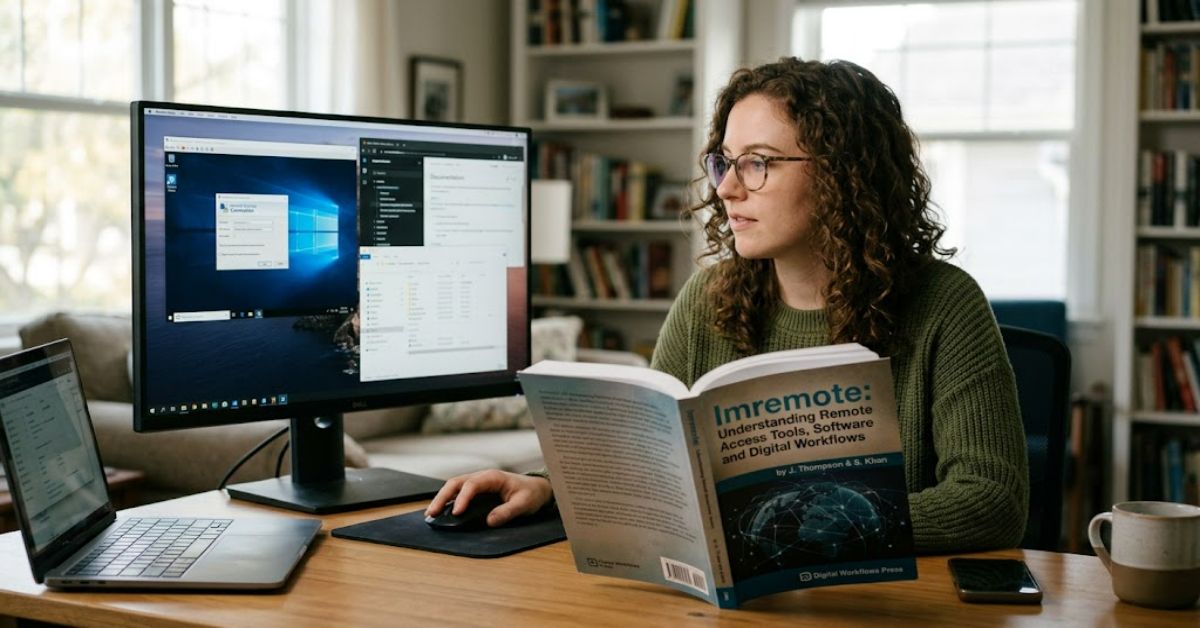
The term imremote can refer to different software tools, digital creators or technical processes, depending on where it appears. It may be associated with remote access, online collaboration or a specific digital identity. However, the name alone is not enough to confirm that it represents one recognised application or service.
Understanding the context is the first step. A reference in a software guide might concern remote computer access, while a social media profile or online directory could use the same name for an unrelated purpose. Treating every reference as the same product can lead to confusion or, in some cases, unsafe downloads.
Remote technology has become an important part of modern computing. Businesses use remote administration to maintain systems, support employees and troubleshoot technical problems. Individuals may also use remote access tools to reach files or operate a computer from another location. These activities can save time, but they introduce questions about privacy, authentication and control.
This guide explains how to interpret the term, how remote access systems generally operate and what users should verify before trusting a service associated with it. It also distinguishes established technical practices from details that cannot be confirmed from the name alone.
What Is Imremote?
Imremote is an ambiguous term rather than a clearly established technical standard with one universally accepted definition. Its meaning depends on the source, spelling and surrounding information.
The phrase may appear in discussions of remote computing, software utilities, online accounts or digital creators. Capitalisation can also vary, with references such as “IM Remote” potentially describing something different from a product written as “imremote”.
Three checks help establish the intended meaning:
- Source: Identify the website, application store, document or account where the name appears.
- Purpose: Look for a clear explanation of the service, including its intended users and main functions.
- Ownership: Confirm the publisher or creator through an official profile or independently verifiable documentation.
A credible service should explain what it does and who operates it. If a page offers downloads without identifying the developer, or makes broad claims without supporting information, users should be cautious.
How Remote Access Technology Works
Remote access technology allows an authorised user to interact with a computer, application or network from another location. Depending on the system, the connection may provide screen control, file transfer, command-line access or access to business resources.
A typical remote support session follows a straightforward process.
- The user or administrator installs or opens an approved tool.
- The system establishes a connection between the participating devices.
- Authentication checks whether the person attempting access is authorised.
- The software grants the permissions required for the task.
- The session ends, and access is revoked or retained according to the configured policy.
Not every remote tool works in the same way. Some provide a live desktop interface, while others use secure shell connections, virtual private networks or browser-based administration panels.
The distinction matters because the level of access can vary considerably. Viewing a screen is not equivalent to obtaining administrator privileges, and transferring a single file is not the same as controlling an entire device.
Common Uses and Practical Benefits
Remote access systems serve several purposes across personal computing and business operations.
| Use case | Practical benefit | Main consideration |
| Technical support | Diagnose problems without travelling | Confirm the technician’s identity |
| Remote working | Reach approved workplace systems | Apply access controls |
| Device administration | Maintain computers across locations | Limit administrator privileges |
| File access | Retrieve authorised documents remotely | Protect sensitive information |
| Education and training | Demonstrate software to learners | Obtain consent before sharing screens |
For small organisations, remote support can reduce delays when employees experience technical problems. Distributed teams can also access approved systems without being physically present in an office.
However, convenience should not be confused with safety. A poorly configured tool can expose files, credentials or internal systems. Remote access should therefore be treated as a controlled capability rather than an unrestricted connection.
Security Risks and Privacy Considerations
The principal risk of an unfamiliar remote tool is granting access before confirming who operates it and what it can do.
Cybercriminals sometimes impersonate technical support staff or persuade users to install remote-control software. Once access is granted, an attacker may attempt to view information, alter settings or access additional accounts. The danger comes not only from the software itself but also from the permissions and trust placed in the person using it.
The UK National Cyber Security Centre provides guidance on protecting accounts, devices and organisational systems. Established security practices include using multi-factor authentication where available, applying software updates and restricting access to authorised users.
Before using a service associated with imremote, check these areas:
- Publisher verification: Confirm the developer’s identity and obtain software from a legitimate source.
- Authentication: Prefer strong passwords and multi-factor authentication.
- Permissions: Grant only the access required for the specific task.
- Session control: Close connections when work is complete and disable unattended access unless it is necessary.
- Privacy: Review what information the service collects, stores or shares.
- Support requests: Never grant access simply because an unexpected caller claims to represent a trusted company.
An additional concern is the difference between deleting an application and removing its access. An account, background service or saved credential may remain active after the main programme has been removed. Users should check the relevant account and device settings rather than assuming that uninstalling software revokes every permission.
How to Evaluate an Unfamiliar Tool
The following checklist provides a practical starting point for assessing a service.
| Check | What to look for | Warning sign |
| Identity | Named developer and official documentation | No verifiable owner |
| Purpose | Specific features and intended users | Vague or contradictory claims |
| Security | Authentication and permission controls | Unrestricted access by default |
| Privacy | Clear data collection and retention policies | No meaningful privacy explanation |
| Maintenance | Release notes and security updates | Abandoned or unexplained downloads |
| Support | Verifiable contact details | Pressure to act immediately |
No single check guarantees that a service is safe. A professional-looking website can still be misleading, while a small developer may operate legitimate software with limited public visibility. Assess the evidence as a whole.
If the name appears in an email, message or unexpected support request, independently locate the organisation’s official contact details. Do not rely on telephone numbers or download instructions supplied in a suspicious message.
Imremote Compared With Established Remote Access Options
Because imremote cannot be identified as one specific product from the term alone, it would be misleading to attribute confirmed features, prices or security certifications to it. The comparison below therefore describes established categories rather than claiming that imremote belongs to any particular one.
| Technology category | Typical function | Important limitation |
| Remote desktop software | Interact with a distant computer through its interface | Can expose sensitive activity if misused |
| Secure shell (SSH) | Administer compatible systems through an encrypted command-line connection | Requires suitable technical knowledge |
| Virtual private network (VPN) | Connect to an authorised private network | Does not automatically provide desktop control |
| Remote support platforms | Help another user troubleshoot a device | Sessions require careful permission management |
| Browser-based administration | Manage supported services through a web interface | Account security becomes especially important |
The right choice depends on the task, device compatibility, security requirements and available support. A VPN may be appropriate for reaching a company network, while remote desktop software may suit a task that requires visual interaction with another computer.
The important distinction is functional: remote connectivity, remote control and secure network access solve different problems. A product should be evaluated against the actual requirement rather than its name or marketing claims.
The Future of Imremote in 2027
The future of any specific service called imremote remains uncertain until its identity and development plans can be verified. Broader trends in remote computing, however, provide a useful basis for understanding the direction of the sector.
By 2027, organisations will continue to face pressure to secure distributed work, manage cloud services and reduce the risks associated with unauthorised access. The growing use of automated administration may improve efficiency, but it also makes permission management and audit records more important.
Security frameworks such as the National Institute of Standards and Technology’s Cybersecurity Framework 2.0, published in February 2024, offer a structured approach to identifying and managing cyber risks. Its principles are relevant to organisations assessing remote access, regardless of which software they choose.
Three practical developments deserve attention:
- Stronger identity controls: Organisations can reduce risk by verifying users and devices rather than trusting a connection simply because it comes from a familiar network.
- More detailed monitoring: Session records and access logs can help identify unusual activity and support investigations.
- Tighter permission management: Temporary access and least-privilege policies can limit the consequences of compromised accounts.
These developments are directions rather than guarantees for any named product. Their implementation will depend on budgets, technical compatibility, regulatory requirements and the quality of individual services.
Key Takeaways for Users
- Establish what the term imremote refers to before downloading software or sharing personal information.
- Confirm the identity of the publisher through reliable, independent evidence.
- Match the tool to the actual task instead of assuming every remote access product has the same capabilities.
- Use multi-factor authentication and restrict permissions wherever possible.
- Review privacy policies, update practices and support arrangements before adoption.
- Revoke temporary access after a session and investigate any unexpected connection requests.
- Treat future product claims cautiously until supported by official documentation.
Frequently Asked Questions
What does imremote mean?
Imremote is an ambiguous term that may refer to software, a digital creator or a technical process. Its exact meaning depends on the source in which it appears.
Is imremote a remote access application?
The name alone does not establish that it is a remote access application. Confirm the official product name, developer and documentation before assuming it provides remote control features.
Is imremote safe to download?
Its safety cannot be confirmed without identifying the specific service. Check the publisher, download source, permissions, privacy policy and security documentation before installing it.
What is the difference between imremote and remote desktop software?
Remote desktop software is a recognised category of technology that enables interaction with another computer. Imremote is an ambiguous name, so a direct comparison requires identifying the particular product.
Can remote access tools expose personal information?
Yes. Depending on their permissions, remote access tools may expose files, screen contents, credentials or system settings. Use trusted software and grant only the access needed.
How can I verify an imremote website or profile?
Check the exact domain or account name, identify its operator, review official documentation and compare claims against independent sources. Avoid unexpected downloads and requests for sensitive information.
References
National Cyber Security Centre. (n.d.). Cyber security guidance for individuals and organisations. UK National Cyber Security Centre.
National Institute of Standards and Technology. (2024). The NIST Cybersecurity Framework (CSF) 2.0 (NIST CSWP 29). U.S. Department of Commerce.
These sources provide general security context. They do not verify the identity, ownership or capabilities of a particular product named imremote.
Methodology
This article distinguishes the ambiguous term imremote from established remote access technologies. The technical explanations and security recommendations are based on general cybersecurity principles and the guidance identified in the references. No hands-on product test, developer interview or independent verification of a specific imremote service was conducted. As a result, no particular feature set, price, user count or security certification is attributed to the name.
The main limitation is the lack of a uniquely identified product or service. Readers should confirm the exact name and official documentation before making installation or purchasing decisions. A human editor should verify the references, assess any product-specific claims and confirm the publication’s author credentials before publication.
Editorial disclosure: This article was drafted with AI assistance and requires human fact-checking and editorial review before publication.