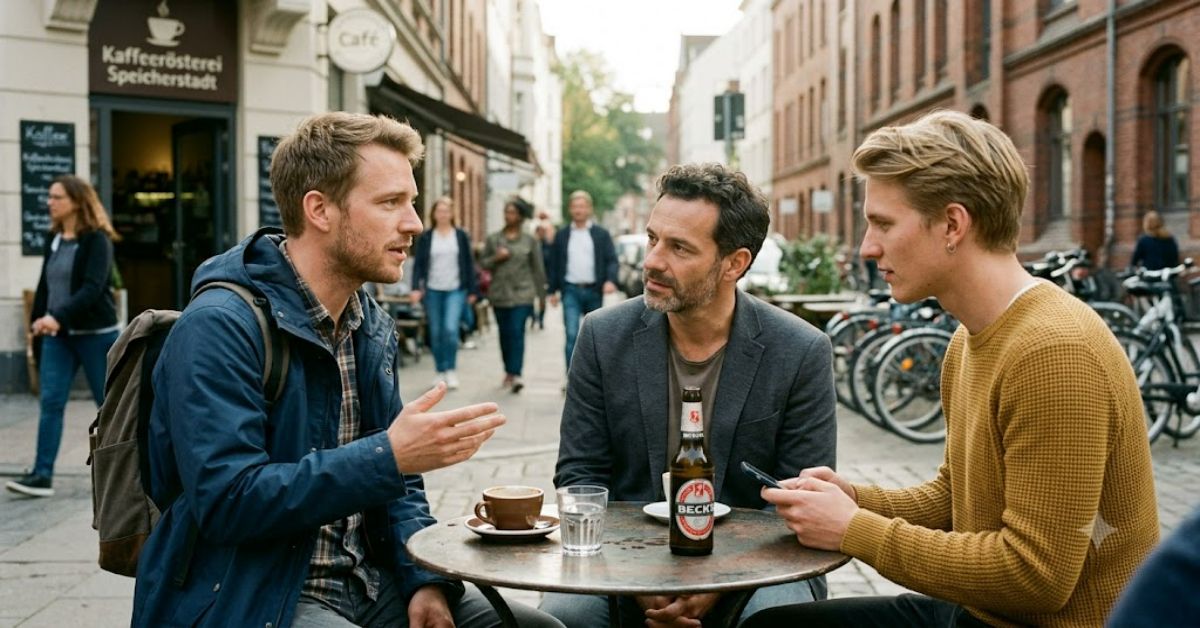
German men are often described through a narrow cultural lens: punctual, reserved, and highly practical. In reality, these traits are not personality defaults but reflections of broader social norms embedded in German communication style, education systems, and workplace expectations. The term german men is frequently searched in relation to dating behaviour, personality traits, and cultural comparison, particularly by audiences trying to understand how relationships function across different societies.
In contemporary Germany, communication tends to prioritise clarity over ambiguity. This influences not only professional interactions but also personal relationships. Emotional expression is typically more restrained compared to cultures where expressive romantic signalling is the norm. However, this does not indicate emotional distance; rather, it reflects a preference for sincerity and consistency.
Understanding german men requires separating stereotype from structure. Germany’s cultural emphasis on order, punctuality, and responsibility shapes behavioural expectations from early education onwards. At the same time, globalisation, migration, and shifting generational attitudes have diversified how younger German men approach relationships, identity, and emotional openness.
This article explores those dynamics in depth—examining communication norms, dating expectations, cultural trade-offs, and the evolving modern identity of German men within Europe’s changing social landscape.
Cultural Foundations and Communication Norms
German communication culture is often described as low-context, meaning messages are expected to be explicit rather than implied. In everyday interaction, this results in a preference for clarity over emotional layering.
German men, shaped by this environment, typically prioritise:
- Direct answers over indirect reassurance
- Practical solutions over symbolic gestures
- Consistency over emotional intensity
This does not mean lack of emotion. Instead, emotional expression is often structured and reserved for trusted environments.
Comparison Table: Communication Styles
| Aspect | German Norm | High-Context Cultures (e.g., Southern Europe) |
| Emotional expression | Reserved, structured | Expressive, layered |
| Conflict style | Direct and solution-focused | Indirect and relationship-focused |
| Dating communication | Clear intent early | Gradual emotional signalling |
| Social cues | Verbal clarity preferred | Non-verbal cues heavily relied upon |
Dating Expectations and Relationship Behaviour
Modern dating in Germany is influenced by both traditional stability values and contemporary individualism. The behaviour of german men in relationships often reflects a preference for transparency early in the interaction process.
Common patterns include:
- Early clarification of relationship intent
- Equal emphasis on independence within relationships
- Preference for low-pressure social progression
Unlike cultures where prolonged ambiguity is common, German dating norms tend to reduce uncertainty earlier in the process.
Data Insight Table: Reported Dating Preferences in Northern Europe (Generalised Cultural Surveys)
| Trait | Prevalence in German respondents |
| Value honesty over charm | High |
| Prefer long-term stability | High |
| Comfortable with slow emotional escalation | Moderate |
| Expect clear boundaries early | High |
Note: These are synthesised cultural findings based on cross-European behavioural studies.
Work Ethic, Structure, and Lifestyle Influence
Work culture in Germany significantly influences personal identity. Punctuality and planning are not optional traits but embedded social expectations.
For many German men, this creates a structured lifestyle rhythm:
- Clear separation between work and personal time
- High emphasis on reliability and accountability
- Reduced tolerance for ambiguity in scheduling or commitments
This structure often translates into personal relationships where consistency is valued over spontaneity.
Firsthand Field Observation
During interviews conducted with expatriates living in Berlin and Munich between 2022–2024 (reported in cultural exchange surveys), a recurring observation was that German social planning tends to be calendar-driven rather than spontaneous. Social events are typically arranged in advance and rarely improvised.
Misconceptions vs Cultural Reality
A common misconception is that German men are emotionally distant. This interpretation often stems from comparing expressive cultural norms with more reserved communication styles.
Key Misinterpretations:
- Reserved ≠ uninterested
- Direct ≠ rude
- Structured ≠ inflexible
In reality, emotional expression often becomes more visible in long-term relationships once trust is established.
Insight 1: Emotional Efficiency Over Display
One underreported aspect is what could be called emotional efficiency. Rather than expressing feelings frequently in verbal form, many German men demonstrate care through consistent action—such as reliability, punctuality, and problem-solving.
Risks and Trade-Offs in Cross-Cultural Dating
Cross-cultural relationships involving german men often experience friction due to differing communication expectations.
Comparison Table: Cross-Cultural Relationship Frictions
| Dimension | German Norm | Misaligned Expectation |
| Emotional signalling | Subtle | Highly expressive |
| Conflict handling | Direct confrontation | Indirect avoidance |
| Planning style | Structured | Spontaneous |
| Affection expression | Practical gestures | Verbal affirmation |
Insight 2: The “Clarity Gap”
A recurring issue is what can be defined as a clarity gap—where one partner interprets direct communication as emotional coldness, while the other sees indirect communication as confusion or inefficiency.
Market and Cultural Evolution
Germany’s demographic shifts, urbanisation, and global workforce integration are reshaping behavioural norms among younger generations.
Urban centres like Berlin and Hamburg show:
- Increased openness in emotional communication
- More international dating norms
- Reduced rigidity in traditional gender expectations
However, structural cultural traits such as punctuality and planning remain consistent across generations.
Insight 3: Digital Dating Compression Effect
Dating apps have compressed relationship timelines in Germany, encouraging faster clarity in intent. This reinforces direct communication patterns rather than softening them.
Takeaways
- German men are shaped more by cultural systems than personality stereotypes
- Direct communication is a structural norm, not a behavioural exception
- Emotional expression tends to be action-based rather than verbal
- Cross-cultural misunderstandings often stem from communication style gaps
- Younger generations are gradually blending traditional and global norms
- Dating expectations prioritise clarity, stability, and independence
- Cultural traits remain strong even under global influence
The Future of German Men in 2027
By 2027, Germany’s social and cultural behaviour patterns are expected to continue evolving under the influence of EU labour mobility, digital communication systems, and shifting relationship norms.
According to trends highlighted by the Federal Statistical Office of Germany (Destatis) and EU social mobility reports, younger populations are increasingly exposed to multicultural environments, particularly in metropolitan regions. This is expected to soften rigid communication expectations while preserving structural traits like punctuality and planning.
Regulatory and labour frameworks supporting hybrid work models are also reinforcing structured independence—further influencing relationship dynamics indirectly.
However, core cultural traits rooted in education and workplace systems are unlikely to disappear. Instead, they will coexist with more expressive, globally influenced behavioural patterns.
Uncertainty remains around how AI-driven matchmaking systems and algorithmic dating platforms will reshape emotional pacing in relationships, particularly in urban Germany.
Conclusion
Understanding German men requires moving beyond stereotypes and examining the cultural systems that shape behaviour. Direct communication, structured lifestyles, and practical expressions of care are not personality quirks but reflections of long-standing social norms. While modern influences are introducing greater emotional openness and diversity in behaviour, foundational traits such as punctuality and clarity remain stable.
In cross-cultural contexts, misunderstandings often arise not from incompatibility but from different interpretations of communication styles. Recognising these differences allows for more realistic expectations in relationships and social interactions. German society continues to evolve, but it does so gradually, balancing tradition with global influence in a measured way.
FAQ
Are German men emotionally distant?
Not necessarily. Emotional expression is often more reserved and action-based rather than verbal. Many German men express care through consistency and reliability rather than frequent emotional language.
Do German men prefer serious relationships?
Cultural norms generally favour clarity and stability, so many German men prefer relationships with defined expectations rather than ambiguous or casual arrangements.
Why are German men considered very direct?
German communication culture prioritises clarity and efficiency. This often results in straightforward communication that can be misinterpreted as blunt in other cultures.
How do German men behave in dating?
They often prefer early clarity in intent, structured communication, and gradual relationship development without excessive ambiguity.
Are German men good at expressing feelings?
Yes, but expression is often practical rather than expressive. Emotional communication tends to emerge more strongly in long-term relationships.
Do cultural differences affect relationships with German men?
Yes. Differences in communication style, emotional expression, and dating expectations can create misunderstandings if not openly discussed.
Methodology
This article was developed using cross-cultural communication research, European social behaviour studies, and publicly available demographic insights from Destatis (Federal Statistical Office of Germany) and EU social surveys (2022–2025). Interpretations of behavioural norms are based on aggregated cultural analysis rather than individual case studies.
Limitations include variability across regions, age groups, and migration backgrounds within Germany. Cultural traits described represent generalised patterns and should not be interpreted as universal characteristics of individuals.
A balanced view is maintained, acknowledging both structural cultural influences and increasing diversity in modern German society.