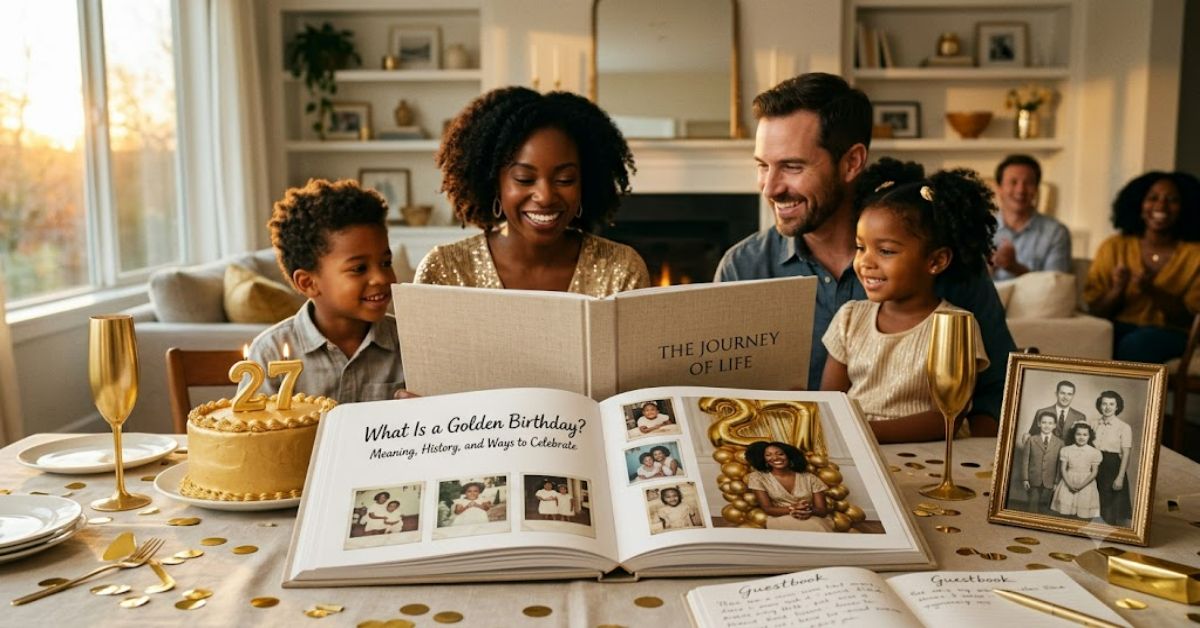
If you have ever wondered what is a golden birthday, the answer is simple: it is the birthday when your age matches the day of the month you were born. For example, someone born on 7 March celebrates their golden birthday when they turn seven years old. A person born on 25 October reaches this milestone at age 25.
Also called a “champagne birthday”, this celebration has become a popular way to mark a once-in-a-lifetime event. Unlike annual birthdays, which happen repeatedly, a golden birthday only occurs once because the matching number disappears after that specific year.
The tradition reflects a broader cultural interest in personal milestones. People often use symbolic dates to create meaningful memories, celebrate growth, and recognise important stages of life.
How Golden Birthdays Work
The calculation is based entirely on the date number of a person’s birth.
| Birth Date | Golden Birthday Age | Example |
| 5 January | 5 years old | Celebration on 5 January when turning 5 |
| 18 June | 18 years old | Celebration on 18 June when turning 18 |
| 30 September | 30 years old | Celebration on 30 September when turning 30 |
The concept only applies to birthdays between the 1st and 31st of a month because the age must match the numerical date.
People born on dates such as 29 February have a more unusual situation because leap day birthdays occur only in certain years. They may choose a nearby celebration date or consider alternative milestone traditions.
The Meaning Behind a Golden Birthday
The appeal of a golden birthday comes from its symbolic connection between identity and time. A normal birthday celebrates another year of life, but this milestone creates a direct numerical link between a person’s birth date and their age.
For many families, the celebration represents:
- A transition into a new stage of life
- Personal growth and achievement
- A memorable childhood or adult milestone
- A chance to create lasting memories
The meaning is not based on a formal cultural or religious tradition. Instead, it has developed through social sharing, family customs, and modern celebration trends.
Golden Birthday vs Other Birthday Milestones
Golden birthdays are one of several special birthday traditions. Each milestone has a different meaning.
| Birthday Type | Meaning | Common Age |
| Golden Birthday | Age matches birth date | 1–31 years old |
| Silver Birthday | Sometimes linked with turning 25 | 25 years old |
| Diamond Birthday | Often associated with major life milestones | Varies |
| Sweet Sixteen | Cultural coming-of-age celebration | 16 years old |
The popularity of these celebrations varies by country and community. Golden birthdays have become especially visible through social media, where unique personal milestones are frequently shared.
Why Golden Birthdays Became Popular
The growth of golden birthdays reflects changes in how people celebrate personal events. Modern celebrations increasingly focus on creating unique experiences rather than following traditional customs.
Social media has played a major role in spreading awareness. A person celebrating a rare milestone can share photos, themed parties, and personal reflections with friends and family worldwide.
Another factor is the appeal of personalised celebrations. A golden birthday naturally creates a theme based on the individual rather than a general birthday tradition.
Planning a Golden Birthday Celebration
A golden birthday does not require an expensive event. The value comes from personal meaning rather than cost.
Popular celebration ideas include:
| Idea | Description |
| Gold-themed party | Decorations, clothing, and accessories using gold colours |
| Memory collection | Photos, letters, and messages from family and friends |
| Experience gift | Travel, activities, or a meaningful personal experience |
| Charity activity | Celebrating by supporting a cause |
The best celebrations usually reflect the person’s interests and personality.
The Future of Golden Birthdays in 2027
By 2027, personalised celebrations are likely to continue growing as people look for meaningful alternatives to traditional events. Digital invitations, online memory books, and personalised experiences are already changing how milestones are planned.
Technology will likely influence how families preserve these occasions. Artificial intelligence tools, digital photography, and interactive platforms may allow people to create more customised birthday experiences.
However, the core appeal of a golden birthday is unlikely to change. Its importance comes from the simple connection between a person’s age and birth date, rather than technology or commercial trends.
Key Takeaways
- A golden birthday occurs when someone reaches the age matching their birth date.
- The celebration happens only once in a person’s lifetime.
- The tradition is modern rather than historically established.
- Many people use the occasion for personalised experiences.
- Social media has helped increase awareness of this milestone.
- The meaning depends on individual and family traditions.
Conclusion
A golden birthday is a simple but meaningful celebration that connects a person’s age with the date they entered the world. While it does not have ancient historical roots, its popularity comes from the desire to recognise unique moments in life.
Whether celebrated with a large party or a quiet family gathering, the milestone offers an opportunity to reflect on growth and create memories. Its appeal lies in its rarity and personal connection, making it different from ordinary annual birthdays.
As modern celebrations become increasingly personalised, golden birthdays continue to represent the value people place on meaningful dates and memorable experiences.
Frequently Asked Questions
What is a golden birthday?
A golden birthday happens when your age matches the day of the month you were born. For example, someone born on the 12th celebrates this milestone at age 12.
Why is it called a golden birthday?
The term comes from the idea that the matching age and date create a special or “golden” moment. Some also call it a champagne birthday.
How do I calculate my golden birthday?
Simply look at the day number of your birth date. That number is the age when your golden birthday occurs.
Can adults have a golden birthday?
Yes. If someone does not celebrate it as a child, they can still recognise the milestone later by reflecting on the date’s meaning.
What happens if someone is born on 29 February?
Leap day birthdays create a unique situation. People born on 29 February may choose different ways to celebrate their golden milestone.
Is a golden birthday a worldwide tradition?
The concept is known in several countries but is not a universal cultural tradition. Its popularity depends on local celebration habits.
Methodology
This article was created using established explanations of birthday traditions, cultural references, and general milestone celebration practices. The concept of golden birthdays was evaluated through publicly available cultural sources and common usage patterns.
A limitation is that golden birthdays do not have a single documented historical origin, meaning explanations of when the tradition began vary. The article focuses on widely accepted definitions and modern cultural interpretation.
References
Collins Dictionary. (2024). Golden birthday definition and usage. Collins English Dictionary.
Merriam-Webster. (2024). Birthday traditions and cultural terms. Merriam-Webster Dictionary.
Encyclopaedia Britannica. (2023). Birthdays and cultural celebrations. Encyclopaedia Britannica.