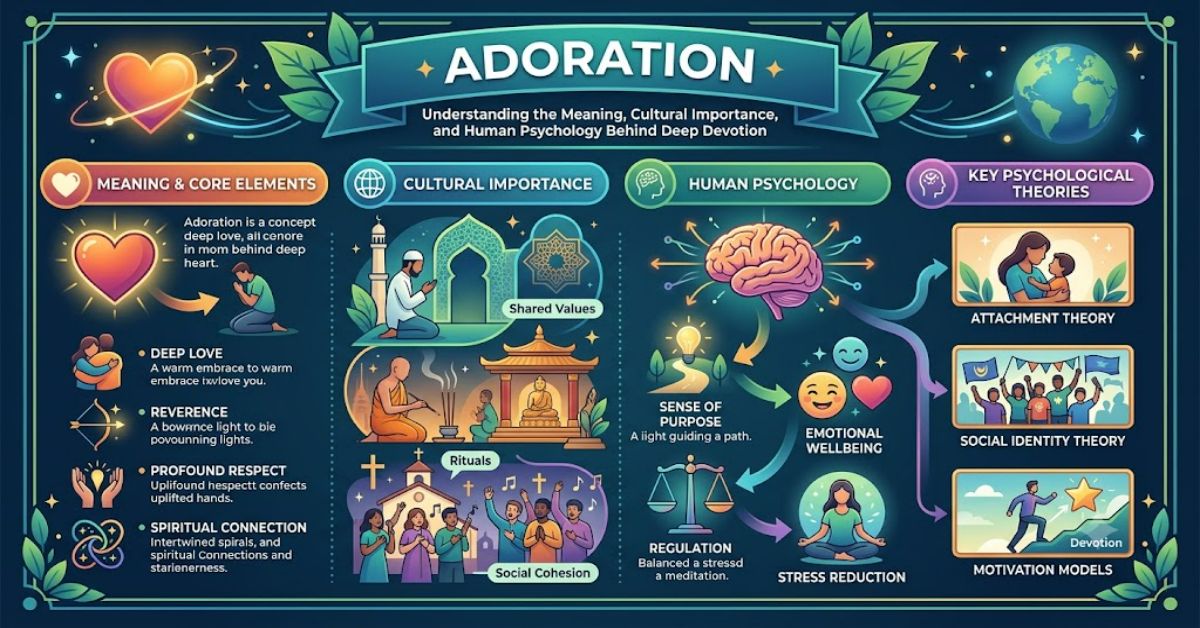
Adoration is a powerful human emotion that describes a deep and intense feeling of love, worship, or high honour given to someone or something. The word originates from the Latin term adorare, meaning “to pray to” or “to honour”, connecting the concept historically with religious worship and reverence.
Today, adoration extends beyond spiritual contexts. People use the term to describe strong affection for family members, admiration for public figures, appreciation of art, or devotion to meaningful causes. It represents an emotional state that combines affection, respect, and a sense of value.
Understanding adoration requires looking beyond simple admiration. While admiration may focus on recognising achievement or talent, adoration often involves a deeper emotional attachment. It can influence relationships, cultural movements, consumer behaviour, and personal identity.
Throughout history, societies have expressed adoration through religious ceremonies, artistic traditions, literature, and social rituals. From ancient worship practices to modern celebrity culture, the emotion continues to shape how humans connect with ideas and individuals.
However, adoration also has complex dimensions. While it can inspire loyalty, creativity, and compassion, excessive idealisation may lead to unrealistic expectations or emotional dependence. Examining both sides provides a clearer understanding of why this emotion remains central to human experience.
The Historical Origins and Meaning of Adoration
The roots of adoration are strongly connected with spirituality. In many religious traditions, adoration refers to acts of worship directed towards a divine being. This meaning remains significant in Christian theology, where adoration represents recognition of divine greatness and reverence.
The transition from religious language into everyday use reflects broader changes in society. Over centuries, the term expanded to describe admiration for exceptional people, artistic achievements, and personal relationships.
A key distinction exists between admiration and adoration:
| Emotional Response | Main Focus | Level of Attachment |
| Appreciation | Recognising value or quality | Moderate |
| Admiration | Respect for achievement or ability | Strong |
| Adoration | Deep affection and honour | Very strong |
| Worship | Spiritual devotion | Absolute religious commitment |
This difference explains why adoration carries a stronger emotional meaning than ordinary praise.
The Psychology Behind Deep Emotional Attachment
From a psychological perspective, adoration involves emotional bonding, positive perception, and personal meaning. People often experience it when someone or something represents important values, aspirations, or feelings.
Research into attachment theory suggests that humans naturally form emotional connections that provide security and belonging. Adoration can develop when a person associates another individual or symbol with comfort, inspiration, or identity.
Examples include:
- Parents experiencing intense love towards their children
- Fans developing strong admiration for artists or athletes
- Communities valuing cultural figures
- Individuals connecting deeply with spiritual beliefs
The emotional intensity of adoration can strengthen relationships, but it can also create challenges when perception becomes disconnected from reality.
Cultural Expressions of Adoration
Different cultures express adoration through unique traditions and social practices.
In religious communities, adoration may involve prayer, ceremonies, music, or symbolic acts of respect. In artistic contexts, people demonstrate admiration through collecting works, attending performances, or preserving cultural heritage.
Modern digital platforms have introduced new forms of emotional expression. Social media allows individuals to publicly display support for creators, celebrities, and communities.
This shift has changed how admiration operates. A person can now build a relationship with an online personality despite never meeting them personally.
Practical Benefits and Risks of Adoration
Adoratio’n can have positive effects when balanced with realistic understanding.
Potential benefits include:
- Stronger emotional connections
- Increased motivation and inspiration
- Greater appreciation for creativity and achievement
- Development of shared cultural identities
However, there are also risks.
| Area | Positive Impact | Possible Risk |
| Relationships | Encourages affection and loyalty | Can create unrealistic expectations |
| Celebrity culture | Builds communities | May encourage unhealthy attachment |
| Spiritual life | Supports meaning and reflection | Can become rigid or exclusive |
| Consumer behaviour | Strengthens brand communities | May encourage emotional purchasing |
The difference between healthy appreciation and excessive idealisation depends largely on awareness and balance.
Modern Society and the Influence of Digital Culture
Digital communication has transformed how adoratio’n is displayed. Online communities can form around musicians, filmmakers, brands, social movements, and public figures.
A notable change is the speed at which admiration spreads. A person’s work can gain international recognition within hours through online sharing.
However, digital environments can also amplify unrealistic images. Carefully managed online identities may encourage audiences to admire an idealised version of someone rather than their complete reality.
This creates a cultural challenge: maintaining appreciation while recognising complexity.
The Future of Adoration in 2027
By 2027, expressions of adoratio’n are likely to continue changing alongside digital communication and social platforms.
Artificial intelligence, virtual communities, and immersive technologies may create new ways for people to interact with cultural figures and digital personalities. However, these developments will raise questions about authenticity, emotional attachment, and responsible technology design.
Regulatory discussions around online platforms, digital identity, and consumer protection will remain important as technology creates increasingly personalised experiences.
The future of adoration will likely depend on maintaining a balance between emotional connection and critical awareness.
Key Takeaways
- Adoratio’n combines love, honour, and deep emotional respect.
- The term has historical connections with religious worship and spiritual practice.
- Modern usage includes relationships, culture, entertainment, and digital communities.
- Healthy adoratio’n can inspire connection and creativity.
- Excessive idealisation can create emotional and social challenges.
- Digital platforms are reshaping how admiration is expressed worldwide.
Conclusion
Adoration remains one of the most powerful expressions of human emotion. Its meaning has evolved from traditional religious devotion into a broader concept covering love, respect, admiration, and cultural appreciation.
The emotion plays an important role in relationships, communities, and personal identity. It allows people to recognise value, celebrate achievement, and create meaningful connections.
At the same time, adoration requires balance. When appreciation becomes unrealistic idealisation, it can affect judgement and emotional wellbeing. Understanding the difference between genuine respect and excessive attachment helps people engage with the emotion in healthier ways.
As society continues to change through technology and cultural transformation, adoration will remain a significant part of how humans express connection, meaning, and belonging.
Frequently Asked Questions
What is the true meaning of adoration?
Adoration means having deep love, respect, honour, or devotion towards someone or something. It can refer to spiritual worship, personal affection, or strong admiration.
Where does the word adoration come from?
The word comes from the Latin term adorare, which means to pray to, worship, or honour a divine being.
What is the difference between admiration and adoration?
Admiration usually involves respect for qualities or achievements, while adoration includes deeper emotional attachment and strong affection.
Can adoration be unhealthy?
Yes. While adoration can strengthen relationships, excessive idealisation may lead to unrealistic expectations or emotional dependence.
How is adoration expressed in modern culture?
Modern expressions include supporting artists, celebrating public figures, engaging with online communities, and appreciating creative or cultural achievements.
Is adoration always connected to religion?
No. Although the term has religious origins, it is now widely used for personal relationships, cultural appreciation, and emotional attachment.
Methodology
This article was developed using linguistic research, cultural analysis, and established psychological concepts related to human attachment and emotional expression. Sources were selected from recognised academic and institutional materials where possible.
The analysis focuses on the broad meaning of adoration across religious, cultural, and personal contexts. Because emotional experiences vary between individuals and societies, interpretations may differ depending on cultural background and personal beliefs.
This article was drafted with AI assistance and requires human editorial review before publication. All factual claims, references, and historical details should be independently verified by the publishing team.
References (APA Style)
Cambridge University Press. (2024). Cambridge Dictionary: Meaning and usage of adoration. Cambridge University Press.
Encyclopaedia Britannica. (2024). Emotion and human attachment. Encyclopaedia Britannica.
Oxford English Dictionary. (2023). Adoration: Definition and historical usage. Oxford University Press.
American Psychological Association. (2023). Understanding emotions and human relationships. American Psychological Association.