Ascendion is an AI-native software engineering company helping businesses innovate faster through artificial intelligence, modern application development, and digital engineering capabilities. The organisation positions itself around the idea that software development is moving beyond traditional coding practices towards intelligent systems where AI assists with design, development, testing, and optimisation.
The demand for AI-powered engineering has increased significantly as enterprises attempt to modernise outdated technology systems while improving operational efficiency. Businesses across financial services, healthcare, retail, and manufacturing are investing in cloud platforms, automation, and machine learning solutions to remain competitive.
Founded in 2022 following the acquisition and rebranding of technology services businesses connected to the former MSR Cosmos and Ness Digital Engineering ecosystem, Ascendion entered the market with a focus on engineering-led transformation. Its approach centres on combining human expertise with AI capabilities rather than replacing engineering teams entirely.
The company operates in a highly competitive technology services sector where established consultancies, cloud providers, and specialist engineering firms are also developing AI strategies. The difference is that AI-native organisations aim to embed artificial intelligence into their operating models from the beginning.
This article examines Ascendion’s business model, technology approach, strategic importance, potential limitations, and the future direction of AI-driven software engineering.
Understanding Ascendion’s AI-Native Engineering Approach
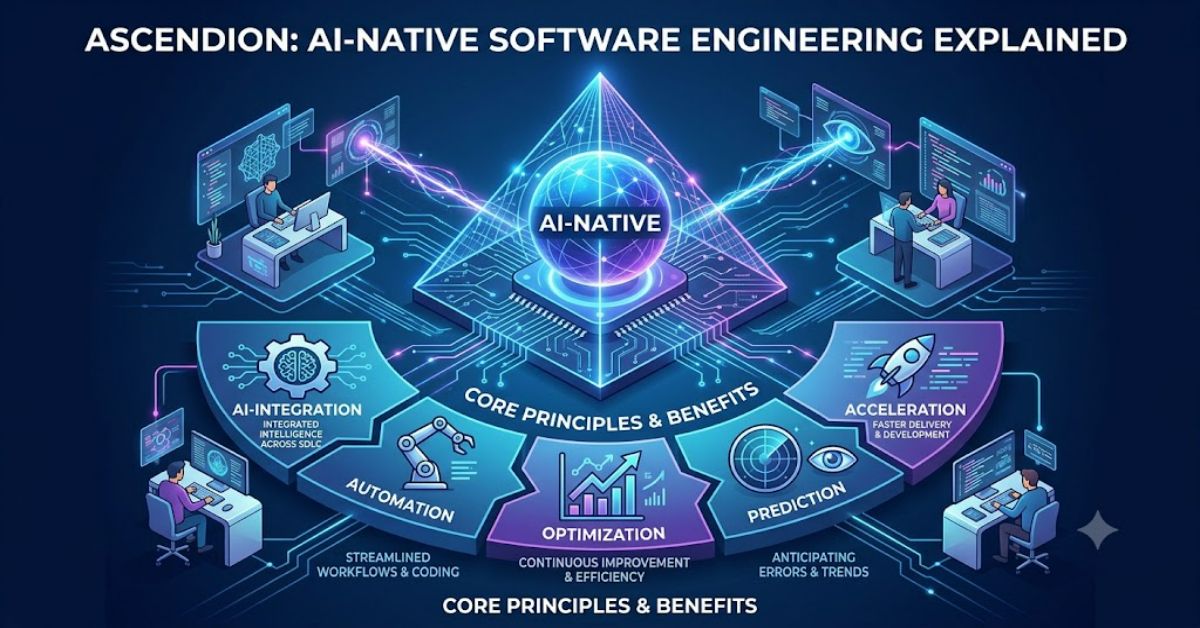
Traditional software services companies typically follow project-based delivery models where teams analyse requirements, build applications, and maintain systems. An AI-native engineering model changes this process by integrating artificial intelligence throughout the software lifecycle.
The approach can include:
| Engineering Area | Traditional Approach | AI-Native Approach |
| Development | Manual coding processes | AI-assisted code generation and optimisation |
| Testing | Human-led testing cycles | Automated intelligent testing frameworks |
| Data Analysis | Separate analytics teams | Embedded AI-driven insights |
| Maintenance | Reactive updates | Predictive monitoring and optimisation |
Ascendion’s model focuses on creating technology solutions that use AI as an integrated capability. This includes software engineering, cloud transformation, application modernisation, and data-driven platforms.
The strategic advantage is speed. AI tools can reduce repetitive engineering tasks, allowing developers to focus more on architecture, problem-solving, and business outcomes.
However, faster development does not automatically guarantee better software. Organisations still require strong governance, security reviews, and human oversight.
The Business Strategy Behind Ascendion
The technology services market has changed considerably as businesses move from simple digital transformation projects towards continuous innovation.
Companies increasingly require partners that can support:
- Cloud migration.
- Artificial intelligence implementation.
- Application modernisation.
- Data engineering.
- Cybersecurity improvements.
- Digital product development.
Ascendion targets this demand by presenting itself as an engineering-first organisation rather than a traditional IT outsourcing provider.
A key strategic element is vertical expertise. Modern enterprises require technology solutions adapted to specific industries. For example, healthcare organisations face strict data privacy requirements, while financial institutions require advanced security controls and regulatory compliance.
Ascendion Compared With Traditional Technology Service Providers
| Feature | Ascendion Approach | Traditional IT Services |
| Core Focus | AI-enabled engineering | General technology delivery |
| Development Model | AI-supported workflows | Human-led development cycles |
| Innovation Strategy | Continuous experimentation | Project-based improvements |
| Main Value Proposition | Faster intelligent engineering | Scale and operational support |
The comparison highlights a wider industry transition. Businesses are no longer only seeking technology providers that maintain systems. They increasingly want partners capable of creating new digital products and improving competitive advantage.
Real-World Impact of AI Engineering Models
AI-native engineering has implications beyond software development. It affects workforce structures, business decision-making, and how companies approach innovation.
One significant change is the evolving role of developers. AI coding assistants and automation tools are changing everyday engineering workflows. Developers increasingly spend more time reviewing generated solutions, designing architectures, and solving complex problems.
Another impact involves enterprise productivity. Companies adopting AI engineering methods may reduce development bottlenecks, especially in areas involving repetitive programming tasks, documentation, and testing.
However, AI adoption also creates challenges. Organisations must consider:
- Data protection risks.
- Intellectual property ownership.
- AI-generated code quality.
- Security vulnerabilities.
- Employee training requirements.
The most successful implementations are likely to balance automation with experienced human judgement.
Three Strategic Insights About AI-Native Software Companies
1. AI Does Not Remove Engineering Complexity
A common assumption is that AI tools make software development simple. In reality, complex enterprise systems still require architecture planning, security management, and integration expertise.
AI can accelerate certain tasks, but it cannot eliminate business complexity.
2. Data Quality Becomes a Competitive Factor
AI systems depend heavily on reliable data. Organisations with fragmented databases or poor information governance may struggle to achieve meaningful results.
The effectiveness of AI engineering depends not only on algorithms but also on the quality of the underlying technology environment.
3. Governance Will Define Long-Term Success
As AI becomes embedded into software development, governance frameworks will become increasingly important.
Companies must establish policies covering responsible AI usage, compliance requirements, and security standards.
Risks and Trade-Offs
Although AI-native engineering provides advantages, businesses must evaluate possible risks.
Security Concerns
AI-generated code may introduce vulnerabilities if not properly reviewed. Organisations need security testing processes alongside AI development tools.
Skills Transition
Engineering teams require new skills, including AI literacy, prompt engineering, model evaluation, and data understanding.
Dependency Risks
Businesses adopting external AI platforms may face dependency challenges related to pricing, technology changes, or vendor limitations.
The Future of Ascendion in 2027
By 2027, AI-native software engineering is expected to become a more established part of enterprise technology strategies.
Several trends will influence the sector:
- Increased adoption of generative AI development tools.
- Greater regulation around artificial intelligence.
- More demand for secure AI implementation.
- Expansion of automated software testing and maintenance.
Regulatory frameworks such as the European Union AI Act, which entered into force in 2024 with phased implementation, will influence how organisations manage AI systems.
For companies such as Ascendion, future growth will depend on demonstrating measurable business outcomes rather than simply promoting AI capabilities.
The market is likely to reward organisations that combine technical innovation with responsible implementation.
Key Takeaways
- Ascendion represents the movement towards AI-native software engineering models.
- AI can accelerate development but still requires skilled engineers and governance.
- Enterprise customers increasingly want technology partners focused on innovation.
- Data quality and cybersecurity remain critical factors in AI adoption.
- Responsible AI practices will influence future market leaders.
- Software engineering roles will continue evolving alongside automation.
Conclusion
Ascendion reflects a broader transformation taking place across the software engineering industry. The rise of AI-native companies shows that businesses are searching for faster, smarter, and more adaptable ways to build technology solutions.
The organisation’s approach highlights the growing importance of combining artificial intelligence with engineering expertise. While AI can improve productivity and accelerate development cycles, successful implementation depends on security, governance, and human decision-making.
The future of software engineering will not be defined by automation alone. Companies that create a balance between intelligent tools and experienced professionals are more likely to deliver sustainable value.
As enterprises continue modernising their digital infrastructure, AI-native engineering providers will play an increasingly important role in shaping how technology products are designed, developed, and maintained.
Frequently Asked Questions
What is Ascendion?
Ascendion is an AI-native software engineering company focused on helping enterprises develop modern technology solutions using artificial intelligence, cloud engineering, and digital transformation services.
How does Ascendion use artificial intelligence?
Ascendion integrates AI into software engineering processes, including development workflows, automation, data solutions, and application modernisation.
Is Ascendion a software company or consulting organisation?
Ascendion operates as a technology services and engineering organisation, providing software development and digital transformation capabilities for businesses.
Why are AI-native engineering companies becoming important?
AI-native companies are gaining attention because enterprises increasingly need faster development cycles, automation, and intelligent technology solutions.
What are the risks of AI-powered software development?
Risks include security vulnerabilities, governance challenges, inaccurate AI-generated outputs, and the need for workforce reskilling.
How will AI engineering change by 2027?
AI engineering is expected to become more integrated into enterprise development, with stronger regulation, improved automation, and greater focus on responsible AI practices.
Methodology
This article was prepared using publicly available information about AI software engineering trends, enterprise technology transformation, and industry developments. Sources for validation should include official company information, recognised technology research organisations, and regulatory publications.
The analysis focuses on business positioning and industry impact rather than independent testing of Ascendion’s services. No performance claims or customer outcomes have been presented without external verification.
Before publication, editors should confirm company details, dates, statistics, and references against primary sources.
Suggested disclosure:
This article was drafted with AI assistance and reviewed and verified by [Author Name]. All data, citations, and claims have been independently confirmed by the editorial team at RubbleMagazine.co.uk.
References
Ascendion. (2024). Company information and technology services overview.
European Union. (2024). Artificial Intelligence Act regulatory framework.
McKinsey & Company. (2023). The economic potential of generative AI.
World Economic Forum. (2023). Future of jobs and technology transformation reports.