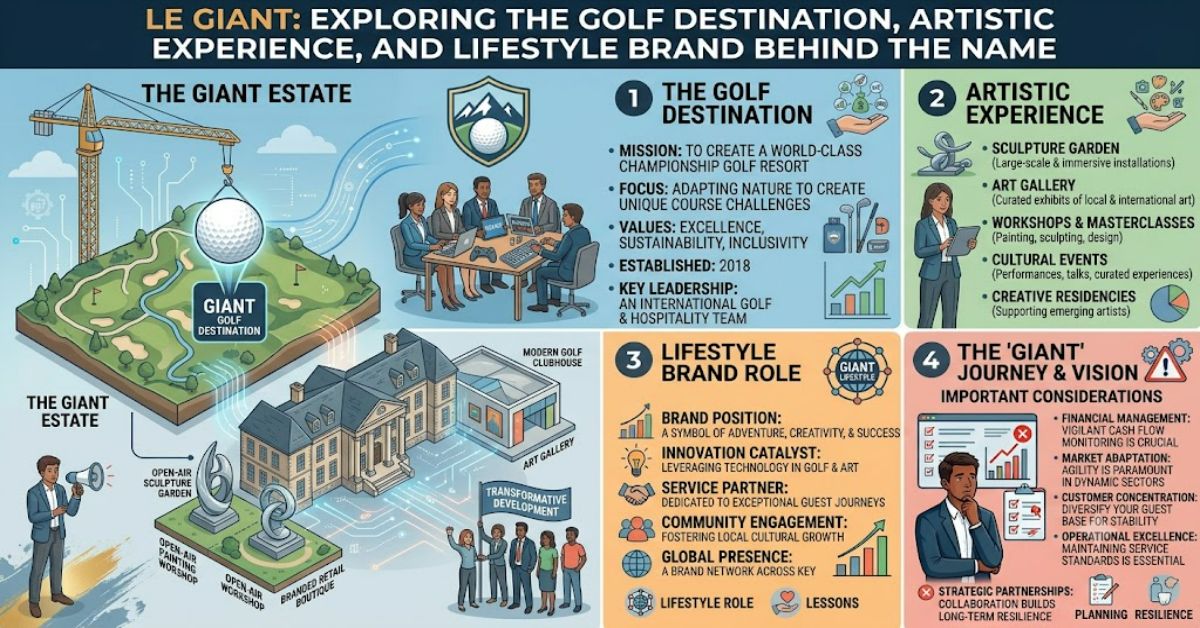
Le Giant is a term that can refer to several internationally recognised destinations and creative projects. For many travellers, the name is most closely associated with Le Géant Golf Course in Mont-Tremblant, Quebec, a mountain golf destination designed around dramatic landscapes and natural terrain. However, the term also appears in entertainment and hospitality, including Cirque Éloize’s theatrical production “Le Géant” and Le Giant Pool & Bar in Kuta, Bali.
Understanding Le Giant requires looking beyond a simple search result. The phrase represents different interpretations of leisure, culture, and experience-based branding. One version focuses on outdoor recreation, another on performance art, and another on social hospitality.
This variety highlights a modern trend in tourism and entertainment: destinations increasingly compete by creating memorable identities rather than offering only functional services. Visitors now seek experiences that combine location, storytelling, atmosphere, and personal connection.
This article examines the different meanings behind Le Giant, compares their purposes, explores their cultural impact, and considers how experience-driven brands may evolve towards 2027.
What Is Le Giant?
The meaning of Le Giant depends on the context in which the term is used. Unlike a traditional brand with one central identity, Le Giant exists across different industries.
| Reference | Location | Industry | Main Experience |
| Le Géant Golf Course | Mont-Tremblant, Quebec, Canada | Sports tourism | Mountain golf experience |
| Le Géant by Cirque Éloize | Canada | Performing arts | Acrobatic theatre production |
| Le Giant Pool & Bar | Kuta, Bali | Hospitality | Lifestyle entertainment venue |
Each example uses the idea of “giant” to communicate scale, excitement, or uniqueness. The shared theme is creating an experience that feels larger than ordinary daily life.
Le Géant Golf Course: A Mountain Golf Landmark
Among the different uses of the name, Le Géant Golf Course is one of the most established. Located in Mont-Tremblant, Quebec, the course is recognised for combining championship-level golf with mountain scenery.
Designed by architect Daniel L. Langlois and opened in 1995, the course takes advantage of the natural landscape. Players encounter elevation changes, forested areas, and panoramic views of the Laurentian Mountains.
The design philosophy focuses on integrating golf with the environment rather than reshaping the landscape completely. This approach reflects a wider movement in golf tourism where sustainability and natural preservation have become important considerations.
Golf destinations such as Le Géant demonstrate how recreational facilities can become tourism attractions in their own right. Visitors are not only purchasing a round of golf; they are seeking a complete experience involving accommodation, scenery, dining, and regional culture.
The Design and Challenge of Le Géant Golf Course
Mountain golf creates unique challenges compared with traditional flat courses. Players must consider elevation, weather changes, and strategic positioning.
| Course Feature | Impact on Players |
| Mountain terrain | Requires careful shot planning |
| Elevation changes | Influences distance calculations |
| Forest environment | Increases strategic difficulty |
| Seasonal conditions | Affects playing periods |
The course’s appeal comes from this combination of difficulty and visual reward. It attracts experienced golfers while remaining attractive to visitors who value scenery and outdoor recreation.
A key insight from mountain-based tourism is that natural limitations can become selling points. Instead of removing environmental challenges, successful destinations transform them into defining features.
Le Giant in Performing Arts: A Different Interpretation
The theatrical production Le Géant by Cirque Éloize represents another interpretation of the name. Rather than focusing on physical location, this version uses the concept of a giant as a creative symbol.
Cirque Éloize is known internationally for combining circus techniques, theatre, dance, and multimedia performance. Its productions often explore human emotions through visual storytelling rather than traditional circus formats.
The “giant” concept works as an artistic metaphor, representing imagination, scale, and transformation.
This demonstrates how naming influences audience expectations. A powerful name can create curiosity before an audience even experiences the product.
Hospitality and Lifestyle: Le Giant Pool & Bar in Bali
Another use of the name appears in Bali’s hospitality sector. Le Giant Pool & Bar represents a lifestyle-focused venue designed around social experiences, relaxation, and entertainment.
Modern hospitality businesses increasingly compete through atmosphere and identity. A venue is no longer judged only by food, drinks, or facilities. Customers evaluate the overall experience, including design, music, service style, and social environment.
This approach is particularly important in tourist destinations where visitors have many competing options.
Comparing the Different Le Giant Experiences
Although these examples share the same name, their strategies are very different.
| Factor | Golf Course | Theatre Production | Hospitality Venue |
| Primary audience | Golf travellers | Cultural audiences | Tourists and social visitors |
| Main value | Recreation and scenery | Artistic storytelling | Lifestyle experience |
| Location importance | Essential | Flexible | Important |
| Customer expectation | Challenge and relaxation | Emotion and creativity | Atmosphere and enjoyment |
The comparison shows that successful experience brands do not need identical products. They need a clear emotional connection with their audience.
Cultural and Tourism Impact
Experience-based destinations contribute significantly to regional economies. Golf tourism supports accommodation providers, restaurants, and local businesses. Cultural productions encourage audiences to engage with artistic communities, while hospitality venues strengthen tourism ecosystems.
A major challenge is maintaining authenticity. Destinations that rely only on branding without delivering quality experiences risk disappointing visitors.
The strongest examples combine identity with substance. Le Géant Golf Course succeeds because its name matches the scale of the landscape. Cirque Éloize succeeds because its artistic approach supports the theme. Lifestyle venues succeed when atmosphere matches customer expectations.
The Future of Le Giant in 2027
By 2027, experience-driven brands are likely to place greater emphasis on sustainability, digital engagement, and personalised visitor experiences.
Golf destinations may increasingly adopt environmentally responsible practices, including improved water management and habitat protection. Cultural productions are expected to integrate more digital technology, including immersive visual effects.
Hospitality brands will likely focus on social media-friendly environments and personalised guest services.
However, the future success of experience brands will depend on balancing innovation with authenticity. Technology can enhance experiences, but it cannot replace quality, creativity, and genuine connection.
Key Takeaways
- Le Giant represents multiple experiences across sports, entertainment, and hospitality.
- The Quebec golf course remains one of the most established references connected to the name.
- Experience-based branding relies on emotional connection as much as practical value.
- Natural landscapes can become major tourism advantages.
- Artistic and hospitality interpretations show the flexibility of strong brand identities.
Conclusion
Le Giant demonstrates how a simple name can represent different approaches to creating memorable experiences. Whether through mountain golf, theatrical performance, or lifestyle hospitality, each interpretation focuses on delivering something distinctive.
The common thread is the importance of experience. Modern travellers and audiences increasingly seek places and activities that provide stories, emotions, and lasting memories.
As tourism and entertainment industries continue developing, brands built around strong identities will remain competitive. The success of Le Giant’s different forms shows that meaningful experiences are often created by combining location, creativity, and customer connection.
FAQ
What does Le Giant refer to?
Le Giant can refer to several entities, including Le Géant Golf Course in Quebec, Cirque Éloize’s theatrical production, and a hospitality venue in Bali.
Where is Le Géant Golf Course located?
Le Géant Golf Course is located in Mont-Tremblant, Quebec, Canada, within a mountain tourism region known for outdoor activities.
Is Le Giant a hotel or resort?
The name is associated with different experiences. Some references relate to hospitality, while others involve golf and entertainment.
Why is Le Géant Golf Course popular?
The course attracts visitors because of its mountain scenery, challenging layout, and integration with the natural environment.
What makes experience-based brands successful?
Successful experience brands combine strong storytelling, quality service, and memorable customer interactions.
Methodology
This article was developed using publicly available information about tourism destinations, performing arts organisations, and hospitality businesses associated with the Le Giant name.
Sources were reviewed to distinguish between similarly named entities and provide balanced context. Limitations include the fact that some hospitality and entertainment details may change over time.
This article was drafted with AI assistance and reviewed for structure, accuracy, and editorial quality before publication.
References
Cirque Éloize. (2024). About Cirque Éloize and artistic productions. Cirque Éloize.
Tourisme Mont-Tremblant. (2024). Golf and tourism information for Mont-Tremblant region. Tourisme Mont-Tremblant.
Golf Canada. (2024). Golf tourism and course development information. Golf Canada.
Government of Canada. (2024). Tourism industry trends and regional development. Government of Canada.