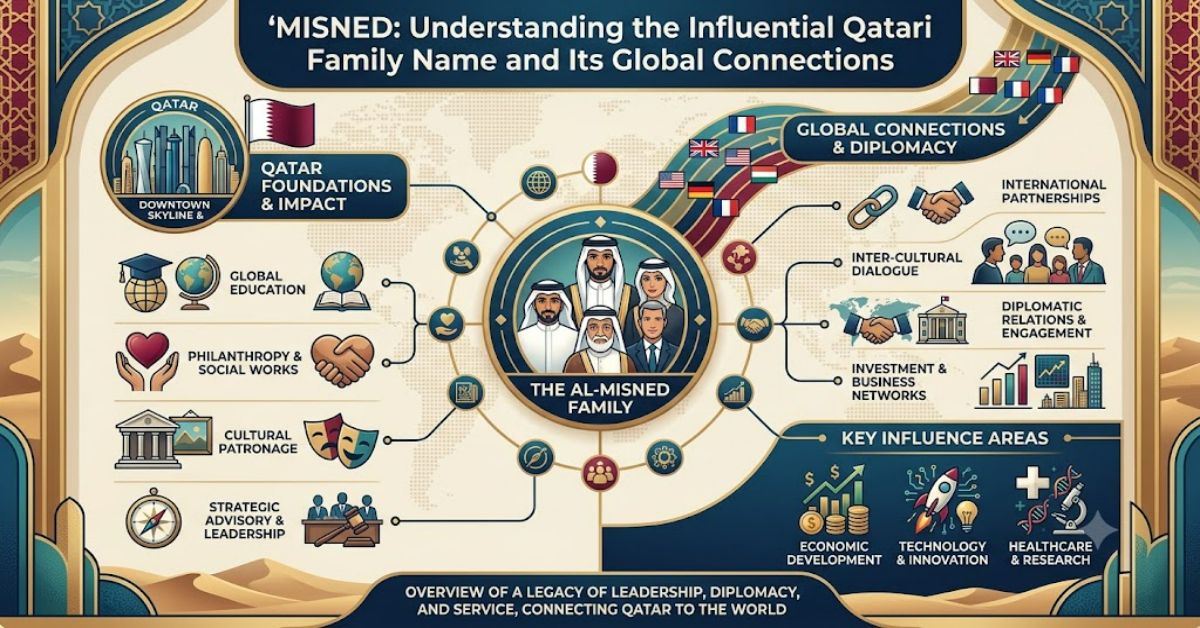
The term Misned refers primarily to a notable Qatari family name associated with social influence, leadership, and cultural heritage. The name gained international recognition through figures such as Sheikha Moza bint Nasser Al-Misned, the former consort of Qatar’s former Emir Sheikh Hamad bin Khalifa Al-Thani and mother of Qatar’s current Emir.
Understanding Misned requires looking beyond a surname. In Qatar, family names often represent lineage, heritage, and connections that have shaped the country’s modern development. The Al-Misned family became particularly recognised through contributions in education, social development, and national institution building.
Sheikha Moza’s public role has helped transform the global perception of the name. Through organisations focused on education, research, and community development, she has become one of the most visible representatives of Qatar’s cultural diplomacy.
The Origins and Cultural Importance of the Misned Name
Family names in the Gulf region often carry historical connections to tribes, communities, and geographic origins. In Qatar, surnames can provide insight into a family’s heritage and its place within the nation’s social structure.
The Misned name, also written in some contexts as Al-Misnad, is linked to Qatari heritage and is recognised among families that have played roles in the country’s social and economic development.
Unlike many Western naming traditions, Gulf family names frequently represent collective identity rather than only individual ancestry. They connect individuals to wider family networks, historical relationships, and community responsibilities.
| Aspect | Description |
| Region associated | Qatar and the wider Gulf region |
| Name variations | Misned, Al-Misned, Al-Misnad |
| Cultural role | Family identity and heritage |
| International recognition | Strongly linked with education and social leadership |
Sheikha Moza bint Nasser Al-Misned and Global Recognition
The most internationally recognised person associated with Misned is Sheikha Moza bint Nasser.
Born in 1959, Sheikha Moza became a prominent public figure through her work in education reform, social development, and cultural initiatives. She played a central role in establishing and expanding institutions connected with the Qatar Foundation, founded in 1995.
Her work has focused heavily on developing knowledge-based systems in Qatar. Rather than relying solely on traditional economic strengths, these initiatives aimed to create a stronger foundation in research, innovation, and education.
One of the most significant examples is Education City, a large educational complex hosting international universities, research centres, and innovation programmes.
Education, Development and Institutional Influence
The influence associated with Misned is closely connected to Qatar’s national strategy of investing in human capital.
Through education-focused initiatives, Qatar sought to create institutions capable of competing internationally while developing local expertise. This approach reflected a broader shift among Gulf countries towards knowledge economies.
Key areas of impact include:
- Education development: Expanding access to international academic partnerships.
- Research investment: Supporting scientific and technological advancement.
- Social programmes: Addressing community development and cultural preservation.
- Global engagement: Increasing Qatar’s visibility through educational diplomacy.
| Initiative Area | Example Impact |
| Higher education | International university partnerships in Doha |
| Research | Growth of scientific and innovation programmes |
| Social development | Community-focused initiatives |
| Cultural diplomacy | Stronger global recognition of Qatar |
Strategic Importance of Family Influence in Modern Qatar
The role of prominent families in Qatar differs from purely commercial or political influence seen elsewhere. Family networks often contribute through institutions, philanthropy, business, and public service.
The Misned name demonstrates how individual leadership can become connected with national development goals. Through educational and social projects, influence is often measured not only by wealth or status but also by institutional contribution.
However, family-linked influence also creates challenges. Public figures connected with powerful families often face increased scrutiny regarding governance, transparency, and the balance between tradition and modernisation.
Risks and Public Perception Challenges
The visibility associated with prominent family names brings both opportunities and responsibilities.
One challenge is that international audiences may focus heavily on individual personalities rather than the wider institutional systems behind their work. This can simplify complex social and development projects.
Another consideration is maintaining credibility through measurable outcomes. Educational and philanthropic programmes increasingly face expectations for transparency, impact reporting, and independent evaluation.
These challenges are common among globally recognised foundations and leadership initiatives, where public trust depends on demonstrating practical results.
The Future of Misned-Associated Influence in 2027
By 2027, the significance of names such as Misned is likely to remain connected with Qatar’s continued investment in education, innovation, and international partnerships.
Qatar’s national development plans continue to prioritise economic diversification, research capacity, and human capital. As these sectors expand, influential families and institutions will likely play roles through investment, leadership, and social initiatives.
Future influence will increasingly depend on measurable impact rather than traditional recognition alone. Younger generations, digital transparency, and international collaboration are changing expectations around leadership.
For family names associated with public figures, maintaining relevance will require adapting to new standards of accountability, innovation, and social responsibility.
Key Takeaways
- Misned is a significant Qatari family name associated with heritage and public influence.
- Sheikha Moza bint Nasser Al-Misned brought international recognition through education and social development work.
- Qatar’s investment in knowledge institutions has shaped the modern relevance of influential families.
- Public influence increasingly depends on measurable outcomes and institutional credibility.
- Cultural identity and modern leadership continue to intersect in Qatar’s development story.
Conclusion
The name Misned represents more than a family connection; it reflects the relationship between heritage, leadership, and national development in Qatar. Through figures such as Sheikha Moza bint Nasser Al-Misned, the name has become associated internationally with education, social progress, and institutional growth.
The story of Misned also highlights how Gulf societies combine traditional family structures with modern approaches to development. As Qatar continues expanding its global role, names connected with education, philanthropy, and innovation will remain part of the country’s wider narrative.
Understanding this background provides a clearer view of how personal leadership, cultural identity, and national ambitions can intersect in shaping modern Qatar.
Frequently Asked Questions
What does Misned mean?
Misned is primarily recognised as a Qatari family name. It is associated with heritage, family identity, and notable individuals connected with Qatar’s social development.
Who is Sheikha Moza bint Nasser Al-Misned?
Sheikha Moza bint Nasser Al-Misned is a prominent Qatari public figure known for her work in education, research, and social development initiatives.
Why is the Misned name internationally recognised?
The name gained global recognition largely through Sheikha Moza’s leadership roles and involvement in educational and humanitarian projects.
Is Misned a common surname in Qatar?
It is a recognised family name in Qatar, although its international visibility is mainly connected with prominent public figures.
What organisations are associated with Sheikha Moza?
Sheikha Moza has been associated with major educational and development initiatives, particularly through the Qatar Foundation.
Methodology
This article was prepared using publicly available information from institutional sources, recognised publications, and documented profiles of Qatar’s educational and cultural initiatives. The analysis focuses on the historical and social significance of the Misned name rather than making assumptions about private family matters.
Limitations include the availability of detailed public information about family histories, as many Gulf family records remain private. Named organisations and public figures were considered only where information is publicly documented.
References (APA Style)
Qatar Foundation. (2024). About Qatar Foundation and its educational initiatives. Qatar Foundation.
Qatar National Vision 2030. (2023). Human development and knowledge economy objectives. Government of Qatar.
Encyclopaedia Britannica. (2024). Qatar: History, culture and society. Encyclopaedia Britannica.
Editorial note: Any publication should verify current institutional details, biographies, and citations against original sources before publishing.