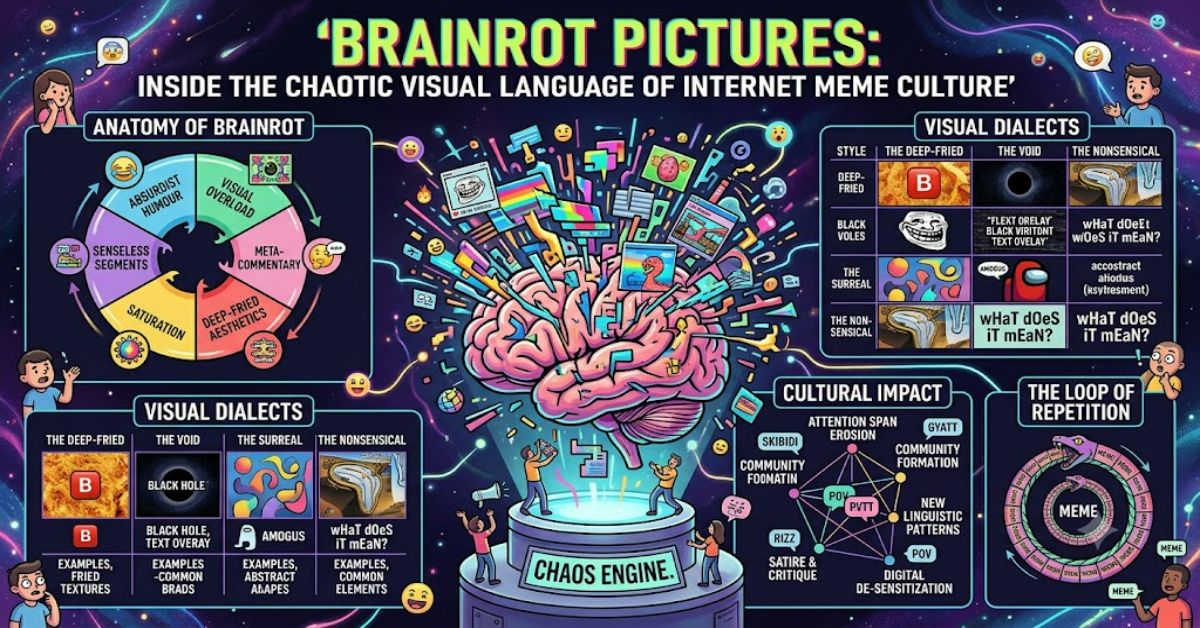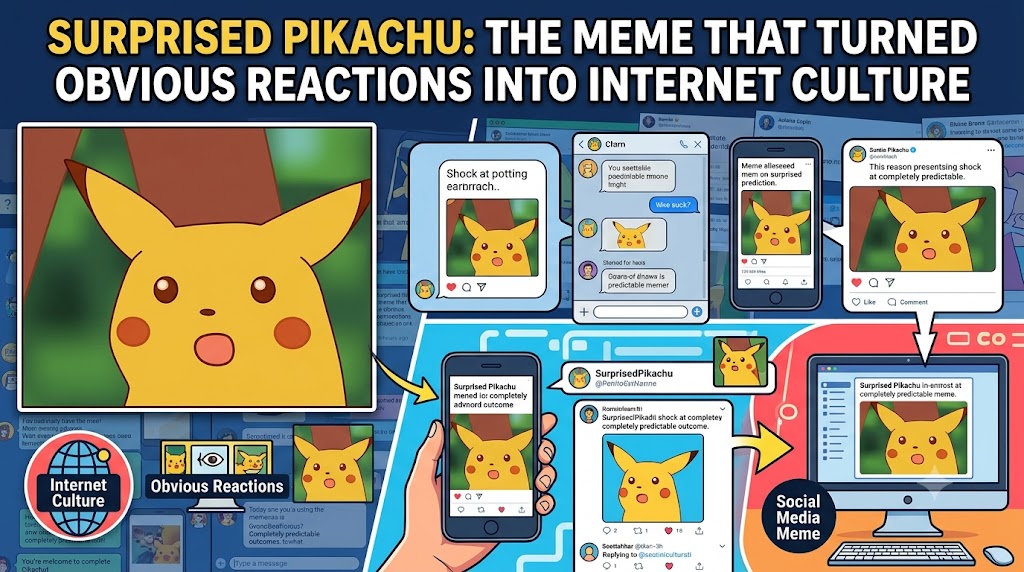
The Surprised Pikachu meme is one of the most recognisable reaction images in modern internet culture. It shows Pikachu with a wide-eyed, open-mouthed expression and is commonly used to represent sarcastic shock when someone experiences an outcome that was completely predictable.
The image became widely shared in 2018 after online communities began using it to highlight ironic situations. The joke format usually follows a simple structure: someone makes an obvious decision, the expected result happens, and the person reacts as if they have encountered an unexpected surprise.
Although the image comes from the Pokémon anime, its popularity developed independently from the original storyline. Instead of being remembered for a specific scene, the expression became a visual language for online commentary.
The popularity of this meme demonstrates how digital communities transform entertainment content into new forms of communication. A single animation frame can gain a second life when users attach new meanings to it.
The appeal of this format comes from its simplicity. Viewers immediately understand the contradiction between the predictable event and the exaggerated reaction. This combination of humour, familiarity, and flexibility allowed the meme to spread across platforms including Tumblr, Reddit, Twitter, and other social networks.
The Origin of the Surprised Pikachu Meme
The image comes from the first season of the original Pokémon anime series. It appears in Episode 10, “Bulbasaur and the Hidden Village,” which originally aired in Japan in 1997 and later became part of international Pokémon releases.
In the scene, Pikachu appears in the background with an exaggerated facial expression. The moment was not originally intended as a standalone joke. Like many internet memes, its later meaning was created by online communities rather than by the original creators.
The image gained major attention in 2018 when Tumblr users began pairing it with captions describing situations where a negative or unexpected result was actually obvious.
The structure became:
- A person makes a questionable decision.
- A predictable consequence occurs.
- The person reacts with exaggerated surprise.
This format worked because it represented a common human experience: pretending to be shocked by something that was easy to predict.
Why the Meme Became So Popular
Internet memes succeed when they are easy to understand and easy to adapt. The Surprised Pikachu format achieved both.
Universal Emotional Recognition
The expression communicates a clear emotion without requiring explanation. Users do not need extensive background knowledge about Pokémon to understand the joke.
Visual communication is especially powerful online because social media users often scroll quickly. A recognisable image can deliver meaning instantly.
Flexible Caption Structure
Unlike memes connected to specific events, this format can be applied to almost any situation.
Examples include:
- Ignoring warnings and facing consequences.
- Making a predictable mistake.
- Being surprised by an obvious outcome.
- Expecting unrealistic results.
This flexibility increased its lifespan because new audiences could continue creating variations.
Comparison: Traditional Reaction Images vs Surprised Pikachu Format
| Feature | Traditional Reaction Images | Surprised Pikachu |
| Meaning | Often linked to one emotion | Focuses on ironic surprise |
| Adaptability | Depends on context | Works across many scenarios |
| Audience Recognition | May require explanation | Widely understood |
| Origin | Often created specifically for memes | Repurposed from existing media |
| Main Humour Style | Emotional reaction | Predictable consequence |
The strength of this meme is not only the image itself but the relationship between the image and the caption. The humour comes from the contrast.
The Cultural Impact of Surprised Pikachu
The Surprised Pikachu meme represents a wider trend in digital culture: the transformation of entertainment into shared communication.
Memes now function similarly to expressions, gestures, or slang. They allow people to communicate opinions and emotions quickly.
The meme also demonstrates how audiences reinterpret media. A scene originally created for an animated series became a tool for discussing everyday behaviour, politics, technology, and social trends.
This process is common in online communities. Users take familiar cultural material and create new meanings around it.
The Psychology Behind the Meme’s Appeal
The humour behind this format is based on irony.
The viewer understands that the surprise is unnecessary. The reaction is exaggerated because the outcome was predictable.
This creates a feeling of shared understanding between the person posting the meme and the audience.
The joke works because both sides recognise the same contradiction:
- The event was expected.
- Someone behaves as though it was impossible to predict.
This type of humour is especially common online because digital communities often use irony to comment on personal experiences and social behaviour.
Risks and Limitations of Meme-Based Communication
Although memes are effective communication tools, they also have limitations.
Context Loss
A meme may be interpreted differently by different audiences. Without surrounding explanation, the intended message can become unclear.
Short Attention Cycles
Internet culture changes quickly. Many memes become popular and then disappear as users move towards new formats.
Commercial Challenges
Brands attempting to use popular memes must understand their original meaning. Incorrect usage can appear forced or disconnected from online communities.
Data Insights: The Lifecycle of an Internet Meme
| Stage | Description |
| Discovery | Users identify a recognisable image or moment |
| Adaptation | Communities create new captions and meanings |
| Expansion | The format spreads across social platforms |
| Mainstream Recognition | Larger audiences become familiar with it |
| Decline or Evolution | The meme disappears or develops new variations |
The Surprised Pikachu meme followed this typical pattern but remained memorable because its format was highly reusable.
The Future of Surprised Pikachu and Digital Meme Culture in 2027
By 2027, reaction images like Surprised Pikachu are likely to remain part of online communication, although the way people create and share them will continue changing.
Artificial intelligence tools are already making it easier for users to generate customised images, videos, and variations of existing formats. This may increase the speed at which memes appear and disappear.
However, established memes with strong cultural recognition may continue surviving because they provide shared references between online communities.
The future challenge for meme culture will involve ownership, copyright, and platform moderation. As artificial intelligence makes content creation easier, questions about original creators and intellectual property will become more important.
Despite these challenges, the basic appeal of reaction images will remain: people will always need simple ways to express humour, surprise, and shared experiences.
Key Takeaways
- Surprised Pikachu became popular because it represents predictable outcomes disguised as unexpected surprises.
- The image originated from Pokémon but gained a completely new meaning online.
- Meme culture depends on adaptation, simplicity, and shared understanding.
- Reaction images act as a modern form of digital communication.
- Copyright and AI-generated content may influence future meme development.
- The strongest memes survive because audiences can repeatedly create new interpretations.
Conclusion
The Surprised Pikachu meme shows how internet culture can transform a small moment from entertainment into a global communication symbol. A simple animated expression became a powerful way to describe irony, predictable mistakes, and everyday contradictions.
Its success was not based only on the popularity of Pokémon. The meme survived because its meaning was immediately understandable and adaptable across different situations.
As online communities continue creating new forms of humour, reaction images will remain an important part of digital conversation. The tools may change, but the human desire to share observations, jokes, and emotions through simple visual language will continue.
Frequently Asked Questions
What is the Surprised Pikachu meme?
The Surprised Pikachu meme is a reaction image showing Pikachu with a shocked expression. It is usually used to represent fake surprise at an obvious outcome.
Where did the Surprised Pikachu image come from?
The image originated from the Pokémon anime episode “Bulbasaur and the Hidden Village” from the first season.
When did the meme become popular?
The meme became widely popular in 2018 after users on platforms such as Tumblr began creating caption-based versions.
Why is the meme still recognised today?
Its simple structure allows people to apply it to many situations, making it easy for new audiences to understand.
Is Surprised Pikachu still used online?
Yes. Although its peak popularity has passed, it remains a recognised internet reaction format.
Can brands use popular memes?
Brands can use memes, but they must understand the cultural meaning and avoid appearing disconnected from online communities.
Methodology
This article was prepared using publicly available information about Pokémon history, internet meme development, and digital culture research.
Sources were reviewed to confirm the origin of the image, its approximate viral timeline, and its role in online communication.
The analysis focuses on cultural impact rather than measuring exact platform statistics because meme popularity varies across communities and social networks.
AI-assisted drafting was used during preparation. Human editorial review should verify historical details, references, and publication requirements before release.
References
Shifman, L. (2014). Memes in Digital Culture. MIT Press.
Know Your Meme. (2018). Surprised Pikachu meme entry and history.
Jenkins, H., Ford, S., & Green, J. (2013). Spreadable Media: Creating Value and Meaning in a Networked Culture. New York University Press.
Pokémon Company International. (2024). Pokémon animated series historical information.
Editorial Disclosure:
This article was drafted with AI assistance and should be reviewed and verified by the RubbleMagazine.co.uk editorial team before publication. All historical details, citations, and claims should be independently confirmed.