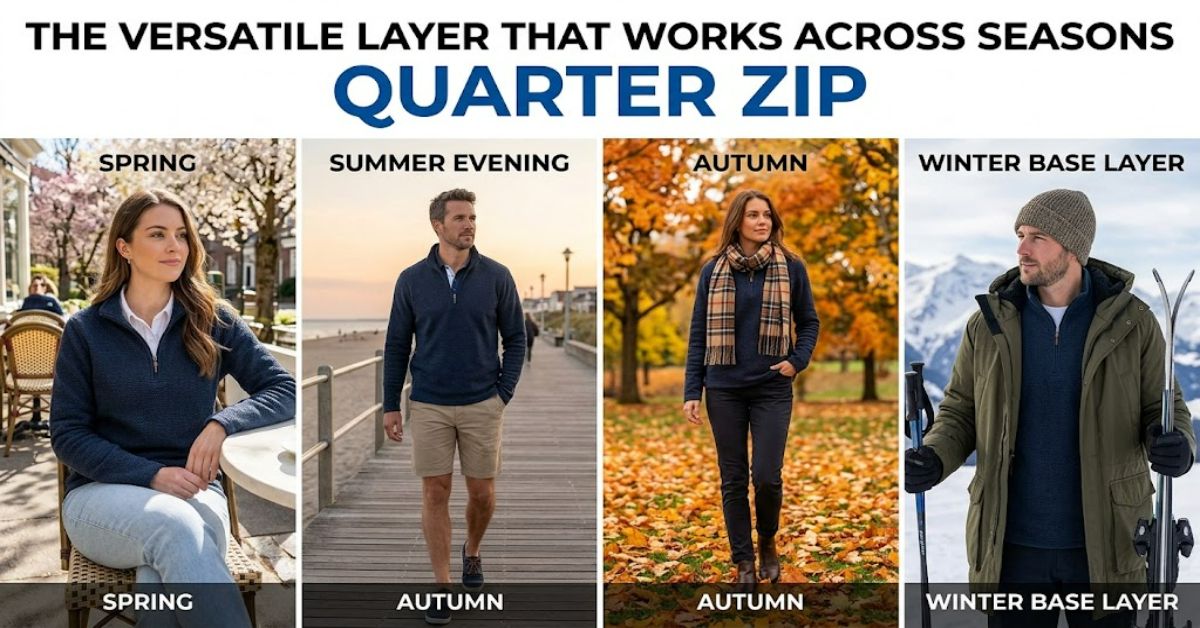
A quarter zip is a pullover featuring a short zip running from the collar to the upper chest. It may sound like a simple design detail, but that zip changes how the garment performs. It allows the wearer to adjust ventilation, change the shape of the neckline and layer the piece over different clothing.
Quarter-zip pullovers are especially useful during transitional weather. A T-shirt may feel too light, while a heavy coat can be excessive. The pullover sits comfortably between those options. Worn open over a T-shirt, it feels relaxed. Zipped higher over a collared shirt, it can appear considerably smarter.
The appeal is not new. Sportswear, knitwear and outdoor clothing have used partial-zip constructions for decades because they balance warmth with temperature control. Over time, the design moved beyond technical clothing and into everyday fashion.
That evolution matters because modern wardrobes increasingly favour flexibility. A single garment that works for commuting, casual meetings, travel and weekends can offer more practical value than an item reserved for one occasion.
How Different Quarter-Zip Styles Compare
The material has a major effect on how the garment looks and performs.
| Style | Best Use | Key Advantage | Potential Limitation |
| Cotton sweatshirt | Everyday casual wear | Soft and easy to layer | Can look informal |
| Fine knit | Smart-casual settings | Cleaner silhouette | Requires more careful care |
| Fleece | Outdoor and cold weather | Warm and lightweight | Less suited to formal outfits |
| Performance fabric | Exercise and travel | Moisture management | Sportier appearance |
The most versatile option is often a medium-weight cotton or merino-style knit. These fabrics can move between casual and slightly smarter settings without looking out of place.
Why Fit Matters More Than the Zip
One of the most overlooked aspects of choosing a pullover is proportion. An oversized fit can create a relaxed, contemporary appearance, but excessive volume may make layering difficult. A very slim fit can look sharp but may restrict movement or expose the outline of garments worn underneath.
The shoulder seam should generally sit close to the natural shoulder unless the design intentionally uses a dropped-shoulder cut. Sleeve length also matters. Excess fabric gathering around the wrists can make an otherwise polished outfit appear untidy.
This creates an important practical insight: versatility does not come from the garment alone. It comes from the relationship between fit, fabric and the rest of the outfit.
Structured Insight: Choosing by Situation
| Situation | Recommended Fabric | Styling Direction |
| Weekend errands | Cotton or jersey | Relaxed fit with jeans |
| Office with casual dress code | Fine knit | Layer over a shirt |
| Walking or travel | Fleece or technical fabric | Comfortable, functional layers |
| Evening casual setting | Merino or textured knit | Darker colours and cleaner trousers |
Styling a Quarter Zip for Different Occasions
For a relaxed look, pair the pullover with straight-leg jeans, chinos or simple joggers. Neutral colours such as navy, grey, cream and olive generally provide more outfit combinations than highly distinctive prints.
For smart-casual occasions, the key is to reduce visual clutter. A fine-gauge knit worn over an Oxford shirt can create a cleaner appearance than a heavy fleece. Leaving the collar visible adds structure without requiring a blazer.
Layering is where this garment performs particularly well. A lightweight base layer beneath it allows warmth to be adjusted throughout the day. In colder weather, the quarter zip can sit under an overshirt, coat or lightweight jacket.
The main risk is over-layering. Thick fabric under another thick layer can create bulk around the shoulders and arms. This is why a thinner knit or cotton construction often works better when the garment is intended to stay indoors.
The Cultural Shift Towards Practical Wardrobes
Fashion has always responded to changes in daily life. The growth of hybrid working and relaxed dress codes has increased interest in clothing that does not belong exclusively to either formalwear or sportswear.
The quarter zip fits neatly into that space. It is more structured than a basic sweatshirt but less formal than traditional knitwear paired with tailoring.
The broader lesson is that consumers are increasingly evaluating clothing through versatility as well as appearance. Cost-per-wear has become an important informal calculation. A garment worn twice a week for several months may offer greater practical value than a more expensive item reserved for occasional events.
This does not mean every wardrobe needs identical basics. Instead, it highlights the value of garments that can change function through styling.
Common Mistakes When Wearing a Quarter Zip
The most common mistake is choosing a garment that is too sporty for the intended setting. A technical running layer may be excellent for exercise but look disconnected when paired with formal trousers.
Another issue is ignoring collar structure. A floppy or stretched collar can quickly reduce the appearance of quality, particularly on knitwear.
Care also matters. Cotton can shrink, fleece can develop surface wear and delicate wool requires appropriate washing. The purchase decision should therefore include maintenance requirements, not simply initial appearance.
A useful rule is to consider the garment’s entire lifecycle: purchase price, expected frequency of wear, cleaning needs and durability.
The Future of Quarter-Zip Style in 2027
By 2027, the appeal of adaptable clothing is likely to remain strong, although specific silhouettes will continue to change. Relaxed tailoring, technical fabrics and classic knitwear are increasingly influencing one another, creating garments that cross traditional category boundaries.
Quarter-zip designs may become more focused on fabric innovation, including recycled fibres and blends designed for durability or easier care. However, sustainability claims require scrutiny. A recycled material is not automatically low-impact if the finished garment has a short usable life.
The strongest future trend may therefore be longevity rather than novelty. Designs that remain wearable across several seasons are likely to hold greater value than pieces dependent on a short-lived trend cycle.
Key Takeaways
- The quarter zip works because its partial fastening allows flexible styling and temperature control.
- Fabric determines whether the garment appears casual, technical or smart-casual.
- Fit and proportion are as important as colour when creating a versatile wardrobe.
- Fine knits generally work best for polished outfits, while fleece suits practical outdoor use.
- Layering should add function rather than unnecessary bulk.
- Long-term value depends on durability, maintenance and frequency of wear.
Conclusion
The quarter zip has endured because it solves a practical wardrobe problem without demanding much attention. It provides warmth when needed, ventilation when unzipped and enough structure to work beyond purely casual settings.
Its versatility, however, should not be exaggerated. Not every version suits every occasion. Fabric, fit and construction determine whether it works with jeans, tailored trousers or outdoor clothing. A well-chosen piece can move comfortably between these settings, while the wrong version may remain limited to one.
The strongest approach is to choose a style based on how it will actually be worn. Consider climate, daily routine, preferred layers and maintenance requirements. When those factors align, the quarter zip becomes more than a seasonal trend: it becomes a reliable part of a functional wardrobe.
FAQ
What is a quarter zip?
A quarter zip is a pullover with a short zip extending from the collar towards the chest. It allows the neckline to be opened or closed for comfort, temperature control and different styling options.
Are quarter-zip pullovers smart casual?
They can be. Fine-knit or structured versions in neutral colours can work well in smart-casual environments, especially when layered over a collared shirt. Fleece and technical versions are generally more casual.
What should you wear under a quarter zip?
A T-shirt is suitable for relaxed outfits, while an Oxford or button-down shirt can create a smarter appearance. Lightweight layers usually work best because they avoid unnecessary bulk.
Should a quarter zip be tight or loose?
Neither extreme is universally best. A comfortable fit with enough room for a light base layer is usually the most versatile. The shoulders and sleeves should not feel restrictive.
Can you wear a quarter zip with jeans?
Yes. Jeans and a quarter zip create an easy casual outfit. Darker jeans and a fine-knit pullover can produce a more polished result than distressed denim and heavy fleece.
Methodology
This article was developed using established fashion terminology, documented clothing construction principles and analysis of how quarter-zip garments function across casual, smart-casual and outdoor settings. The comparison focuses on fabric characteristics, fit, layering and maintenance rather than claiming original product testing.
A limitation is that performance varies by manufacturer, fabric composition and garment construction. Individual products should therefore be assessed according to their material labels, care instructions and intended use. The analysis also recognises that personal style, workplace dress codes and climate can change what counts as a versatile garment.
References
Fashion Revolution. (2024). Fashion transparency and sustainability reporting. Fashion Revolution.
Textile Exchange. (2024). Preferred fiber and materials market report. Textile Exchange.
UK Government. (2024). Waste prevention and resources policy: textiles and sustainable consumption. GOV.UK.