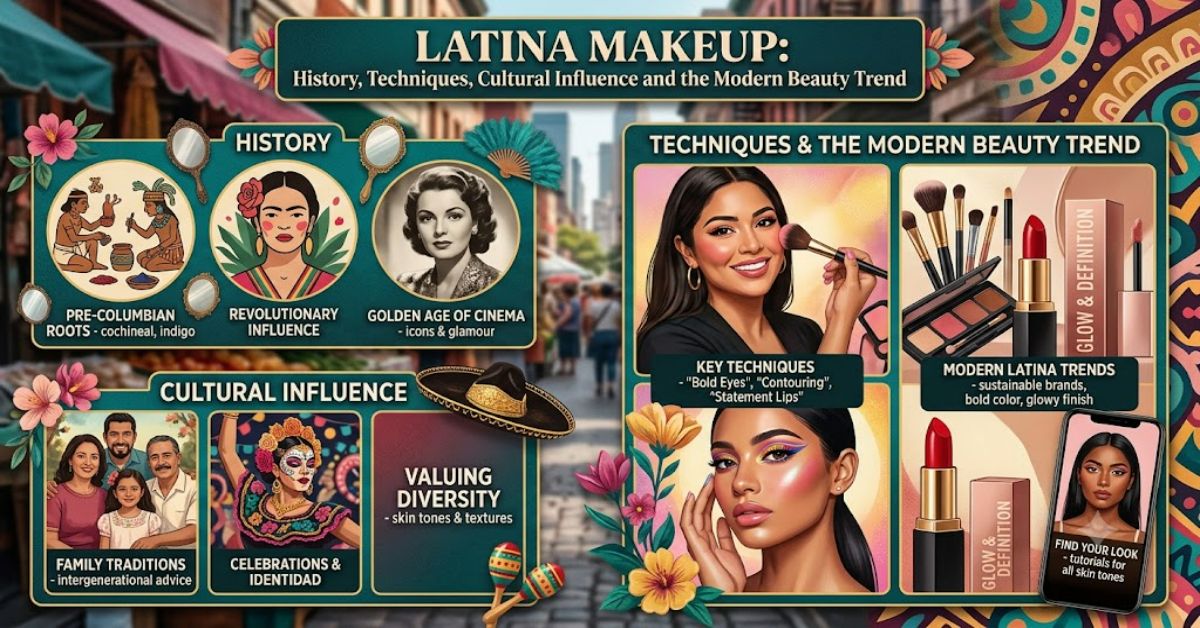
Latina makeup is a beauty aesthetic known for its ultra-polished complexion, sharply defined brows, sculpted contour, dramatic winged eyeliner, and carefully lined lips. The style has become widely recognised on platforms such as TikTok and Instagram, but its origins extend far beyond social media trends.
The modern interpretation draws heavily from 1990s Chicana beauty culture, particularly styles developed within Mexican-American communities in the United States. These looks often represented confidence, creativity, identity, and cultural pride rather than simply following mainstream beauty standards.
Over time, techniques associated with this aesthetic have moved from community-based expression into global beauty conversations. Professional makeup artists, influencers, and cosmetic brands have adopted elements such as brown lip liner, warm-toned eyeshadow, and precise facial sculpting.
Understanding this style requires looking beyond the surface. The popularity of Latina makeup reflects changing beauty ideals, increased visibility of Latina creators, and a broader movement towards celebrating diverse cultural influences in fashion and cosmetics.
This article examines the history, techniques, cultural impact, commercial growth, and future direction of this influential beauty trend.
The Origins of Latina Makeup and Chicana Beauty Culture
The foundations of this aesthetic are strongly connected to Chicana culture, particularly in California and other parts of the United States with large Mexican-American communities.
During the 1980s and 1990s, beauty choices within Chicana communities often challenged narrow mainstream expectations. Dark lip liners, carefully styled eyebrows, dramatic eye makeup, and glossy finishes became recognisable elements of personal expression.
These styles developed alongside broader cultural movements focused on identity and representation. Beauty was not only about appearance; it became a way to communicate belonging, creativity, and confidence.
The rise of Latina musicians, actors, and public figures during the 1990s also increased visibility of these beauty choices. Although individual styles varied, many shared common elements such as strong brows, defined lips, and glamorous finishes.
Core Elements That Define Latina Makeup
The appeal of this beauty style comes from its structured approach. Each feature is carefully designed to create balance and definition.
| Technique | Purpose | Common Products |
| Matte complexion | Creates a smooth base | Foundation, setting powder |
| Contoured cheeks | Adds dimension | Cream and powder contour |
| Sculpted brows | Frames facial features | Brow pencil, gel |
| Winged eyeliner | Creates dramatic eye shape | Liquid liner |
| Lined lips | Defines and enhances lips | Brown lip liner, lipstick |
Unlike minimal beauty trends that focus on barely visible enhancement, this style celebrates intentional glamour.
Flawless Base and Complexion Techniques
A key feature is a highly refined complexion. The traditional approach involves creating an even base before adding dimension through contouring and highlighting.
Modern versions often combine full-coverage foundations with lightweight skin preparation. This reflects a wider industry shift where consumers want both coverage and healthier-looking skin.
Beauty professionals increasingly focus on skin preparation because heavy products can emphasise texture if applied incorrectly. Hydration, primer selection, and blending techniques have become important parts of achieving the desired finish.
Brows, Eyes and Lips: The Signature Features
The eyes and lips are central to the visual identity of this aesthetic.
Sculpted Brows
Strong eyebrows remain one of the most recognisable features. The goal is usually a clean, structured shape that enhances facial symmetry.
The trend differs from extremely thin 1990s brows because modern techniques often maintain fuller natural density while adding definition.
Winged Eyeliner and Warm Eyeshadow
Sharp eyeliner creates a lifted appearance around the eyes. Many interpretations include neutral browns, golds, bronzes, and smoky tones.
This combination connects traditional glamour techniques with contemporary makeup preferences.
Defined Lips
Brown lip liner paired with lipstick or gloss has become one of the most influential elements associated with the trend.
The technique has expanded beyond Latina communities and is now common across international beauty markets.
Latina Makeup Compared With Other Beauty Styles
| Beauty Style | Main Characteristics | Cultural Influence |
| Latina makeup | Sculpted features, bold liner, defined lips | Chicana and Latin American beauty traditions |
| Clean girl makeup | Minimal products, natural finish | Contemporary minimalist beauty |
| Soft glam | Balanced glamour, blended tones | Celebrity makeup trends |
| Y2K makeup | Gloss, colour, nostalgic elements | Early 2000s fashion revival |
This comparison shows that Latina makeup is not simply a technique-based trend. It carries historical and cultural meaning that separates it from purely seasonal beauty movements.
The Role of Social Media in Global Popularity
Platforms such as TikTok have accelerated the spread of beauty aesthetics. Short tutorials allow creators to demonstrate detailed techniques and explain cultural references behind specific looks.
A significant shift has been the movement from imitation towards education. Many creators now explain the history behind certain styles instead of presenting them as completely new trends.
However, social media also creates risks. When cultural aesthetics become viral, important context can sometimes disappear. A look that carries personal and historical meaning may be reduced to a temporary fashion category.
This creates a balance between appreciation and appropriation. Consumers can engage with the style respectfully by learning about its origins and recognising the communities that shaped it.
Commercial Impact on the Beauty Industry
The popularity of this aesthetic has influenced cosmetic product development.
Brands have expanded ranges of:
- Deeper foundation shades
- Brown-toned lip products
- Long-lasting eyeliners
- Contouring products
- Warm-toned palettes
The growth also reflects broader changes in consumer expectations. Beauty customers increasingly look for products designed for diverse skin tones and different cultural approaches to makeup.
A practical industry insight is that successful beauty trends are rarely created only by brands. Many begin within communities before being adopted commercially.
Risks and Cultural Considerations
Although the trend celebrates Latina beauty influences, there are important discussions surrounding representation.
One concern is selective adoption. Some elements of Latina aesthetics may become fashionable while the cultural history behind them receives less recognition.
Another challenge is unrealistic beauty expectations. Highly edited social media content can create pressure to achieve perfectly sculpted appearances that may require significant time, skill, and professional products.
The most sustainable approach is viewing the style as a creative form of expression rather than a strict standard.
Data Insights: Latina Makeup and Beauty Industry Trends
| Area | Industry Observation |
| Social media influence | Beauty tutorials drive rapid trend adoption |
| Consumer demand | Increased interest in inclusive shades and products |
| Cultural visibility | Latina creators have expanded representation |
| Product development | Brands increasingly focus on diverse audiences |
These trends suggest that cultural influence will remain an important factor in future beauty innovation.
The Future of Latina Makeup in 2027
By 2027, Latina makeup is likely to continue evolving rather than remaining fixed. Beauty trends increasingly move through cycles where traditional techniques are combined with modern preferences.
Future developments may include:
- More personalised complexion products using technology-assisted shade matching.
- Increased recognition of cultural origins behind beauty aesthetics.
- Greater demand for sustainable cosmetic packaging and ethical production.
Regulatory changes in the beauty industry, including stronger ingredient transparency expectations in regions such as the UK and European Union, may also influence product development.
The direction of the trend remains uncertain because beauty preferences change quickly. However, the cultural influence behind the style is likely to remain significant.
Key Takeaways
- Latina makeup developed from cultural beauty practices, especially within Chicana communities.
- The style combines technical precision with personal and cultural expression.
- Social media has expanded global awareness of the aesthetic.
- Commercial adoption has increased demand for inclusive beauty products.
- Understanding cultural history helps distinguish appreciation from simple trend copying.
- The future of the style will likely combine tradition, technology, and personalised beauty.
Conclusion
Latina makeup represents more than a collection of beauty techniques. Its sculpted complexion, defined lips, bold eyeliner, and carefully shaped brows reflect decades of cultural creativity and personal expression.
The trend’s journey from Chicana communities to global beauty platforms demonstrates how local styles can influence worldwide conversations. However, its popularity also highlights the importance of recognising the communities that created these aesthetics.
As beauty continues to become more diverse, cultural understanding will remain essential. Latina makeup’s lasting influence comes not only from its visual impact but also from the stories, identities, and traditions connected to it.
Frequently Asked Questions
What is Latina makeup known for?
Latina makeup is known for a flawless matte base, sculpted contour, bold brows, winged eyeliner, and defined lips.
Where did Latina makeup originate?
Many elements developed from Chicana beauty culture in Mexican-American communities, especially during the late 20th century.
Is Latina makeup only for Latina people?
No. Anyone can practise the techniques, but understanding and respecting the cultural background is important.
What products are commonly used for Latina makeup?
Popular products include foundation, contour, brow pencils, eyeliner, brown lip liner, lipstick, and setting powder.
Why is this makeup style popular on social media?
Its dramatic transformation, clear techniques, and visual impact make it highly suitable for tutorial-based platforms.
How is Latina makeup different from soft glam?
Soft glam focuses on subtle enhancement, while Latina makeup usually features stronger definition and more sculpted features.
Methodology
This article was developed using cultural history references, beauty industry analysis, and documented discussions surrounding Chicana beauty practices and modern cosmetics.
Sources were selected to provide balanced context on cultural influence, representation, and industry trends. Limitations include the fact that beauty aesthetics vary significantly between individuals and communities.
This article was drafted with AI assistance and requires human editorial review to verify cultural references, citations, and final publication accuracy.
References (APA Style)
González, A. (2023). Latinx identity and representation in contemporary beauty culture. Journal of Cultural Studies.
Mintel. (2024). Global beauty and personal care trends report. Mintel Group Ltd.
NielsenIQ. (2023). Beauty consumer behaviour and diversity trends. NielsenIQ.
Internal Linking Note: Relevant RubbleMagazine.co.uk internal links should be added only after verifying live related articles on the website.