Finding suitable jobs for teens has become easier as employers increasingly recognise the value of young workers. Beyond earning money, part-time employment helps teenagers develop communication, teamwork, time management, and financial responsibility. Whether a student is looking for weekend work, a summer internship, or an online freelance opportunity, there are now more options than ever before.
In cities such as Karachi, Pakistan, many O-Level and A-Level students earn income through home tutoring, social media content creation, cafés, retail stores, and customer service roles. Paid internships with international sales companies and call centres have also become increasingly popular, with some positions offering monthly salaries between PKR 35,000 and PKR 60,000, while experienced tutors may earn PKR 15,000 to PKR 30,000 depending on subjects and teaching hours.
The best teenage jobs provide flexibility without interfering with education, allowing students to gain practical experience while continuing their studies.
Why Teenagers Benefit from Part-Time Jobs
Working during school years offers advantages beyond financial rewards.
Teen employment helps develop:
- Professional communication
- Customer service skills
- Time management
- Problem-solving
- Teamwork
- Workplace confidence
These abilities remain valuable throughout higher education and future careers.
Best Jobs for Teens
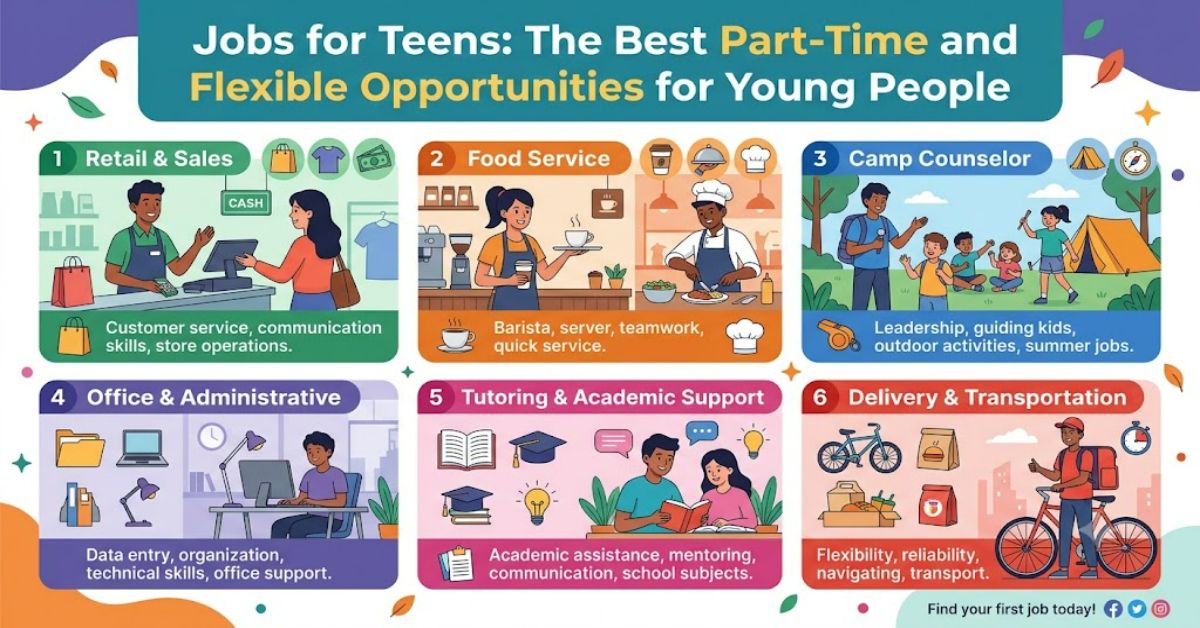
Home Tutoring
Tutoring remains one of the highest-paying options for academically strong students.
Teen tutors commonly teach:
- Mathematics
- English
- Science
- Computer studies
- Primary school subjects
Flexible evening schedules make tutoring particularly suitable for students.
Retail Assistant
Many clothing stores, supermarkets, and shopping centres hire teenagers for part-time customer service roles.
Responsibilities include:
- Assisting customers
- Organising merchandise
- Operating tills
- Stock management
Retail work develops interpersonal and organisational skills.
Café and Restaurant Staff
Local cafés frequently recruit students for evening and weekend shifts.
Typical duties include:
- Serving customers
- Preparing beverages
- Maintaining cleanliness
- Handling payments
These roles improve communication and teamwork.
Social Media Content Creator
Creative teenagers can earn income by producing:
- Short-form videos
- Product reviews
- Photography
- Graphic design
- Educational content
Successful creators may also secure sponsorships and affiliate partnerships.
Paid Summer Internships
Many companies offer structured internship programmes for students.
These internships often expose teenagers to:
- Office administration
- Sales support
- Marketing
- Customer service
- Digital operations
Besides earning income, interns gain valuable professional experience.
Comparison of Popular Teen Jobs
| Job | Flexibility | Typical Monthly Earnings |
| Home tutoring | Excellent | PKR 15,000–30,000 |
| Retail assistant | Good | Varies by employer |
| Café worker | Good | Varies by employer |
| Social media creator | Excellent | Performance-based |
| Summer internship | Moderate | PKR 35,000–60,000 |
| Call centre (part-time) | Moderate | Competitive entry-level pay |
Online Jobs for Teenagers
Technology has created additional opportunities that require little more than a computer and internet connection.
Popular online options include:
- Freelance writing
- Graphic design
- Video editing
- Virtual assistance
- Online tutoring
- Social media management
These roles allow teenagers to build digital portfolios while earning remotely.
Skills Employers Value
Teenagers do not need years of experience to secure employment.
Most employers prioritise:
- Reliability
- Positive attitude
- Communication
- Willingness to learn
- Basic computer literacy
- Punctuality
Demonstrating these qualities during interviews often matters more than previous work history.
Structured Insight Table
| Skill Developed | Career Benefit |
| Communication | Customer interaction |
| Time management | Academic balance |
| Teamwork | Workplace collaboration |
| Problem-solving | Better decision-making |
| Financial responsibility | Budgeting skills |
| Digital literacy | Future employability |
Challenges Teen Workers May Face
Balancing education and employment requires careful planning.
Common challenges include:
- Managing school assignments
- Avoiding excessive working hours
- Transportation difficulties
- Limited work experience
- Adapting to professional environments
Creating a realistic weekly schedule helps students maintain academic performance while working.
Tips for Finding Safe Teen Jobs
When applying for employment:
- Verify the employer’s reputation.
- Read employment terms carefully.
- Never pay recruitment fees for legitimate jobs.
- Discuss opportunities with parents or guardians.
- Avoid positions that interfere with education.
These precautions help teenagers gain experience safely.
The Future of Jobs for Teens in 2027
The employment landscape for teenagers is expected to continue evolving as digital work expands. Remote internships, freelance platforms, AI-assisted content creation, and online customer support roles are likely to become even more accessible. Employers increasingly value digital skills, meaning teenagers who develop competencies in design, coding, communication, or content production may find broader employment opportunities.
Traditional part-time jobs in retail and hospitality will remain important, but hybrid work models and flexible scheduling are expected to provide students with greater choice while allowing them to continue their education.
Key Takeaways
- Teenagers have more employment options than ever before.
- Tutoring and internships often provide competitive earnings.
- Flexible schedules help balance work and education.
- Digital skills increase future career opportunities.
- Workplace experience builds confidence and employability.
- Safety and legitimate employers should always be prioritised.
Conclusion
Finding suitable jobs for teens is about much more than earning extra money. Part-time employment allows young people to develop practical skills, gain workplace confidence, and build experience that supports future education and careers. Whether working as a tutor, retail assistant, café employee, content creator, or summer intern, teenagers can develop valuable professional habits while earning an income.
Choosing roles that complement academic commitments remains essential. Flexible scheduling, trustworthy employers, and opportunities for skill development provide the greatest long-term value. As the workplace becomes increasingly digital, teenagers who combine traditional work experience with modern technical skills will be well positioned for future success.
Frequently Asked Questions
What are the best jobs for teens?
Popular options include tutoring, retail work, café jobs, internships, customer service, and online freelancing.
Can teenagers earn money online?
Yes. Teenagers can earn through freelance writing, graphic design, social media management, tutoring, and content creation, depending on local regulations and platform requirements.
How much can teenagers earn in Karachi?
Home tutors may earn approximately PKR 15,000–30,000 per month, while some internships and entry-level call centre roles can offer PKR 35,000–60,000 per month, depending on experience and employer.
Should teenagers work during school?
Part-time work can be beneficial provided it does not negatively affect academic performance or personal wellbeing.
What skills help teenagers get hired?
Communication, reliability, punctuality, teamwork, computer literacy, and a willingness to learn are qualities most employers appreciate.
Methodology
This article draws on publicly available information about youth employment, internship programmes, freelance opportunities, and entry-level hiring trends. Regional salary examples reflect commonly advertised ranges and may vary depending on employer, working hours, qualifications, and local labour market conditions.
References
- International Labour Organization. (2024). Global Employment Trends for Youth.
- UNICEF. (2024). Adolescent Skills and Employability.
- World Bank. (2024). Youth Employment and Skills Development.
- Pakistan Bureau of Statistics. (2024). Labour Market Indicators.