Learning how to create a podcast is more accessible than it once was. A modern creator can plan a show, record an episode with relatively affordable equipment, edit the audio using desktop or browser-based software, and distribute the finished programme through major podcast platforms without building a traditional media operation.
The difficult part is not pressing the record button. It is creating something listeners have a reason to return to.
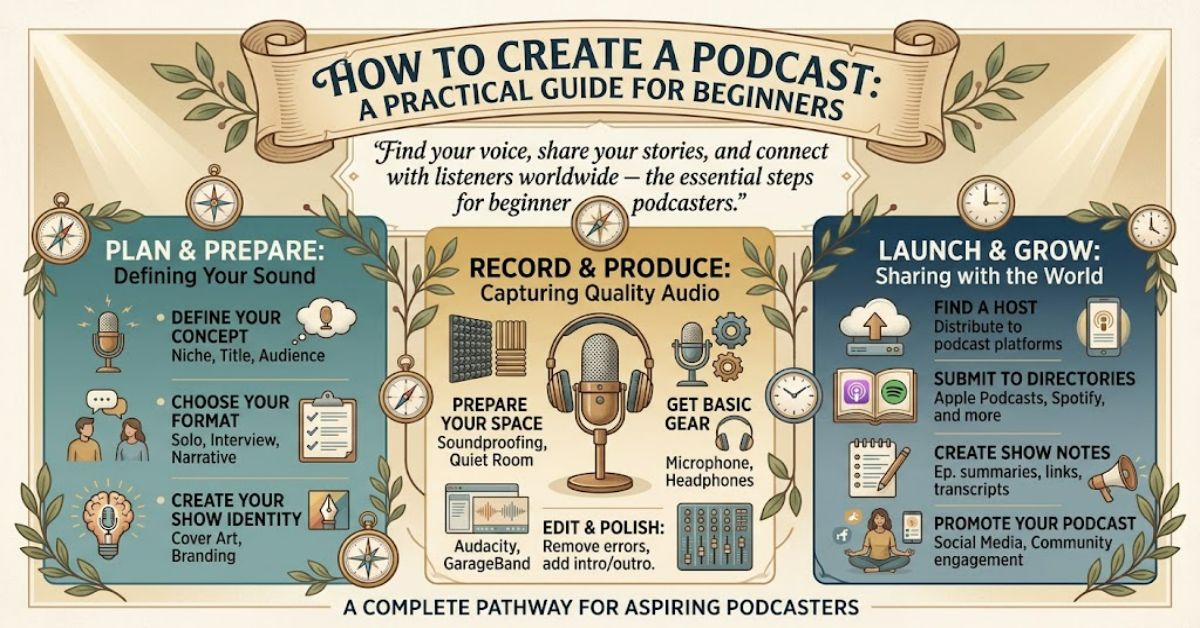
A good podcast begins with a defined subject and audience. From there, the creator needs a workable format, reliable recording process, sensible editing workflow and publishing system. These decisions are connected. A solo educational podcast requires different preparation from a weekly interview show, while a narrative series may require research, scripting and much heavier post-production.
The UK market shows why the opportunity remains significant. Ofcom reported in 2025 that more than one in five UK adults listened to podcasts each week. Among regular listeners, the average person followed six podcasts and listened to around five episodes per week. Spotify and YouTube were the two most-used services for podcast listening in Ofcom’s survey, used by 37% and 34% of podcast listeners respectively.
That audience creates opportunity, but also competition. The strongest starting point is therefore not trying to appeal to everyone. It is deciding exactly why someone should listen to your show.
1. Choose a Clear Podcast Concept
Before buying a microphone, define the podcast.
Start with three questions:
- Who is the intended listener?
- What problem, interest or curiosity does the show address?
- Why should someone choose this podcast instead of another?
A broad subject such as “business” is difficult to position. A narrower concept, such as interviews with small-business owners about their first three years, gives the show a clearer identity.
Decide the format early. Common options include solo commentary, interviews, co-hosted discussions, narrative storytelling and educational episodes.
| Format | Main advantage | Main challenge |
| Solo | Simple production and scheduling | Depends heavily on presenter |
| Interview | Variety and guest expertise | Guest coordination |
| Co-hosted | Natural conversation | Requires reliable partners |
| Narrative | Strong storytelling potential | High research and editing workload |
| Educational | Clear practical value | Requires accurate preparation |
The best format is one you can sustain. A complicated production model may sound impressive but become difficult after ten episodes.
2. Plan Episodes Before Recording
Create a basic episode structure before switching on the microphone.
A simple 30-minute episode might contain an introduction, three main discussion points, a practical example and a closing summary. This structure gives the presenter direction without forcing every sentence into a script.
For interview podcasts, prepare more questions than you expect to use. Follow-up questions are often more valuable than the original list because they respond to what the guest actually says.
Create a repeatable production checklist covering research, guest communication, recording, editing, artwork, show notes and publishing. This turns podcast production into a process rather than a series of improvised tasks.
One useful insight is that production consistency can be more valuable than production complexity. A manageable weekly format that survives for a year is stronger than an ambitious concept that stops after six episodes.
3. Record Clean, Understandable Audio
You do not need a studio to create a podcast, but you do need intelligible sound.
Record in the quietest practical room. Hard surfaces can create reflections and echo, while soft furnishings can reduce unwanted reverberation. Keep the microphone at a consistent distance and monitor for clipping, background noise and interruptions.
For beginners, a USB microphone is often simpler than building a complete XLR recording system. The important objective is a clean recording that listeners can understand comfortably.
Apple’s current podcast guidance accepts MP3 and AAC for RSS-feed audio and provides recommended technical specifications for different recording formats and bit rates.
| Production area | Beginner priority |
| Microphone | Clear voice capture |
| Room | Low echo and background noise |
| Headphones | Monitoring during recording |
| Recording software | Stable local recording |
| File format | Platform-compatible export |
| Backup | Preserve original recordings |
4. Edit Without Over-Editing
Editing should improve listening rather than make every second sound artificially perfect.
Remove obvious mistakes, long pauses, repeated sentences and distracting background noise. For interviews, tighten sections that wander away from the subject. Add music only when it serves a clear purpose.
Keep original recordings until the final episode has been published and checked. Losing source audio can make a simple correction impossible.
A second important insight is that editing time should match the podcast’s purpose. A conversational show may benefit from light editing, while an investigative or narrative production may justify substantially more post-production.
5. Publish Through an RSS Feed
A podcast host stores episode files and generates an RSS feed containing information about the show and its episodes. That feed acts as the distribution mechanism for podcast directories.
Apple requires an RSS-based podcast to meet technical requirements, contain required tags, include at least one episode and provide artwork. Each episode also needs a unique enclosure and globally unique identifier.
Spotify’s creator documentation similarly describes the RSS feed as containing titles, descriptions, audio file information and artwork. When using Spotify’s own hosting system, the feed becomes available after publishing the first episode.
This means your podcast is not simply an audio file uploaded somewhere. Metadata, artwork, episode information and feed structure all affect distribution.
6. Distribute and Promote the Show
Once the RSS feed is ready, submit the podcast to relevant listening services.
Apple Podcasts validates submitted feeds before publication, while YouTube can ingest eligible RSS feeds and automatically create static-image videos from audio-first episodes.
YouTube’s RSS delivery is available in Pakistan as well as numerous other countries.
Promotion should begin before launch. Prepare several short clips, quotations or useful insights from the first episodes. Social posts can direct attention towards the full show without requiring every potential listener to discover it through a podcast directory.
The Future of How to Create a Podcast in 2027
Podcast production is moving towards a more integrated audio-and-video model. Ofcom’s 2025 research showed YouTube already functioning as a major podcast listening service in the UK, reflecting the growing overlap between podcasting and video platforms.
In 2027, creators are likely to face an important choice: remain audio-first, build video versions, or design a production workflow capable of supporting both.
The practical constraint will remain time. Video can increase discoverability, but filming, lighting, editing and publishing add workload. For many independent creators, a strong audio product with selected video clips may remain more sustainable than producing a fully filmed episode every week.
Key Insights
- A narrow audience definition makes podcast positioning easier.
- A repeatable production system is often more valuable than expensive equipment.
- Audio quality should prioritise intelligibility and consistency.
- RSS infrastructure remains central to podcast distribution.
- YouTube’s growing podcast role makes visual discovery increasingly relevant.
- Editing should remove friction without destroying natural conversation.
- Publishing is only the beginning; sustainable promotion requires a separate workflow.
Conclusion
Creating a podcast is technically easier than ever, but building a worthwhile show still requires discipline. The strongest productions begin with a clear audience and a concept that can generate multiple episodes without becoming repetitive.
Equipment should support that concept rather than define it. A quiet recording environment, reliable microphone and sensible editing workflow can produce professional results without a large studio budget. The publishing process then turns those recordings into a distributed programme through RSS and major listening platforms.
The most important decision is sustainability. If a creator can consistently research, record, edit and publish useful episodes, the podcast has a foundation for growth. If the production process becomes too complicated, even an excellent idea can disappear.
The practical lesson is simple: start with a focused concept, build a repeatable workflow and improve the show as real listeners reveal what works.
Frequently Asked Questions
How to create a podcast for beginners?
Choose a focused topic, define your audience, select a format, record clean audio, edit the episode, choose a podcast host and distribute the resulting RSS feed to listening platforms.
How much does it cost to create a podcast?
A podcast can begin with existing equipment and free or low-cost software. Costs increase when you add professional microphones, hosting, music licensing, video production or outsourced editing.
Do I need a microphone to start a podcast?
A dedicated microphone is recommended, but it is not essential for testing an idea. The priority is clear, intelligible audio recorded in a quiet environment.
How long should a podcast episode be?
There is no universal ideal length. An episode should be long enough to deliver its intended value without unnecessary repetition. Format and subject matter should determine duration.
Where should I publish my podcast?
Start with a podcast hosting service that provides an RSS feed, then distribute the show to relevant listening platforms. Apple, Spotify and YouTube are important options for many creators.
Can I create a podcast without video?
Yes. Podcasts can remain audio-first. However, video platforms have become important discovery channels, so creators may choose to produce clips or video versions alongside their audio episodes.
Methodology
This article how to create a podcast combines the supplied editorial brief with current documentation from Apple Podcasts, Spotify and YouTube, alongside Ofcom’s UK podcast research. Platform requirements can change, so creators should verify technical specifications before publishing.
The article does not claim firsthand testing of recording hardware or podcast hosting services. Practical recommendations are based on documented platform requirements and established production workflows. Ofcom data provides UK market context rather than a prediction of individual podcast performance.
References
Apple. (2026). Apple Podcasts for Creators: Podcast RSS feed requirements.
Apple. (2026). Apple Podcasts for Creators: Submit a new show.
Apple. (2026). Apple Podcasts for Creators: Audio requirements.
Ofcom. (2025). Audio Listening in the UK 2025.
Ofcom. (2025). Media Nations 2025: UK Report.
Spotify. (2026). Finding and enabling your RSS feed.
YouTube. (2026). Deliver podcasts using an RSS feed.