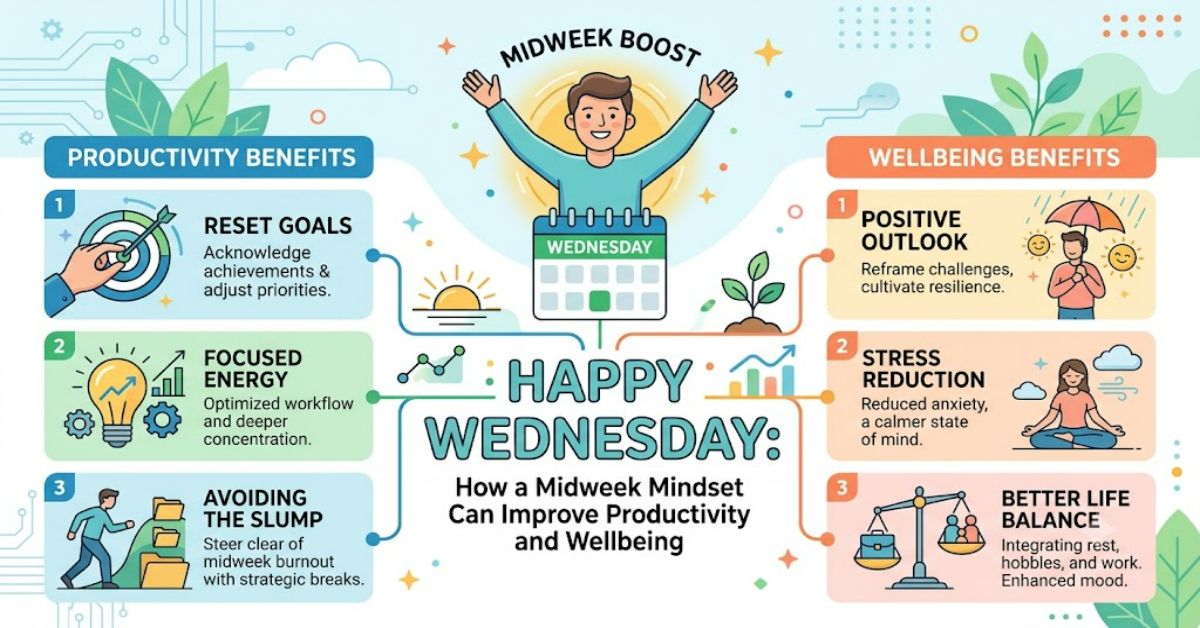
Happy Wednesday is a phrase commonly used to celebrate reaching the middle of the workweek. For many employees, students, and professionals, Wednesday marks a turning point: Monday and Tuesday are complete, while the weekend feels closer. This simple expression has grown into a cultural reminder to stay motivated, organise remaining tasks, and approach the second half of the week with renewed energy.
The idea behind the phrase is not only about optimism. Research in workplace psychology shows that emotional state, goal clarity, and daily routines influence productivity and satisfaction. A positive midweek check-in can help people recognise achievements, identify unfinished responsibilities, and make realistic adjustments.
Wednesday also provides a practical opportunity to review workload pressure. Instead of waiting until Friday to evaluate progress, individuals can use the midpoint of the week to prioritise important tasks, remove distractions, and create a manageable plan.
In digital culture, Wednesday greetings, workplace messages, and social media posts have turned into small moments of connection. Whether shared between colleagues or used as a personal reminder, the phrase reflects a broader trend toward workplace wellbeing and intentional productivity.
Why Happy Wednesday Has Become a Popular Midweek Tradition
The popularity of Happy Wednesday comes from a simple human need: recognising progress. The beginning of the week often brings pressure because deadlines appear distant and workloads feel larger. By Wednesday, people have usually completed early priorities and gained a clearer understanding of what remains.
Psychologists describe this as a progress effect. Seeing movement toward a goal can increase motivation because people feel a stronger connection between effort and achievement.
The phrase also works socially. A short Wednesday message can strengthen workplace relationships by creating moments of encouragement without requiring significant time investment.
The Productivity Benefits of a Wednesday Reset
A midweek reset is a practical method for improving organisation. Instead of treating Wednesday as another ordinary day, professionals can use it as a checkpoint.
Reviewing Weekly Goals
Many productivity systems recommend regular reviews. Wednesday is particularly useful because there is enough time remaining to correct problems before the week finishes.
A simple review may include:
- Completed tasks
- Remaining priorities
- Upcoming deadlines
- Necessary adjustments
This approach prevents Friday stress caused by unfinished work.
Reducing Mental Overload
Modern workplaces often involve multiple communication channels, meetings, and competing priorities. A short planning session can reduce cognitive pressure by creating a clear action list.
| Productivity Practice | Midweek Benefit |
| Task review | Identifies unfinished priorities |
| Calendar check | Prevents scheduling conflicts |
| Email organisation | Reduces communication overload |
| Goal adjustment | Creates realistic expectations |
The Psychology Behind Positive Midweek Messages
Positive language influences how people interpret situations. A phrase like Happy Wednesday does not remove workplace challenges, but it can encourage a more balanced perspective.
According to positive psychology research, small moments of optimism can support resilience and emotional wellbeing. The effectiveness comes from repetition and meaning rather than the phrase itself.
A Wednesday message can act as a social signal:
- “You are making progress.”
- “The week is moving forward.”
- “There is still time to achieve goals.”
These small reminders may appear insignificant, but workplace culture is often shaped by repeated daily interactions.
Practical Ways to Make Wednesday More Productive
Creating a meaningful Wednesday routine does not require major lifestyle changes.
1. Complete One Important Task First
Many people lose momentum by focusing only on urgent tasks. Completing one high-value responsibility early creates a sense of achievement.
2. Reorganise Remaining Priorities
The original Monday plan may no longer match reality. Wednesday is the ideal time to update expectations.
3. Add a Short Reflection Period
A five-minute review can answer:
- What worked this week?
- What needs improvement?
- What should receive attention next?
4. Support Team Motivation
Managers and colleagues can use positive communication to strengthen workplace connections. A simple message can improve collaboration and morale.
Cultural Impact of Midweek Expressions
Digital communication has transformed everyday phrases into shared experiences. Expressions like Happy Wednesday spread through workplaces, messaging platforms, and social networks because they create a sense of community.
Unlike major celebrations, midweek traditions are informal. Their value comes from accessibility. Anyone can participate regardless of profession, location, or background.
| Area | Impact |
| Workplace culture | Encourages connection and recognition |
| Personal routines | Supports reflection and planning |
| Online communities | Creates shared positivity |
| Employee wellbeing | Promotes emotional awareness |
Risks and Limitations of Positive Workplace Messages
Although positivity can be beneficial, it should not replace practical solutions. A cheerful Wednesday message cannot solve excessive workloads, poor management, or workplace burnout.
Organisations must balance encouragement with structural improvements. Employees need realistic deadlines, supportive leadership, and healthy working conditions.
Another limitation is that positive messaging affects people differently. Some individuals may appreciate motivational reminders, while others may prefer direct problem-solving approaches.
The Future of Happy Wednesday in 2027
By 2027, workplace culture is expected to continue focusing on flexibility, employee wellbeing, and digital communication. Organisations are increasingly using technology to monitor workload patterns and support healthier productivity habits.
Artificial intelligence tools, workplace platforms, and digital scheduling systems may make midweek reviews more automated. However, the human element will remain important.
The future of Happy Wednesday is unlikely to depend on the phrase itself. Its value will come from the behaviour behind it: reflection, communication, and recognition.
Key Takeaways
- Wednesday acts as a natural checkpoint during the working week.
- Positive messages can strengthen workplace relationships.
- Midweek planning helps prevent end-of-week pressure.
- Small routines can improve focus and emotional balance.
- Positivity works best when combined with practical support.
- Digital communication has expanded everyday workplace traditions.
Conclusion
Happy Wednesday has become more than a simple greeting. It represents a moment to recognise progress, adjust priorities, and approach the remainder of the week with renewed focus. While the phrase itself is small, the behaviour it encourages can have meaningful effects on productivity and wellbeing.
A successful midweek routine does not require complicated systems. Reviewing goals, appreciating progress, and supporting others are simple actions that create positive momentum. However, optimism should work alongside realistic planning and healthy workplace practices.
As work environments continue changing, small cultural habits that encourage connection and reflection will remain valuable. Wednesday provides a natural opportunity to pause, evaluate, and continue moving forward.
Frequently Asked Questions
What does Happy Wednesday mean?
Happy Wednesday is a positive expression used to celebrate reaching the middle of the week and encourage motivation for the remaining days.
Why do people say Happy Wednesday at work?
Many people use the phrase to create connection, improve workplace mood, and recognise that the weekend is approaching.
How can Wednesday improve productivity?
Wednesday provides a useful checkpoint for reviewing goals, adjusting priorities, and organising unfinished tasks.
Is a positive mindset important for work performance?
A positive mindset can support motivation and resilience, but it works best when combined with realistic planning and supportive conditions.
What are simple Wednesday productivity habits?
Reviewing tasks, organising schedules, and completing important priorities are effective midweek habits.
Methodology
This article was developed using research from workplace psychology studies, productivity research, and documented discussions about employee wellbeing. Information was reviewed through established academic and professional sources to maintain accuracy.
Limitations include the fact that individual responses to motivational practices vary depending on workplace conditions, personality, and personal circumstances.
This article was drafted with AI assistance and reviewed for structure, clarity, and accuracy before publication.
References (APA Style)
Grant, A. M. (2021). Think Again: The Power of Knowing What You Don’t Know. Viking.
World Health Organization. (2022). WHO guidelines on mental health at work. World Health Organization.
American Psychological Association. (2023). Workplace wellbeing and psychological health research. American Psychological Association.