As streaming services continue expanding worldwide, audiences increasingly expect high-quality localised content in their native language. Ferecans has emerged as a recognised Persian dubbing studio known for producing professionally localised audio tracks for international films and television series. Its work includes Persian-language versions of popular titles such as Dune: Part Two and Migration, distributed through regional streaming platforms including Upera and TDH Films.
Rather than relying solely on subtitles, many viewers prefer dubbed content because it allows them to focus on the visuals while following dialogue naturally. Producing an effective dub involves much more than direct translation. Scripts must be culturally adapted, dialogue timing adjusted, and performances carefully recorded to match the original actors’ expressions and emotions.
This article explores what Ferecans is, how Persian dubbing works, the studio’s role within the localisation industry, and why professional dubbing continues to grow alongside international streaming services.
What Is Ferecans?
Ferecans is a Persian dubbing studio, sometimes referred to as the Ferecans Group, specialising in the localisation of international entertainment for Persian-speaking audiences.
Its primary work involves creating Persian voice tracks for films and television productions originally produced in other languages.
Rather than replacing the original story, dubbing aims to preserve the emotional impact while making dialogue sound natural for local viewers.
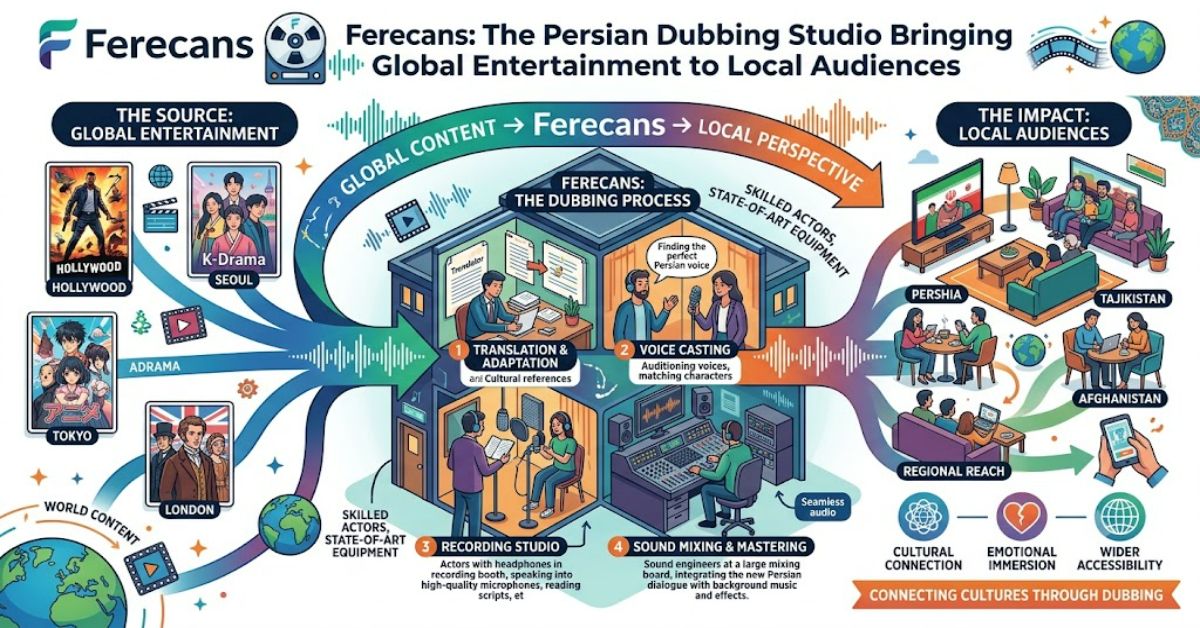
The Localisation Process
Professional dubbing is a collaborative production involving several specialists.
The typical workflow includes:
- Script translation
- Cultural adaptation
- Dialogue timing
- Voice casting
- Studio recording
- Audio mixing
- Quality review
- Final synchronisation
Each stage contributes to creating a version that feels authentic rather than simply translated.
Films and Series Associated with Ferecans
Ferecans has gained recognition for dubbing several internationally popular productions.
Examples include:
- Dune: Part Two
- Migration
- Selected international television series available through regional streaming platforms
These projects demonstrate the increasing demand for professionally produced Persian-language entertainment.
Why High-Quality Dubbing Matters
Subtitles remain popular, but dubbing offers several advantages.
These include:
- Easier viewing for younger audiences
- Improved accessibility
- Greater emotional engagement
- Natural dialogue flow
- Better family viewing experience
For many viewers, a well-produced dub creates a more immersive experience than reading subtitles throughout a film.
Comparison: Dubbing vs Subtitles
| Feature | Professional Dubbing | Subtitles |
| Language | Fully localised audio | Original audio retained |
| Accessibility | Excellent for children | Requires reading |
| Viewing Experience | More immersive | Original performances preserved |
| Production Cost | Higher | Lower |
| Audience Preference | Strong among family viewers | Popular with language learners |
Both methods have advantages, and viewer preference often depends on personal choice.
The Technology Behind Modern Dubbing
Modern dubbing studios rely on professional recording equipment and digital editing software.
Key production tools include:
- Digital audio workstations
- Noise reduction software
- Lip-sync editing tools
- Multi-track recording systems
- Audio mastering technology
These technologies enable studios to produce polished soundtracks that closely match the original production.
Streaming Platforms and Localisation
The growth of streaming platforms has significantly increased demand for localised content.
Persian-speaking audiences now have access to a broader range of international films than ever before.
Studios such as Ferecans contribute by preparing dubbed versions suitable for digital distribution, helping streaming services reach wider regional audiences.
Structured Insight Table
| Production Stage | Purpose |
| Translation | Convert dialogue accurately |
| Cultural Adaptation | Ensure expressions feel natural |
| Voice Casting | Match character personalities |
| Recording | Capture high-quality performances |
| Audio Mixing | Blend voices with soundtrack |
| Quality Control | Verify synchronisation and clarity |
Challenges in Persian Dubbing
Professional localisation involves more than translating words.
Studios frequently address challenges such as:
- Lip synchronisation
- Cultural references
- Humour adaptation
- Emotional consistency
- Technical audio quality
Successfully balancing these elements requires experienced translators, directors, and voice actors working together throughout production.
Industry Impact
Persian dubbing continues to support the wider entertainment industry by making international productions more accessible.
Its benefits include:
- Expanded audience reach
- Greater accessibility
- Improved viewer engagement
- Support for regional streaming services
- Opportunities for voice actors and audio professionals
As international entertainment becomes increasingly global, localisation remains an essential part of content distribution.
The Future of Ferecans in 2027
Demand for multilingual entertainment is expected to continue growing through 2027.
Streaming services are investing heavily in localisation as they expand into new regions.
Studios specialising in Persian dubbing may increasingly incorporate AI-assisted translation tools during script preparation while continuing to rely on professional voice actors for emotional authenticity. Human performance remains difficult to replace when delivering nuanced dialogue and believable character interactions.
As audiences continue seeking high-quality localised entertainment, studios that combine technical excellence with cultural understanding are likely to remain valuable partners for distributors and streaming platforms.
Key Takeaways
- Ferecans is recognised for producing Persian-language dubs of international films and television series.
- Professional dubbing involves translation, adaptation, recording, and audio engineering.
- Localisation improves accessibility for Persian-speaking audiences.
- Streaming platforms have increased demand for professionally dubbed productions.
- Voice acting remains a critical component of successful localisation.
- High-quality dubbing enhances viewer engagement while preserving the intent of the original production.
Conclusion
Ferecans represents the growing importance of professional localisation within today’s global entertainment industry. By producing Persian-language dubs for internationally recognised films and television series, the studio helps bridge linguistic barriers while preserving the emotional depth of original productions. Successful dubbing requires far more than direct translation; it combines skilled voice acting, careful cultural adaptation, technical precision, and detailed quality control. As streaming services continue expanding their international libraries, professional localisation studios such as Ferecans are expected to play an increasingly important role in making global entertainment accessible to Persian-speaking audiences.
Frequently Asked Questions
What is Ferecans?
Ferecans is a Persian dubbing studio known for producing localised Persian audio tracks for international films and television series.
Which films has Ferecans worked on?
The studio is recognised for Persian dubbing projects including Dune: Part Two, Migration, and other internationally distributed productions.
Why is professional dubbing important?
Professional dubbing improves accessibility, allows viewers to enjoy content without reading subtitles, and creates a more immersive entertainment experience.
Does Ferecans create original films?
Ferecans is primarily known for localising existing international productions rather than producing original films.
How does Persian dubbing differ from subtitles?
Dubbing replaces the original spoken dialogue with Persian voice performances, while subtitles retain the original audio and display translated text on screen.