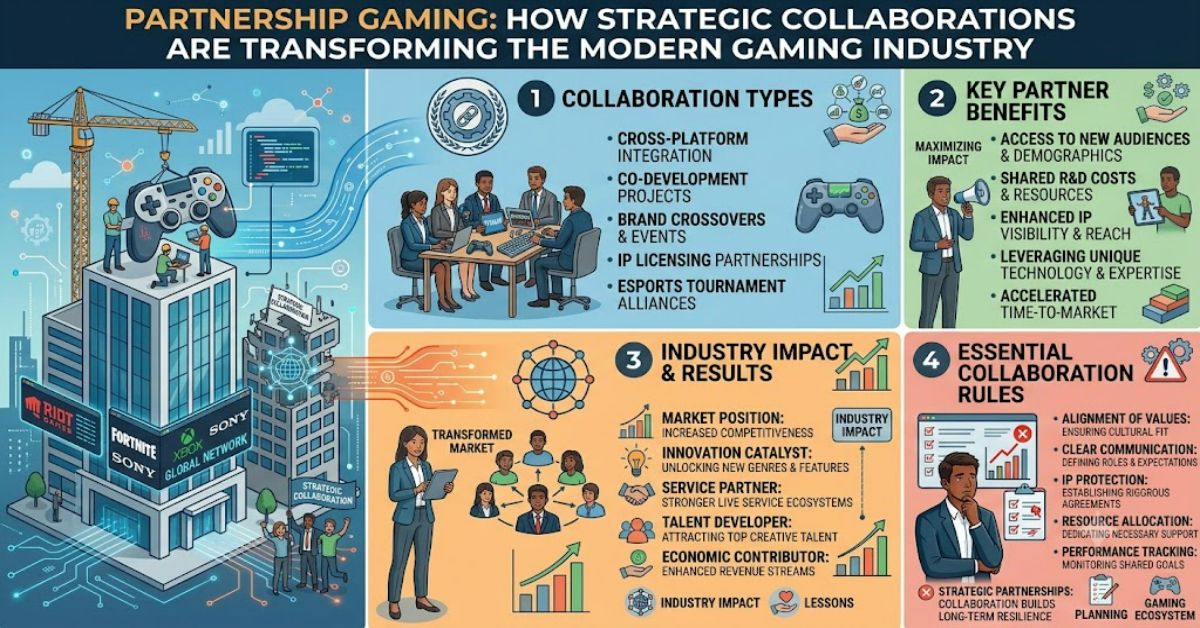
Partnership gaming refers to collaborative strategies where game developers, brands, content creators, and competitive gaming organisations work together to reach wider audiences and improve player experiences. These collaborations can include branded in-game events, esports sponsorships, creator-led campaigns, exclusive digital items, and cross-platform promotions.
The gaming industry has moved far beyond selling standalone software. Modern games operate as digital ecosystems where communities, influencers, advertisers, and entertainment companies interact continuously. This shift has created opportunities for organisations outside traditional gaming to participate through carefully designed partnerships.
Examples range from fashion brands creating virtual clothing collections inside games to global companies sponsoring esports tournaments watched by millions of fans. These activities demonstrate how gaming has become a valuable communication channel rather than simply a form of entertainment.
Research from the Entertainment Software Association has consistently shown that gaming audiences include diverse age groups and demographics, making games attractive environments for brand engagement. Meanwhile, esports growth has encouraged companies to invest in sponsorships similar to traditional sports marketing.
However, not every collaboration succeeds. Players are highly sensitive to partnerships that interrupt gameplay, damage community trust, or prioritise advertising over enjoyment. The strongest examples are built around shared values, creative integration, and genuine benefits for players.
This article examines how partnership gaming works, why companies invest in it, the risks involved, and how collaboration models may develop towards 2027.
Understanding the Growth of Partnership Gaming
The modern gaming economy is built around engagement rather than one-time purchases. Free-to-play models, live-service games, and online communities have created environments where players return regularly for new content.
Partnership gaming takes advantage of these ongoing relationships. Instead of treating players as passive consumers, companies collaborate with communities by introducing experiences that feel connected to the game world.
A successful partnership usually combines three elements:
- Audience access: Brands gain exposure to highly engaged gaming communities.
- Creative integration: Developers introduce partnerships through gameplay features, events, or digital products.
- Community value: Players receive meaningful rewards, entertainment, or new experiences.
The model has become particularly important because traditional advertising channels often struggle to capture younger digital audiences. Gaming environments provide interactive experiences where users spend significant amounts of time.
Major Forms of Gaming Partnerships
Gaming collaborations appear in several different forms depending on business objectives and audience expectations.
| Partnership Type | Example Activity | Primary Goal |
| Brand integration | Cosmetic items, virtual products, themed events | Increase brand visibility |
| Esports sponsorship | Tournament sponsorship and team partnerships | Reach competitive gaming audiences |
| Creator collaboration | Streamer campaigns and community events | Build trust through influencers |
| Cross-media partnerships | Films, music, and gaming collaborations | Expand entertainment ecosystems |
| Technology partnerships | Hardware or platform integrations | Improve player experience |
These models demonstrate that gaming partnerships are no longer limited to advertising placements. They increasingly involve creative development, community management, and shared ownership of experiences.
How Brands Use Gaming Communities for Engagement
Gaming communities are valuable because they are built around participation. Unlike traditional media audiences, players actively communicate, create content, and influence trends.
A brand entering a gaming environment must understand these community dynamics. A poorly designed campaign can quickly receive negative feedback from players who view it as intrusive.
For example, collaborations involving limited-edition digital items often perform well because they provide players with optional content. Cosmetic rewards, character skins, and customisation features allow brands to appear within games without affecting competitive balance.
This approach has been widely used by major titles such as Fortnite, which has hosted collaborations involving entertainment franchises, musicians, and consumer brands.
The key lesson is that players generally respond better when partnerships enhance identity and creativity rather than simply displaying advertisements.
The Role of Esports in Partnership Gaming
Esports has become one of the strongest drivers of commercial collaboration. Competitive gaming organisations now operate similarly to traditional sports teams, requiring sponsorship agreements, media partnerships, and merchandise strategies.
Companies invest in esports because tournaments provide measurable audience engagement. Viewers do not only watch matches; they follow players, teams, and communities.
| Area | Traditional Sports Sponsorship | Gaming Partnership Model |
| Audience interaction | Mostly viewing-based | Interactive communities |
| Content cycle | Scheduled events | Continuous digital engagement |
| Merchandise | Physical products | Physical and digital goods |
| Fan participation | Limited | User-generated content and streaming |
The difference is important because gaming partnerships often continue long after a single event. A sponsored tournament may generate clips, livestream discussions, social media content, and community conversations for weeks.
Strategic Benefits for Developers and Publishers
For game developers, partnerships can provide financial and creative advantages.
Additional Revenue Opportunities
Live-service games require constant investment in updates, servers, security, and content production. Partnerships can provide additional income through sponsorship deals, premium digital items, and promotional events.
Audience Expansion
A collaboration with a major brand or creator can introduce a game to audiences who may not have discovered it otherwise.
For example, a musician collaborating with a game studio can bring fans from the music industry into gaming communities.
Longer Player Retention
Fresh partnership content can encourage players to return. Seasonal events and limited-time collaborations create urgency while maintaining engagement.
However, developers must balance commercial goals with player expectations. Excessive monetisation can create frustration, especially when players believe partnerships are prioritised over gameplay improvements.
Risks and Challenges of Gaming Collaborations
While partnership gaming creates opportunities, it also introduces several risks.
Loss of Authenticity
Gaming communities often value independence and creativity. A partnership that feels forced may damage both the game and the brand involved.
Players frequently evaluate whether a collaboration contributes something meaningful or simply represents paid promotion.
Competitive Fairness Concerns
Partnerships involving gameplay advantages can create controversy. Competitive games must ensure that sponsored content does not influence balance.
Cosmetic rewards are generally safer because they allow commercial participation without changing player performance.
Data and Privacy Issues
Gaming platforms collect extensive behavioural data, including play patterns, purchasing activity, and engagement metrics.
Companies involved in partnerships must consider privacy regulations such as the UK General Data Protection Regulation (UK GDPR) and ensure that player information is handled responsibly.
The Economic Impact of Gaming Partnerships
The commercial value of gaming collaborations has increased alongside the wider gaming economy.
According to industry analysis from organisations including Newzoo, global gaming revenue has reached hundreds of billions of US dollars, making the sector one of the largest entertainment markets worldwide.
| Market Factor | Partnership Impact |
| Growing player base | More potential customers |
| Streaming platforms | Increased visibility |
| Digital purchases | New monetisation opportunities |
| Esports growth | Sponsorship expansion |
| Creator economy | Community-driven promotion |
One important insight is that gaming partnerships increasingly function as community investments rather than simple advertising expenses. Companies that understand player culture can create long-term brand relationships.
The Future of Partnership Gaming in 2027
By 2027, partnership gaming is likely to become more personalised, data-driven, and integrated into wider entertainment ecosystems.
Artificial intelligence tools may help developers create more targeted partnership experiences by analysing player preferences and behaviour patterns. Instead of offering identical promotional content to everyone, games could provide customised events based on individual interests.
Regulatory attention will also increase. Governments and organisations are examining digital advertising practices, particularly around younger audiences. Future partnerships will need stronger transparency standards and responsible marketing approaches.
Another expected development is the growth of virtual economies. Digital ownership, user-generated content, and creator marketplaces may create additional opportunities for brands to collaborate directly with communities.
However, growth will depend on maintaining trust. Players remain the most important stakeholders, and partnerships that ignore community expectations are unlikely to succeed.
Key Takeaways
- Partnership gaming has developed from simple sponsorships into complex collaborations involving brands, creators, developers, and esports organisations.
- Authentic integration is more valuable than visible advertising placement.
- Esports provides brands with highly engaged audiences and long-term community interaction.
- Digital items and virtual experiences are becoming central partnership tools.
- Privacy, fairness, and player trust are major considerations for future collaborations.
- Data-driven personalisation will shape gaming partnerships towards 2027.
Conclusion
Partnership gaming represents a significant shift in how companies approach digital audiences. Games are no longer isolated entertainment products; they are communities where brands, creators, and players interact continuously.
The strongest partnerships succeed because they respect gaming culture and provide genuine value. Whether through creative events, esports sponsorships, or digital products, collaboration works best when players feel included rather than targeted.
Future growth will depend on balancing commercial objectives with community expectations. Developers and brands that focus on authenticity, transparency, and meaningful experiences will be better positioned to build lasting relationships within gaming ecosystems.
As the industry moves towards 2027, partnership strategies will continue evolving, but the central principle will remain unchanged: successful collaborations must serve both businesses and the communities that make games thrive.
FAQ
What is partnership gaming?
Partnership gaming describes collaborations between game developers, brands, creators, and esports organisations designed to improve engagement, expand audiences, and create new commercial opportunities.
Why do brands invest in gaming partnerships?
Brands invest because gaming communities offer highly engaged audiences and interactive experiences that traditional advertising methods often cannot provide.
How do esports teams benefit from partnerships?
Esports teams use partnerships for financial support, improved visibility, equipment agreements, and opportunities to expand their communities.
Are gaming partnerships good for players?
They can be beneficial when partnerships provide enjoyable content, rewards, or new experiences without negatively affecting gameplay balance.
What are examples of gaming collaboration strategies?
Common strategies include branded in-game events, creator campaigns, esports sponsorships, virtual merchandise, and cross-media entertainment projects.
Will partnership gaming continue growing?
The sector is expected to expand as gaming audiences increase, digital economies develop, and brands search for new interactive marketing channels.
Methodology
This article was prepared using publicly available industry research, gaming market analysis, esports reports, and regulatory information relating to digital advertising and consumer protection.
Sources were reviewed from recognised industry organisations and market analysts. The analysis focuses on commercial strategy, community impact, and documented partnership models.
Limitations include the difficulty of measuring private partnership agreements, as many commercial deals do not disclose financial terms publicly. Future market predictions are based on current industry trends rather than guaranteed outcomes.
This article was drafted with AI assistance and reviewed for accuracy, structure, and editorial quality before publication.
References (APA Format)
Entertainment Software Association. (2024). 2024 Essential Facts About the U.S. Video Game Industry. ESA.
Newzoo. (2024). Global Games Market Report 2024. Newzoo.
Ofcom. (2024). Online Nation Report 2024. Office of Communications.
Information Commissioner’s Office. (2024). UK GDPR guidance and accountability requirements. ICO.
Statista. (2024). Video games market revenue worldwide. Statista Research Department.
Top of Form
Bottom of Form