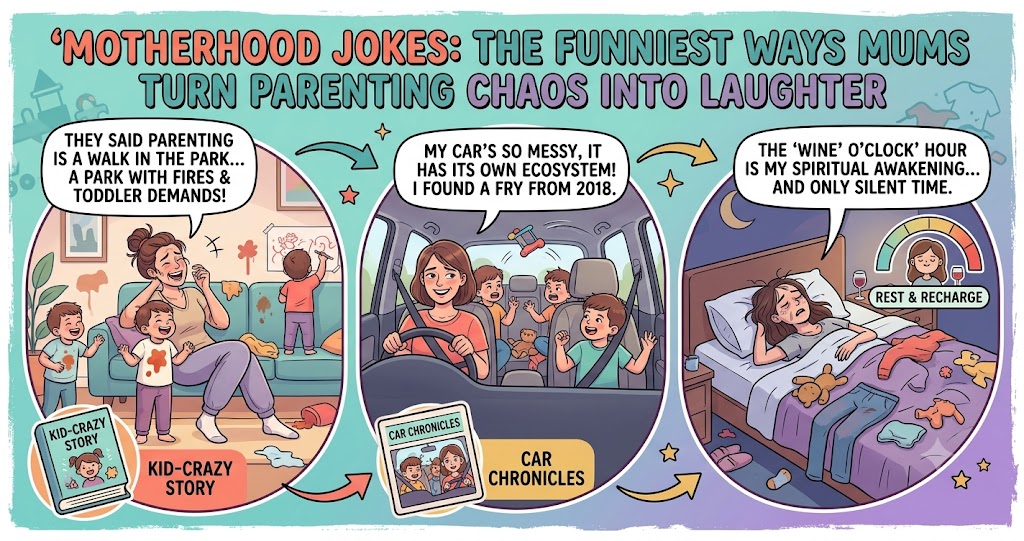
Motherhood jokes have become one of the most relatable forms of family humour because they capture the beautiful mess of raising children. From clever puns about nappies and school runs to honest observations about exhaustion and household chaos, these jokes turn ordinary parenting moments into reasons to laugh.
For many mothers, humour is not simply entertainment. It is a coping mechanism that helps transform stressful situations into shared experiences. A toddler refusing bedtime, a kitchen covered in snacks, or a child asking embarrassing questions in public can become a funny story rather than just another difficult moment.
Modern parenting culture has helped this type of comedy grow through social media platforms, parenting communities, and digital creators. In the UK, where conversations around work-life balance, childcare costs, and family pressures remain important social topics, humour provides a way for parents to discuss challenges without losing optimism.
The popularity of motherhood jokes also shows how comedy changes with society. Today’s mums are not only laughing about traditional parenting themes; they are discussing mental load, identity, relationships, and the realities of modern family life.
Why Motherhood Humour Connects With So Many Parents
Parenting creates countless situations that are difficult to explain unless someone has experienced them. This shared understanding is why mum humour has become such a powerful cultural expression.
A simple joke about a child interrupting a phone call or a parent drinking cold coffee after forgetting it for an hour can immediately connect with thousands of people.
Common themes include:
| Theme | Example of Parenting Reality | Why It Creates Humour |
| Sleep deprivation | Waking multiple times at night | Parents recognise the struggle |
| Toddler behaviour | Unexpected questions and tantrums | Children’s honesty creates funny moments |
| Household chaos | Toys everywhere and endless cleaning | Turns frustration into laughter |
| School routines | Morning rush and forgotten items | Reflects daily family pressure |
The appeal comes from recognition. Good parenting comedy does not pretend everything is perfect; it celebrates the imperfect moments.
The Different Types of Motherhood Jokes
Mother-focused comedy covers a wide range of styles, from gentle jokes to completely unfiltered observations.
Clever Parenting Puns
Puns are popular because they are easy to share and often suitable for family audiences.
Examples include jokes about:
- “Mum-nesia” — forgetting why you walked into a room
- Parenting being a “full-time job with no lunch break”
- Coffee becoming a survival tool rather than a drink
These jokes rely on wordplay while highlighting familiar experiences.
Unfiltered Reality-Based Humour
Some of the most popular jokes come from honest discussions about parenting difficulties. They may focus on:
- Never having personal space
- Children creating mess immediately after cleaning
- The difference between pre-child and post-child lifestyles
This style has grown because many parents appreciate authenticity over unrealistic images of perfect family life.
Humour as a Parenting Coping Tool
Research into positive psychology suggests that humour can support emotional wellbeing by helping people reframe stressful experiences.
A mother dealing with repeated interruptions may not be able to remove the challenge, but finding something funny within the situation can change the emotional response.
The practical benefits include:
| Benefit | Impact |
| Stress reduction | Helps parents emotionally reset |
| Social connection | Creates shared conversations among mums |
| Perspective building | Makes difficult moments feel temporary |
| Family bonding | Encourages positive memories |
However, humour also requires balance. Jokes that mock children excessively or dismiss genuine parenting struggles can create negative conversations. The strongest examples focus on shared experiences rather than criticism.
The Cultural Impact of Mum Comedy
Motherhood jokes have become part of wider discussions about modern parenting. Online communities have allowed mothers to share experiences that were previously discussed privately.
Platforms such as Instagram, TikTok, and parenting forums have created spaces where comedians and everyday parents contribute to the conversation.
A significant shift has occurred: mothers are no longer only expected to present an idealised image of family life. Many now openly discuss exhaustion, identity changes, and emotional challenges through humour.
This has helped normalise conversations about parental pressure while creating supportive communities.
Comparison: Traditional Parenting Humour vs Modern Mum Comedy
| Traditional Parenting Humour | Modern Motherhood Comedy |
| Focused mainly on family roles | Includes identity, careers, and emotional wellbeing |
| Often based on stereotypes | More experience-driven and personal |
| Mostly shared privately | Widely distributed through digital platforms |
| Limited audience reach | Global parenting communities |
The change reflects broader cultural movement towards honest storytelling and diverse parenting experiences.
Three Original Insights About Motherhood Jokes
1. Relatability Matters More Than Professional Comedy Skills
Many successful parenting humour creators are not traditional comedians. Their popularity often comes from describing situations that audiences immediately recognise.
The emotional connection frequently matters more than perfect delivery.
2. Short-Form Content Has Changed Parenting Comedy
The rise of short videos and social media captions has transformed how jokes are created and consumed. Parents often engage with quick, recognisable moments rather than longer comedy routines.
3. Humour Helps Document Family Memories
Many jokes begin as everyday observations but later become family stories. Digital humour has become a modern record of childhood experiences and parenting milestones.
The Future of Motherhood Jokes in 2027
By 2027, motherhood humour is likely to become even more personalised through digital communities and creator-led platforms.
Artificial intelligence tools, video editing technology, and social media recommendation systems may influence how parenting content is produced and distributed. However, authenticity will remain the strongest factor behind successful humour.
Future trends are likely to include:
- More diverse representations of motherhood
- Greater discussion of parenting challenges
- Increased focus on balanced family roles
- More collaboration between parenting experts and comedy creators
The biggest challenge will be maintaining trust. Audiences increasingly value genuine experiences over overly polished content.
Key Takeaways
- Motherhood jokes turn everyday parenting challenges into shared moments of laughter.
- Humour helps many parents manage stress and build connections.
- Authentic experiences are driving modern parenting comedy.
- Digital platforms have expanded the reach of mum-focused humour.
- Future trends will focus on inclusion, honesty, and emotional connection.
Conclusion
Motherhood jokes represent more than simple entertainment. They capture the reality of family life, showing how parents find joy during challenging moments. From sleepless nights to unexpected childhood conversations, humour provides a language for sharing experiences.
The strongest parenting comedy works because it feels genuine. It does not ignore difficulties but transforms them into moments of connection and understanding.
As family structures and parenting expectations continue to change, humour will remain an important way for mothers to express identity, build communities, and celebrate the unpredictable journey of raising children.
Frequently Asked Questions
What are motherhood jokes usually about?
Motherhood jokes usually focus on everyday parenting experiences such as sleepless nights, children’s behaviour, household responsibilities, and the challenges of balancing family life.
Why are mum jokes so popular online?
They are popular because many parents recognise the situations being described. Social media allows these shared experiences to reach large parenting communities.
Can humour help mothers manage stress?
Yes. Positive humour can help people view stressful situations differently and create emotional distance from everyday challenges.
Are motherhood jokes suitable for everyone?
Most are designed for parents and family audiences, but the best jokes avoid insulting children or dismissing serious parenting concerns.
How has social media changed parenting comedy?
Social media has allowed ordinary parents and creators to share short, relatable jokes instantly with audiences worldwide.
Methodology
This article was developed using research into parenting culture, humour studies, and documented trends in digital communities. Sources included family research organisations, psychological studies on humour, and public discussions around modern parenting.
The analysis focuses on the cultural role of humour rather than claiming that every parent experiences the same challenges. Parenting experiences vary significantly across families, cultures, and individual circumstances.
References (APA Style)
Martin, R. A. (2022). The Psychology of Humor: An Integrative Approach. Academic research on humour and wellbeing.
Office for National Statistics. (2023). Families and households in the UK. UK Government.
NHS. (2023). Mental wellbeing and coping strategies. National Health Service.
UNICEF. (2023). Parenting and family wellbeing reports. United Nations Children’s Fund.