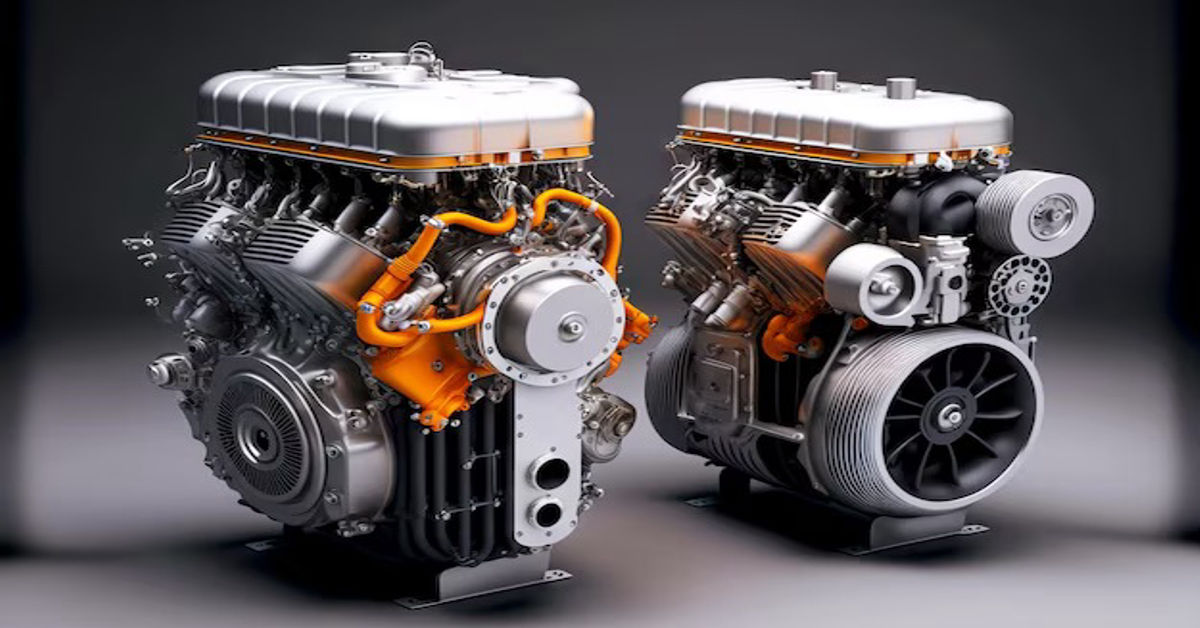
I see the Ford 5.0 vs. 6.0 debate as more than a comparison between two engine displacements. These engines were developed for different trucks, different periods, and very different types of drivers. One emphasizes responsive gasoline V8 performance, while the other delivers the low-speed diesel torque associated with older Super Duty work trucks.
The 5.0-liter Coyote is a naturally aspirated gasoline V8 found in vehicles such as the Ford F-150 and Mustang. In current F-150 form, it combines high-revving power, modern electronic controls, and everyday drivability. It can commute comfortably, tow substantial recreational loads, and support an extensive performance aftermarket.
The 6.0-liter Power Stroke is a turbocharged diesel associated primarily with 2003 to 2007 Super Duty pickups, along with certain Excursion and E-Series applications. It produces less peak horsepower than the latest truck version of the 5.0, but it generates considerably more torque at a much lower engine speed. Ford’s 2006 Super Duty specifications rated it at 325 horsepower and 570 lb-ft of torque.
That difference explains why choosing between these engines is not as simple as selecting the larger number. A modern 5.0 F-150 may be the better match for daily transportation, recreational towing, and predictable ownership. A well-maintained 6.0 Super Duty may be more appropriate for a buyer who needs a heavier chassis, diesel pulling characteristics, and the ability to handle substantial fifth-wheel or work-trailer loads.
In my view, the smartest decision begins with the truck’s intended workload. Horsepower, torque, maintenance history, payload, axle ratio, trailer type, and repair risk all matter. Once we examine those factors together, the right engine usually becomes much easier to identify.
Key Takeaways
- The Ford 5.0 is a naturally aspirated gasoline V8 that prioritizes horsepower, responsiveness, broad availability, and comparatively straightforward maintenance.
- The Ford 6.0 Power Stroke is a turbocharged diesel built around strong low-rpm torque and Super Duty towing capability.
- A current 5.0 F-150 produces 400 horsepower and 410 lb-ft of torque, while a 2006 6.0 Power Stroke was rated at 325 horsepower and 570 lb-ft.
- The 6.0 is attached to a heavier-duty truck platform, so its towing advantage is not created by engine torque alone.
- The 5.0 generally presents lower mechanical complexity, but certain model years have documented service concerns that should still be investigated.
- The 6.0 can provide strong performance, but maintenance records, diagnostic results, cooling-system condition, and modification quality are critical.
- Neither engine has one universal towing or fuel-economy figure. Cab style, axle ratio, drivetrain, model year, options, passengers, and cargo can change the result substantially.
What the Ford 5.0 vs. 6.0 Comparison Really Means
A proper comparison must acknowledge that the 5.0 and 6.0 usually belong to different truck classes. The 5.0 is most commonly discussed as an F-150 engine, while the 6.0 Power Stroke is strongly associated with F-250 and F-350 Super Duty models. This means we are comparing more than gasoline against diesel. We are also comparing a light-duty pickup with a heavy-duty platform.
That distinction affects frame strength, suspension capacity, brakes, axle ratings, transmission selection, tires, cooling equipment, curb weight, payload, and trailer ratings. A 6.0 Super Duty may tow more than a 5.0 F-150, but the diesel engine is only one component of that capability.
What Is the Ford 5.0 Coyote Engine?
The 5.0 Coyote is a gasoline V8 with dual overhead camshafts, four valves per cylinder, and variable camshaft timing. Modern versions use sophisticated fuel and ignition management to deliver strong output without relying on a turbocharger.
The engine is known for building power as engine speed rises. That characteristic gives it responsive acceleration when passing, merging, or climbing a grade. It also creates the familiar sound and linear throttle response that many V8 buyers prefer.
In the 2026 F-150, Ford rates the 5.0-liter Ti-VCT V8 at 400 horsepower at 6,250 rpm and 410 lb-ft of torque at 4,250 rpm. Ford lists an available maximum towing figure of 12,800 pounds for the properly configured 5.0 truck. The qualifying truck requires specific towing equipment and axle selection, so that number should never be applied to every 5.0 F-150.
The 5.0 is suitable for buyers who want a truck that can handle commuting, family transportation, recreational towing, hauling, off-road use, and occasional performance modifications. It provides substantial capability without the fuel-system, turbocharger, and high-pressure oil systems found on the 6.0 diesel.
What Is the Ford 6.0 Power Stroke Engine?
The 6.0 Power Stroke is a turbocharged diesel V8 with a cast-iron block, cast-iron cylinder heads, four valves per cylinder, direct electro-hydraulic fuel injection, and a variable-response turbocharger. Ford’s 2006 specifications listed an 18.0:1 compression ratio, 325 horsepower at 3,300 rpm, and 570 lb-ft of torque at 2,000 rpm.
The low torque peak is important. A diesel does not need to rev like a gasoline engine to generate pulling force. When starting a heavy trailer, accelerating up a grade, or maintaining speed under load, the 6.0 can deliver strong torque while operating at a relatively low engine speed.
Ford used the 6.0 in 2003 to 2007 F-Super Duty trucks, 2003 to 2005 Excursions, and multiple E-Series model years. Ford service bulletins addressing the engine list these applications directly.
The 6.0 appeals to contractors, equipment haulers, agricultural users, commercial operators, fifth-wheel owners, and diesel enthusiasts. However, buyers must evaluate the entire truck, not simply assume that every 6.0 is ready for severe towing.
Ford 5.0 vs. 6.0 Performance Characteristics
The 5.0 wins the peak-horsepower comparison in its current F-150 form, while the 6.0 produces considerably more torque at a much lower rpm. Each result suits a different driving environment.
Horsepower and Acceleration
Horsepower affects how quickly an engine can continue doing work as speed increases. The 5.0’s 400-horsepower rating gives a modern F-150 strong acceleration, especially when the transmission selects a lower gear and allows the engine to rev.
During unloaded driving, the 5.0 usually feels quicker and more responsive. Its lighter truck platform also contributes to that impression. A driver merging onto a highway or passing slower traffic may prefer the immediate, predictable response of the gasoline V8.
The 6.0’s 325-horsepower rating is lower, but peak horsepower does not tell the complete story. The diesel was designed for a heavier truck and places greater emphasis on torque delivery. Its performance feels less like a high-revving gasoline engine and more like a sustained push from low engine speeds.
Torque and Load Management
Torque becomes especially valuable when moving weight from a stop or maintaining momentum under load. The 6.0 reaches its 570 lb-ft peak at 2,000 rpm, while the current 5.0 reaches 410 lb-ft at 4,250 rpm.
Consider a hypothetical landscaping company pulling a dump trailer filled with equipment. The 6.0’s low-rpm torque can reduce the need to rev the engine aggressively when starting on an incline. The 5.0 can still move a substantial trailer, but it may use lower transmission gears and higher engine speeds to produce the required power.
Higher rpm under load is not automatically harmful. Gasoline engines are designed to operate within their intended rev range. Drivers sometimes interpret a revving 5.0 as struggling when it is simply using its horsepower curve and transmission gearing as designed.
The Role of Transmission and Axle Ratio
Engine output reaches the ground through the transmission, transfer case, driveshaft, axle ratio, and tires. Two trucks with the same engine can therefore perform differently.
A numerically higher axle ratio, such as 3.73 instead of 3.31, generally improves leverage for acceleration and towing. The tradeoff may include higher engine speed during certain driving conditions and potentially greater fuel consumption.
Current 5.0 F-150 trucks use a 10-speed automatic transmission, giving the engine a broad range of gear ratios. The 2006 6.0 Super Duty was available with Ford’s TorqShift five-speed automatic or, in some configurations, a manual transmission. Ford’s towing charts show that transmission, axle ratio, cab, drivetrain, and rear-wheel configuration all changed maximum trailer ratings.
Ford 5.0 vs. 6.0 Specification Comparison
The following table uses a current 2026 F-150 5.0 as the gasoline reference and a 2006 Super Duty 6.0 as the diesel reference. These specifications should not be treated as universal values for every production year.
| Specification | 2026 Ford 5.0 F-150 | 2006 Ford 6.0 Power Stroke |
|---|---|---|
| Fuel type | Gasoline | Diesel |
| Engine design | Naturally aspirated V8 | Turbocharged V8 |
| Displacement | 5.0 liters | 6.0 liters |
| Valvetrain | DOHC, four valves per cylinder | OHV, four valves per cylinder |
| Horsepower | 400 hp at 6,250 rpm | 325 hp at 3,300 rpm |
| Torque | 410 lb-ft at 4,250 rpm | 570 lb-ft at 2,000 rpm |
| Typical truck class | Light-duty F-150 | Heavy-duty Super Duty |
| Transmission reference | 10-speed automatic | Five-speed automatic or manual, depending on configuration |
| Maximum towing reference | Up to 12,800 lbs when properly configured | Up to 15,000 lbs conventional and 19,200 lbs fifth-wheel in qualifying 2006 configurations |
| Modification complexity | Moderate | High |
Ford’s current and historical documents confirm that the engines achieve their power in very different ways. The 5.0 produces more horsepower and reaches its torque peak at a higher engine speed. The 6.0 generates more torque much earlier, then relies on the Super Duty chassis and towing hardware to manage heavier trailers.
Ford also offers an important warning against combining maximum figures as though one truck can achieve all of them simultaneously:
“Horsepower, torque, payload and towing are independent attributes and may not be achieved simultaneously.”
Ford 2026 F-150 Towing Information
I believe this is one of the most useful statements in the entire comparison. Maximum payload and maximum towing figures may require different vehicle configurations. A buyer should therefore use the specific truck’s certification labels, axle information, towing guide, and equipment list rather than relying on a general engine advertisement.
Towing and Hauling Capabilities
The 6.0 Power Stroke has an advantage when the comparison involves properly equipped Super Duty trucks and genuinely heavy loads. Ford’s 2006 towing guide listed up to 15,000 pounds of conventional towing and up to 19,200 pounds of fifth-wheel towing for qualifying F-350 configurations equipped with the optional TowBoss package.
The 2026 F-150 5.0 can still tow up to 12,800 pounds in a qualifying configuration. That is enough for many boats, utility trailers, enclosed car trailers, equipment trailers, and travel trailers. The challenge is not merely whether the engine can pull the load. Payload, tongue weight, passengers, bed cargo, hitch equipment, and rear-axle capacity must also remain within their limits.
Recreational Towing Example
Imagine a family towing an 8,000-pound travel trailer several times each year. The trailer applies about 10 to 15 percent of its loaded weight to the hitch, depending on its design and loading. That could place roughly 800 to 1,200 pounds on the truck before passengers, tools, coolers, or bed cargo are included.
A properly configured 5.0 F-150 may handle this scenario well, provided the truck has sufficient payload and the trailer is loaded correctly. The gasoline engine may rev on grades, but the 10-speed transmission helps keep it within a productive power range.
A 6.0 Super Duty would provide a heavier chassis and stronger low-speed torque. It may feel more settled with the same trailer, but the buyer would also accept an older vehicle, greater mechanical complexity, and potentially higher repair exposure.
Commercial Towing Example
Now consider a contractor towing a 14,000-pound equipment trailer several days each week. The load places sustained stress on the engine, transmission, cooling system, brakes, tires, hitch, and suspension.
This scenario is closer to the 6.0 Super Duty’s intended environment. A properly maintained diesel F-350 with the correct axle, hitch, and weight ratings offers more suitable heavy-duty hardware than an F-150. Even though a current 5.0 F-150 is powerful, operating near or beyond its ratings is not an acceptable substitute for choosing the correct truck class.
Payload Can Limit Towing Before Horsepower Does
Truck buyers often focus on the trailer’s advertised dry weight. In practice, the truck’s payload rating may become the limiting factor first.
Payload includes occupants, cargo, accessories, hitch components, and trailer tongue or king-pin weight. A fifth-wheel trailer may transfer 15 to 25 percent of its loaded weight into the truck bed. Ford’s historical towing guide specifically instructed owners to ensure that king-pin weight, passengers, and cargo did not cause the vehicle to exceed rear-axle or gross vehicle weight ratings.
For that reason, I recommend using the yellow payload label on the actual truck rather than an online maximum. Two visually identical trucks can have different capacities because of trim, cab, bed, drivetrain, wheels, accessories, or optional equipment.
Fuel Economy and Everyday Driving
Fuel economy is one of the hardest areas to compare fairly. The 5.0 normally appears in an F-150, while 6.0-powered F-250 and F-350 trucks fall into heavier vehicle classifications. The U.S. Department of Energy notes that the EPA classifies vehicles above approximately 8,500 pounds GVWR as heavy duty, which prevents a simple label-to-label comparison with a light-duty F-150.
Real fuel use also depends on truck weight, axle ratio, tires, modifications, speed, terrain, trailer aerodynamics, temperature, idle time, and maintenance condition. A lightly loaded diesel cruising steadily may return respectable mileage, while the same truck pulling a tall fifth-wheel into a headwind can consume far more fuel.
Where the 5.0 Makes Sense
For commuting and mixed personal use, the 5.0 usually offers the simpler ownership pattern. Gasoline is widely available, warm-up behavior is familiar, and short journeys are less demanding on the powertrain than they can be for an older diesel.
The 5.0 also allows a buyer to purchase a newer truck with modern safety equipment, quieter operation, updated electronics, and a current transmission. Those factors may matter more to a daily driver than the 6.0’s additional torque.
Where the 6.0 Makes Sense
The 6.0 becomes more persuasive when the truck regularly performs work that benefits from a diesel’s torque curve and a Super Duty chassis. Long highway trips under load are more aligned with its purpose than repeated short journeys with little operating temperature.
Diesel fuel consumption should not be considered in isolation. Fuel filters, greater oil capacity, turbocharger systems, high-pressure injection equipment, batteries, cooling-system components, and specialized labor can change total operating costs.
In my analysis, a diesel must save enough time, provide enough capability, or complete work that a lighter gasoline truck cannot perform comfortably. Buying one solely because it might use fewer gallons under certain conditions can overlook the much larger ownership picture.
Maintenance Requirements and Reliability
Neither engine is maintenance-free. The difference is that the 6.0 contains more systems that can create expensive, interrelated problems when maintenance is delayed or modifications are poorly executed.
Maintaining the Ford 5.0
A 5.0 owner must stay current on engine oil, filters, coolant, spark plugs, belts, transmission service, and other model-specific requirements. Ford’s maintenance guidance for modern vehicles uses an oil-life monitoring system, with shorter service intervals under towing, extended idling, extreme temperatures, and other severe conditions.
The engine’s naturally aspirated design eliminates diesel-specific equipment such as a turbocharger, FICM, high-pressure oil-operated injectors, dual fuel filters, and EGR cooler. This does not guarantee cheap repairs, but it reduces the number of specialized diesel systems requiring diagnosis.
Certain 5.0 model years deserve closer inspection. Ford issued Technical Service Bulletin 19-2365 for some 2018 to 2020 F-150s with the 5.0 engine that exhibited oil consumption exceeding one quart in 3,000 miles without visible leaks. Ford’s procedure included PCM reprogramming, an updated oil-level indicator, and an oil and filter change.
That bulletin does not mean every 2018 to 2020 engine has the issue. It means buyers should check the oil level, review service records, ask about oil additions, inspect for smoke or leaks, and confirm whether relevant repairs or updates were completed.
Maintaining the Ford 6.0
The 6.0 demands close attention to engine oil, fuel quality, fuel filters, cooling-system health, batteries, charging voltage, turbocharger operation, and diagnostic data.
Ford’s historical maintenance information called for 5,000-mile oil and filter changes under towing, extensive idling, dusty operation, and other severe conditions. The schedule also included replacement of both engine-mounted and frame-mounted fuel filters at specified intervals.
Ford service bulletins document several areas that 6.0 buyers should understand. TSB 10-12-6 addressed rough running, low power, hard starting, no-start conditions, injector circuit codes, and Fuel Injection Control Module concerns. The bulletin explained that low FICM supply voltage could increase operating loads and shorten FICM life.
TSB 08-26-12 addressed smoke, power loss, surging, and EGR-related trouble codes caused by excessive coking deposits. Ford identified components including the EGR valve, EGR cooler, intake manifold, exhaust back-pressure system, turbocharger, and catalytic converter as possible deposit locations.
Ford’s TSB 09-8-3 addressed coolant loss and included procedures involving the cooling system, EGR cooler, degas cap, and oil cooler. It also warned that improper cooling-system flushing could result in repeat EGR-cooler and oil-cooler failures.
These bulletins do not prove that every 6.0 will fail. They do show why an informed inspection matters. A truck that starts cleanly, maintains stable temperatures, produces correct FICM voltage, shows balanced injector operation, and has documented cooling-system care is more desirable than a truck supported only by verbal claims.
Modifications Require Extra Scrutiny
The 6.0 has a large tuning and repair aftermarket. Some modifications can improve a truck when they are engineered, installed, and documented correctly. Others can increase cylinder pressure, exhaust temperature, transmission stress, and cooling demands.
Ford’s own diesel guide included a direct warning:
“Some aftermarket products may cause severe engine and/or transmission damage.”
Ford 6.0L Power Stroke Diesel Owner’s Guide Supplement
From my perspective, this warning remains relevant when evaluating a used truck. A modified 6.0 should come with invoices, part numbers, calibration information, maintenance history, and an explanation of who performed the work. Phrases such as “fully bulletproofed” are not substitutes for documentation.
Common 6.0 Inspection Areas
A pre-purchase inspection should be performed by a technician familiar with the 6.0 platform. The following areas deserve special attention because Ford service information addresses related operating concerns:
- Cold-start and hot-start behavior
- FICM voltage and charging-system condition
- Injector contribution and balance
- Engine oil temperature and coolant temperature relationship
- Cooling-system pressure and coolant condition
- Evidence of coolant loss or venting
- EGR operation and related diagnostic codes
- Turbocharger vane movement and boost control
- Exhaust smoke under different operating conditions
- High-pressure oil-system performance
- Transmission shift quality
- Calibration or tuner history
- Quality and legality of emissions-related modifications
A generic safety inspection is not enough. The technician should scan live data, road-test the truck, inspect it both cold and fully warmed, and check for stored or recently cleared diagnostic codes.
Engine Longevity and High-Mileage Expectations
Claims that one engine automatically lasts 200,000, 250,000, or 300,000 miles are too simplistic. Mileage is an outcome, not a warranty.
A 5.0 that receives correct oil, avoids overheating, remains properly calibrated, and is not repeatedly abused can provide a long service life. A neglected 5.0 with low oil, poor-quality repairs, or unresolved overheating can fail much earlier.
The same principle applies more strongly to the 6.0. The base engine can accumulate substantial mileage, but supporting systems have a major influence on reliability. Cooling restrictions, low voltage, injector problems, excessive deposits, or poor tuning can turn a usable truck into an expensive repair project.
Hours can matter as much as mileage. A truck with 120,000 miles and thousands of idle hours may have experienced more engine operation than a highway truck showing a much higher odometer reading.
I would choose a higher-mileage truck with complete maintenance records, stable diagnostic data, and evidence of competent repairs over a lower-mileage truck with missing history and unexplained modifications.
Cost of Ownership
Purchase price represents only the first stage of ownership. Fuel, insurance, tires, registration, routine service, unexpected repairs, downtime, and resale value all influence the real cost.
Ford 5.0 Ownership Costs
A 5.0 F-150 normally uses fewer specialized service items. Oil changes require less oil than the 6.0, gasoline fuel systems are less complex, and more general repair facilities can service the engine competently.
The newer purchase price may be higher, especially for a recent low-mileage truck. However, the owner may receive a newer chassis, modern safety systems, current towing technology, and a more predictable repair pattern.
Ford 6.0 Ownership Costs
A 6.0 truck may be available at an attractive used price, but that lower entry cost can be misleading. Diesel oil changes, two fuel filters, heavy-duty tires, dual batteries, specialized diagnostics, cooling-system work, turbocharger repairs, injector repairs, and FICM replacement can increase expenses.
Labor access also matters. Certain diesel repairs require substantial disassembly, which means labor can exceed the price of the component itself.
A buyer who depends on the truck for business should also calculate downtime. A cheaper truck that sits in a repair bay during a critical project can cost more than a newer vehicle with a higher monthly payment.
Ford 5.0 vs. 6.0 Ownership Comparison
This table focuses on practical ownership rather than peak numbers.
| Ownership Factor | Ford 5.0 | Ford 6.0 Power Stroke |
|---|---|---|
| Daily commuting | Better suited for most drivers | Acceptable, but less efficient as a short-trip vehicle |
| Heavy commercial towing | Capable within F-150 limits | Better suited when paired with the correct Super Duty configuration |
| Routine maintenance cost | Generally lower | Generally higher |
| Mechanical complexity | Moderate | High |
| Diagnostic specialization | Widely serviceable | Diesel expertise strongly recommended |
| Fuel availability | Excellent | Excellent, though diesel pricing varies |
| Aftermarket support | Extensive | Extensive |
| Modification risk | Moderate | Potentially high |
| Used-vehicle age | New and used examples available | Primarily older used trucks |
| Best buyer | Personal-use or recreational truck owner | Informed heavy-duty user prepared for diesel maintenance |
| Purchase inspection | Recommended | Essential |
| Financial reserve for repairs | Moderate | Higher reserve advisable |
The central takeaway is that the 5.0 is usually the lower-risk general-purpose choice. The 6.0 can be the more capable heavy-load choice, but only when the truck’s condition, maintenance history, and configuration justify the additional complexity.
How to Choose Between the Ford 5.0 and 6.0
Step 1: Calculate the Real Trailer Weight
Use the trailer’s expected loaded weight, not its empty or shipping weight. Include water, fuel, tools, equipment, batteries, propane, cargo, and accessories.
For a work trailer, use scale tickets or realistic equipment weights. For a recreational trailer, estimate how much gear the family normally carries.
Step 2: Estimate Tongue or King-Pin Weight
Conventional trailers commonly transfer about 10 to 15 percent of loaded trailer weight to the hitch. Fifth-wheel trailers can transfer a much larger percentage into the bed.
This weight counts against the truck’s payload. Add occupants, hitch hardware, bed cargo, tools, and accessories before deciding that the truck has enough capacity.
Step 3: Check the Specific Truck’s Ratings
Inspect the door-jamb certification labels, payload label, axle rating, gross vehicle weight rating, tire capacity, and equipment codes. Confirm the axle ratio and towing package.
Do not assume that an engine automatically gives every truck the maximum advertised rating. Ford’s towing tables contain multiple ratings for the same engine because configuration changes capability.
Step 4: Consider Towing Frequency
A driver towing 6,000 pounds six weekends per year has different requirements from a contractor towing 14,000 pounds four days per week.
The occasional recreational user may appreciate the 5.0’s lower complexity during the rest of the year. The commercial operator may benefit more from the 6.0’s torque and Super Duty hardware.
Step 5: Review Maintenance Records
For a 5.0, look for regular oil changes, cooling-system service, transmission care, and documentation of any oil-consumption diagnosis.
For a 6.0, request records for oil, fuel filters, coolant, EGR-related work, oil-cooler work, injectors, FICM, turbocharger service, batteries, charging-system repairs, and tuning.
Step 6: Arrange an Independent Inspection
The seller’s preferred repair shop may know the truck, but an independent specialist gives the buyer a separate opinion.
The inspection should include a cold start, full warm-up, scan-tool data, road test, fluid inspection, leak inspection, cooling-system evaluation, transmission operation, and confirmation of modifications.
Step 7: Build a Repair Reserve
Every used truck needs a contingency fund. The reserve should be larger for an older modified diesel with incomplete records.
I would not spend the full vehicle budget on the purchase itself. Keeping money available for immediate fluids, filters, tires, batteries, brakes, or unexpected repairs can prevent a difficult first year of ownership.
Common Mistakes and Misconceptions
“The 6.0 Is Always Unreliable”
The 6.0 has documented service concerns, but individual condition varies greatly. A carefully maintained truck with correct repairs may perform better than a neglected example with fewer miles.
The mistake is treating reputation as a substitute for inspection. Reputation should encourage deeper evaluation, not an automatic verdict.
“The 5.0 Cannot Tow Serious Weight”
A properly configured current 5.0 F-150 can tow up to 12,800 pounds, which qualifies as substantial recreational and work capability.
The more accurate statement is that an F-150 may have less payload, braking capacity, suspension capacity, and heavy-duty durability than a properly equipped Super Duty. The limitation is the complete vehicle, not simply the 5.0 engine.
“A Diesel Always Saves Money”
A diesel may consume fuel efficiently under sustained load, but total ownership includes maintenance and repairs. A major diesel repair can erase years of fuel savings.
The correct comparison uses annual mileage, loaded mileage, fuel prices, maintenance costs, downtime, purchase price, and resale expectations.
“Bulletproofed Means Problem-Free”
“Bulletproofed” is an informal sales term with no universal technical definition. One seller may mean an upgraded EGR cooler, while another may mean cylinder-head studs, oil-cooler changes, updated high-pressure oil parts, and extensive supporting work.
Ask for invoices, brands, installation dates, mileage at installation, calibration details, and the name of the shop that completed the work.
“Higher Torque Automatically Means a Higher Tow Rating”
Torque helps move weight, but the tow rating also depends on chassis, brakes, axles, tires, cooling, hitch design, transmission, payload, and gross combined weight rating.
A powerful engine does not legally or safely increase the ratings printed by the manufacturer.
Expert Recommendations for Different Buyers
Choose the 5.0 for General Personal Use
I believe the 5.0 is the stronger overall choice for buyers who commute regularly, transport family members, tow recreationally, and want a familiar gasoline ownership experience.
It offers strong acceleration, a modern transmission, broad service availability, extensive parts support, and enough towing capability for many real-world trailers.
Choose the 6.0 for Heavy-Duty Work With Due Diligence
The 6.0 is more appropriate when the job genuinely calls for an F-250 or F-350 platform. Heavy equipment trailers, large fifth-wheels, commercial hauling, and frequent loaded operation can justify the diesel’s torque and Super Duty chassis.
I would only recommend purchasing one after a specialist inspection and a detailed review of maintenance and repair records.
Avoid Either Engine When the Truck Is Underrated
No engine should be used to justify an overloaded truck. When the trailer’s loaded weight, tongue weight, or cargo exceeds the vehicle’s ratings, the correct solution is a more capable truck.
Consider Newer Super Duty Alternatives
A buyer who needs diesel capability but does not specifically want the 6.0 should compare newer Super Duty engines and chassis. The purchase price will be higher, but newer trucks may provide greater towing capability, improved braking, updated transmissions, and more current technology.
The 6.0 makes the most sense when the buyer understands the platform, values its specific characteristics, and accepts the maintenance responsibility.
Conclusion
I believe the Ford 5.0 vs. 6.0 decision becomes straightforward once we stop treating it as a contest between engine sizes. The 5.0 Coyote is the better all-purpose option for most personal-use buyers. It provides strong horsepower, responsive acceleration, substantial towing capability, broad parts availability, and fewer diesel-specific systems to maintain.
The 6.0 Power Stroke serves a different purpose. Its low-rpm torque and Super Duty platform make it better suited to heavier trailers, commercial work, and demanding hauling. However, its documented FICM, EGR, cooling-system, oil-cooler, and deposit-related service concerns make inspection and maintenance history especially important.
My practical recommendation is to begin with the loaded trailer weight, payload requirement, towing frequency, and annual mileage. Then compare specific trucks rather than generic engine advertisements. Check the door labels, confirm the axle ratio and towing package, review every available service record, and arrange an independent inspection.
For daily driving and occasional towing, I would select the 5.0. For frequent heavy work, I would consider the 6.0 only when the truck is properly configured, thoroughly inspected, and supported by credible maintenance documentation.
Frequently Asked Questions
Is the Ford 5.0 Better Than the 6.0 Power Stroke?
The Ford 5.0 is better for most daily drivers, while the 6.0 Power Stroke may be better for frequent heavy towing. The 5.0 offers higher current horsepower, simpler gasoline operation, and generally lower maintenance complexity. The 6.0 delivers more low-rpm torque and comes in heavier-duty Super Duty trucks. The right answer depends on trailer weight, payload, usage frequency, service history, and the buyer’s tolerance for diesel repair costs.
Which Engine Produces More Power?
A current F-150 5.0 produces more peak horsepower, while the 6.0 Power Stroke produces more torque. Ford rates the 2026 5.0 at 400 horsepower and 410 lb-ft. The 2006 6.0 was rated at 325 horsepower and 570 lb-ft.
The 5.0’s output supports acceleration and high-rpm performance. The 6.0’s low-rpm torque is more valuable when starting or maintaining momentum with a heavy load.
Which Engine Is Better for Daily Driving?
The 5.0 is generally better for daily driving. It warms up normally during short journeys, uses widely available gasoline, produces less diesel-related noise, and can be serviced by a broader range of repair facilities.
A 6.0 can be driven daily, but an older heavy-duty diesel may cost more to maintain and may not be ideal for repeated short trips. Its advantages become more meaningful when the truck regularly tows or hauls substantial weight.
Can a Ford 5.0 Tow a Travel Trailer?
Yes, a Ford 5.0 F-150 can tow many travel trailers when the truck and trailer are properly configured. Ford lists up to 12,800 pounds of available towing for a qualifying 2026 5.0 F-150.
The actual limit may be lower. Buyers must account for tongue weight, passengers, cargo, hitch equipment, axle ratings, and the payload number printed on the specific truck’s door label.
Is the 6.0 Power Stroke Reliable?
A 6.0 Power Stroke can be reliable, but its condition and maintenance history matter greatly. Ford service bulletins document concerns involving FICM voltage, EGR-system deposits, coolant loss, oil-cooler restrictions, and related components.
A well-maintained truck with correct diagnostic readings and documented repairs may provide dependable service. A neglected or poorly modified truck can require expensive repairs soon after purchase.
Does the 6.0 Tow More Than the 5.0?
A properly equipped 6.0 Super Duty can tow more than a current 5.0 F-150 in certain configurations. Ford’s 2006 guide listed up to 15,000 pounds of conventional towing and 19,200 pounds of fifth-wheel towing for qualifying Super Duty models. The 2026 5.0 F-150 is listed at up to 12,800 pounds.
The difference reflects the complete truck platform, not just engine output.
Are Repairs More Expensive for the 6.0?
Repairs are often more expensive for the 6.0 because it uses specialized diesel equipment, including a turbocharger, electro-hydraulic injectors, FICM, dual fuel filters, EGR components, and a high-pressure oil system.
Labor may also be higher because some components require extensive disassembly. A buyer should obtain local estimates and maintain a larger repair reserve than would normally be needed for a gasoline 5.0.
Which Engine Has Better Aftermarket Support?
Both engines have extensive aftermarket support. The 5.0 benefits from its use in F-150 and Mustang applications, so owners can find intake, exhaust, tuning, internal engine, and performance parts.
The 6.0 aftermarket includes cooling-system components, turbochargers, fuel-system parts, monitoring equipment, tuning, and reliability-related upgrades. Modification quality matters more than the number of installed parts, especially on the diesel.
What Should I Check Before Buying a Used 6.0?
Check cold and hot starting, FICM voltage, injector balance, oil and coolant temperatures, cooling-system pressure, coolant condition, turbocharger operation, diagnostic codes, transmission shifts, and modification history.
Request invoices for oil changes, fuel filters, EGR work, oil-cooler work, injectors, turbocharger repairs, batteries, and tuning. A pre-purchase inspection by a technician familiar with the 6.0 is essential.
What Should I Check Before Buying a Used 5.0?
Review oil-change records, coolant service, transmission maintenance, oil level, leaks, startup noises, exhaust smoke, and diagnostic codes. For a 2018 to 2020 F-150, ask whether the truck experienced excessive oil consumption or received the procedures associated with Ford TSB 19-2365.
The inspection should also confirm payload, axle ratio, towing equipment, tire condition, and the truck’s actual operating history.
Sources
- Ford Motor Company, 2026 F-150 Towing Information.
- Ford Motor Company, 2006 F-250 and F-350 Super Duty specifications.
- Ford Motor Company, 2006 RV and Trailer Towing Guide.
- Ford Motor Company, 6.0L Power Stroke Diesel Owner’s Guide Supplement.
- Ford Technical Service Bulletin 10-12-6, 6.0L FICM concerns.
- Ford Technical Service Bulletin 08-26-12, 6.0L EGR and coking concerns.
- Ford Technical Service Bulletin 09-8-3, 6.0L coolant-loss diagnosis.
- Ford Technical Service Bulletin 19-2365, 5.0L oil-consumption concern.
- U.S. Department of Energy, vehicle weight classifications.
Disclaimer
This article provides general educational information and does not replace the owner’s manual, official Ford towing documentation, vehicle certification labels, professional mechanical diagnosis, or trailer-loading guidance. Engine specifications, towing limits, payload, maintenance requirements, emissions regulations, and repair procedures vary by model year and configuration. Always verify the specific vehicle’s identification information, equipment, ratings, service history, and legal compliance before purchasing, modifying, towing, or hauling.