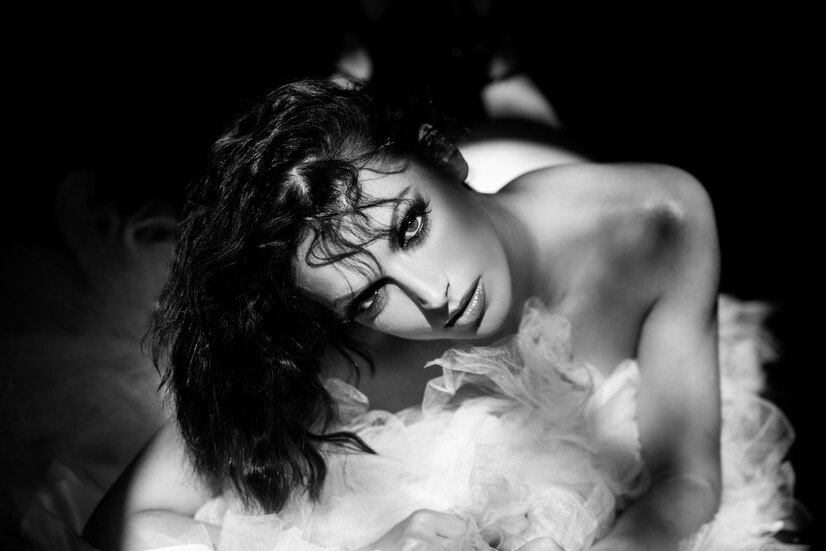
I see Hegre Art as an important case study in how contemporary photography can place sensuality, nudity, commercial publishing, and artistic ambition within the same visual space. Founded by Norwegian photographer Petter Hegre, the project has built its identity around technically polished images of the human body. Rather than treating nudity as an incidental feature, Hegre places it at the center of his visual language and asks viewers to consider form, light, personality, movement, and vulnerability together.
The subject also invites more difficult questions. What separates fine-art nude photography from ordinary adult entertainment? Can a commercially distributed image still function as art? How much does the photographer’s intention matter compared with the model’s agency or the viewer’s interpretation? These questions cannot be resolved by technical quality alone. They require us to examine the complete creative process, including concept development, collaboration, consent, composition, editing, distribution, and cultural context.
From my perspective, the most useful way to understand Hegre Art is neither to celebrate it uncritically nor to dismiss it because of its erotic subject matter. A more productive approach is to examine how the work is made, what visual traditions it draws upon, how the platform describes itself, and where its artistic claims remain open to interpretation. That balanced approach allows us to appreciate the craft while still considering the ethical and cultural tensions surrounding representations of the nude body.
Key Takeaways
- Hegre Art is associated with Norwegian photographer Petter Hegre and a digital platform established in 2002.
- The project combines fine-art nude photography, adult-oriented films, portraiture, and subscription-based digital publishing.
- Hegre’s visual language depends heavily on controlled lighting, precise composition, clarity, directness, and high-resolution presentation.
- The platform describes its approach as natural and intimate, although those terms should be understood as creative positioning rather than objective classifications.
- Artistic quality depends on more than nudity or technical polish. Intention, context, consent, collaboration, and subject agency are equally important.
- Hegre’s work illustrates how digital distribution has changed the relationship between gallery photography, photographic books, cinematic presentation, and commercial adult media.
- Ethical nude photography requires clearly communicated boundaries, informed consent, age verification, appropriate releases, respectful working conditions, and careful control of image use.
- Viewers can evaluate fine-art nude photography more thoughtfully by considering both what appears in the frame and how the image was produced.
What Hegre Art Is and Why It Matters
I use the name Hegre Art to describe the broader body of photography, publications, films, and digital presentation associated with Petter Hegre. When discussing the active online platform, I refer to Hegre.com, which presents itself as a destination for high-quality erotic imagery.
According to the platform’s official account, Petter Hegre founded the website in 2002. Its biography also states that Hegre studied at the Brooks Institute of Photography in Santa Barbara and later spent a year working with Richard Avedon in New York before returning to Europe. The site identifies Luba and Tuscany Nudes among Hegre’s published books. Google Books likewise describes Hegre as a Brooks Institute graduate and former assistant to Avedon.
These details matter because they place Hegre’s work within more than one professional tradition. His background connects formal photographic training, fashion and portrait photography, printed monographs, gallery presentation, digital publishing, and adult media. That combination helps explain why his work can feel visually closer to fashion or editorial photography than to casually produced erotic imagery.
Hegre Art also matters as a digital publishing model. The internet did not simply provide a new place to display existing photographs. It changed the speed, scale, format, audience, and economics of visual publishing. A photographer could now maintain a large archive, publish frequent updates, distribute high-resolution files, release films, communicate directly with subscribers, and retain a consistent visual identity without relying entirely on galleries or magazine editors.
In my analysis, Hegre Art represents this shift particularly clearly. It occupies a space between the traditional photographic monograph and the continually updated digital platform. The individual photograph remains important, but it exists inside a larger branded environment that includes collections, films, recurring subjects, behind-the-scenes material, and membership access.
That structure changes the viewer’s relationship with the work. A printed book invites slow, finite viewing. A gallery exhibition creates a temporary physical encounter. A digital archive offers abundance, repetition, searchability, and continual release. Each format shapes interpretation differently, even when the underlying images come from the same photographer.
Petter Hegre’s Vision and Photographic Background
Petter Hegre’s artistic identity is built around a direct presentation of the nude figure. His images frequently emphasize clarity rather than concealment, using controlled lighting and carefully arranged poses to make the body visually dominant. The surrounding environment usually serves the figure rather than competing with it.
The official platform summarizes its preferred identity in a concise statement:
“Founded in 2002 by Petter Hegre, the site pioneered a more natural and intimate style.”
Hegre.com
This quotation matters because “natural” and “intimate” function as the brand’s central artistic claims. They suggest an alternative to exaggerated theatricality, heavy costume, deliberately artificial sets, or aggressively commercial presentation.
However, I would not interpret “natural” as meaning accidental or unplanned. A photograph can appear effortless while depending on extensive preparation. Lighting must be positioned. Backgrounds must be selected. Skin tones must be balanced. The model and photographer must coordinate movement, expression, posture, and gaze. Hundreds of frames may be produced before the final selection is made.
Naturalism in photography is therefore often a designed effect. The artist removes visible distractions and controls the technical environment so carefully that the resulting image feels immediate. This is similar to a minimalist interior that appears simple even though every object has been chosen deliberately.
Hegre’s reported experience with Richard Avedon also provides a useful point of reference. Avedon was known for creating visually direct portraits in which posture, facial expression, gesture, and psychological presence became central. Hegre’s subject matter is different, but we can recognize a related interest in isolating the person from unnecessary visual noise and making the human figure carry the image.
The connection should not be overstated. Working with an influential photographer does not make two artistic practices equivalent. Still, it helps explain Hegre’s attention to studio control, formal precision, visual confidence, and the individual presence of the model.
His books also show the importance of sequencing. A photographic monograph is not simply a folder of successful pictures. The photographer and editor must decide how one image leads to another, when visual intensity should increase or decrease, how locations should change, and how recurring gestures or colors create continuity.
Photography records individual moments, but a book builds an extended experience. I believe this distinction is essential when assessing Hegre Art. A single image may be read primarily as an erotic portrait, while a carefully sequenced collection can create a broader study of personality, environment, form, or a relationship between photographer and subject.
A documented 2004 exhibition titled LUBAmyLOVE at Galeria Fotonauta in Barcelona provides another example of Hegre’s work entering a conventional exhibition setting. The platform’s own biography also refers to the opening of a Tuscany Nudes exhibition in Florence.
Gallery display does not automatically settle the debate about whether something is art. Commercial material can appear in a gallery, and meaningful art can exist outside institutional spaces. Nevertheless, exhibitions and books show that Hegre’s practice has been presented through recognizable fine-art channels as well as through a commercial digital platform.
How Hegre Art Creates a Distinctive Visual Language
Light as a Structural Element
Light does more than make a body visible. It determines how viewers perceive volume, texture, depth, softness, tension, and emotional atmosphere.
Soft frontal light can reduce harsh shadows and produce a calm, polished appearance. Side lighting can emphasize contours and create a sculptural effect. Backlighting may turn the body into a partially abstract shape. Harder light can reveal texture and make the photograph feel more immediate or confrontational.
Hegre’s photographs are frequently associated with high visual clarity. This means lighting must be controlled carefully enough to preserve detail without flattening the figure. If the light is too even, the body can lose dimensionality. If it is too dramatic, shadows can hide the forms the photographer wants to emphasize.
A useful hypothetical example would be a studio portrait against a plain wall. An inexperienced photographer might position a bright light directly in front of the model, producing a technically visible but visually flat image. A more deliberate approach would place a large light slightly to one side, use a reflector to manage shadow density, and adjust the model’s position until the shoulders, waist, and limbs form a readable sequence of shapes.
The difference is not simply expensive equipment. It is the ability to observe how light moves across a three-dimensional subject.
Composition and the Organization of the Body
Composition determines how the viewer’s eye travels through a photograph. In figure photography, the photographer must organize many visual elements at once, including limbs, facial direction, negative space, background lines, furniture, fabric, hair, and the edges of the frame.
A small positional change can transform the entire image. Moving an arm may open or close the composition. Turning the head can create connection or distance. Shifting the model closer to a wall can produce geometric tension. Changing the crop can make an image feel like a portrait, a study of form, or a fragmented abstraction.
In my view, successful nude photography does not treat the body as an unordered collection of features. It treats the complete figure as a system of lines, curves, angles, weight, balance, and gesture.
This is where Hegre’s work often resembles fashion photography. Both forms depend on an awareness of posture and silhouette. The difference is that clothing no longer supplies color, structure, or narrative. The photographer must build visual interest from the body, expression, setting, and light.
Consider a hypothetical image of a model seated beside a large window. The obvious approach would place the figure in the center and photograph straight ahead. A stronger composition might use the window frame as a vertical boundary, position the model off-center, and allow the curve of the back to contrast with the rigid architecture. The environment would then support the figure instead of functioning as decoration.
Directness Rather Than Visual Concealment
Many traditions of nude art use concealment to create mystery. Fabric, shadow, cropping, turned poses, mist, foliage, or symbolic objects may partially hide the body. Hegre’s style is generally associated with a more direct presentation.
Directness can create a sense of confidence and visual honesty, but it also increases the importance of context. When little is hidden, viewers become more conscious of the model’s expression, degree of participation, and relationship with the camera.
A direct image can feel collaborative when the model appears self-possessed and present. The same formal directness can feel objectifying when personality disappears and the body seems arranged solely for consumption. The difference may be subtle, which is why we should not evaluate the image through pose alone.
The gaze is especially important. Looking into the camera can suggest confidence, confrontation, invitation, performance, or vulnerability. Looking away can feel private, reflective, distant, or staged. There is no universal meaning. The surrounding expression and composition guide interpretation.
Controlled Simplicity
One of the strongest features of the Hegre aesthetic is the frequent use of uncluttered settings. A simple room, neutral studio, bed, terrace, landscape, or architectural surface gives the body visual priority.
Minimal settings also reveal technical weaknesses. In a crowded scene, objects can disguise imperfect composition. In a simple image, every line matters. A misplaced hand, awkward crop, distracting shadow, or tilted background becomes immediately visible.
I have found that controlled simplicity often requires more discipline than visual abundance. The photographer cannot rely on props or dramatic production design to create interest. Light, pose, expression, and timing must sustain the image.
This principle has practical value beyond nude photography. Product photographers, portrait photographers, designers, and filmmakers can all learn from it. Removing unnecessary elements forces creators to identify what the image is actually about.
Color, Surface, and Environment
Although the nude figure remains central, surface and environment influence how the work feels. Warm natural light can create softness and familiarity. Cooler studio tones may produce distance or precision. Stone, wood, fabric, water, glass, and metal each create different relationships with skin.
A rough wall makes smooth skin appear softer. A white room can create purity or clinical detachment. Dark wood may add warmth. Water can introduce reflection and movement. A landscape can connect the body with ideas of nature, freedom, or timelessness.
These associations are culturally constructed, not fixed. A white background does not automatically mean innocence, and a natural landscape does not automatically make an image authentic. The photographer uses familiar visual signals, but viewers bring their own experiences and assumptions.
From my perspective, the strongest environmental choices are those that support the emotional character of the subject. An energetic pose may work with sharp architecture and strong sunlight. A reflective portrait may benefit from softer light and a quiet interior. The setting should extend the idea rather than merely make the production look expensive.
The Model as Subject, Performer, and Collaborator
The original idea of the model as a muse can be appealing, but it should not erase the model’s practical contribution. A model does not simply stand in front of a camera. Skilled figure modeling requires bodily awareness, emotional control, stamina, communication, and the ability to repeat or refine subtle movements.
In a productive collaboration, the model contributes ideas, responds to direction, identifies uncomfortable poses, and helps determine which expressions feel authentic. The photographer may control the frame, but the model’s decisions shape what becomes visible inside it.
The term “muse” can sometimes romanticize an unequal relationship by making the subject sound inspirational but passive. I prefer to describe the model as both creative subject and collaborator. That wording acknowledges the photographer’s authorship without pretending that the person being photographed is simply raw material.
A realistic scenario illustrates the difference. In a weak session, the photographer gives instructions without explaining the concept and treats hesitation as an inconvenience. In a stronger session, the photographer discusses the intended mood, shows visual references, establishes boundaries, invites feedback, and adjusts the plan when the model raises a concern.
The final photographs may look equally polished to an outside viewer. Ethically, however, the two processes are completely different.
Movement from Still Photography to Film
Hegre.com currently presents both photographic galleries and high-resolution films. Individual pages also describe behind-the-scenes productions that show elements of the photographic process, while the platform promotes the use of large-format sensors and high-resolution formats. These descriptions come from the company itself and should therefore be understood partly as marketing claims.
The move from still photography to film changes the creative challenge. A still photographer selects a fraction of a second. A filmmaker must manage continuous movement, pacing, sound, transitions, and duration.
In still photography, an awkward movement disappears if it is not selected. In film, the transition between poses becomes part of the work. The model’s comfort and performance must be maintained for longer periods, and the camera crew must think about continuity rather than a single decisive frame.
Film can also change the viewer’s sense of intimacy. A photograph creates distance because the moment is frozen. Moving images may feel more immediate because viewers can observe breathing, hesitation, shifting expressions, and physical movement.
This immediacy increases both artistic possibilities and ethical responsibilities. The more immersive the medium becomes, the more carefully creators must consider consent, editing, access, and distribution.
Hegre Art and the Boundary Between Art and Erotica
The question “Is it art or erotica?” sounds simple, but I believe it creates a false choice. An image can be erotic and artistic at the same time. It can also be beautifully produced yet artistically shallow. Categories overlap because they describe different qualities.
“Erotic” describes a relationship to desire, sensuality, or sexual imagination. “Artistic” refers to intention, form, interpretation, expression, and cultural context. Neither category automatically excludes the other.
The more useful questions are specific. Does the image have a coherent visual idea? Does its composition create meaning? Does the subject appear to possess agency? Is the work part of a considered sequence? How does the method of distribution affect the viewer’s expectations? Does the image invite sustained attention, or does it rely only on immediate stimulation?
Gregory Halpern’s observation about the ambiguous truth of photographs is valuable here:
“Photographs, on the other hand, are truly never entirely fiction or non-fiction.”
Gregory Halpern, Magnum Photos
This matters because even a photograph that appears spontaneous is shaped by choices. The photographer chooses the model, setting, lens, angle, light, timing, crop, color treatment, and final frame. The model also performs, consciously or unconsciously, in response to the camera.
Photography carries the visual authority of a real body in a real space, but it remains a constructed representation. Recognizing that construction helps us move beyond the misleading idea that a clear image is automatically truthful.
Distribution adds another layer. The same photograph might appear in a gallery, a limited-edition book, a photography magazine, a subscription website, or a social media feed. Its visual content would remain unchanged, but the surrounding context would shape how viewers approached it.
A gallery encourages aesthetic contemplation. A paid adult platform encourages erotic expectations. A book suggests sequence and authorship. Social media encourages rapid scrolling and comparison. Context does not determine meaning completely, but it influences the first question viewers bring to the image.
Commercial purpose complicates the discussion without ending it. Many recognized art forms operate commercially. Painters sell canvases, filmmakers sell tickets, musicians sell recordings, and photographers license images. The presence of payment does not make artistic intention impossible.
At the same time, commercial incentives influence production. A subscription platform must publish frequently, retain members, respond to audience preferences, and maintain a recognizable brand. Those pressures may encourage repetition or increasingly attention-seeking material.
In my analysis, Hegre Art is most interesting precisely because it does not resolve these tensions. It shows how fine-art language and adult-market structures can coexist, support one another, and sometimes compete with one another.
Visual Elements That Shape the Hegre Art Aesthetic
The following table summarizes several visual choices commonly associated with Hegre’s photographic presentation. These are interpretive categories rather than rigid rules, but they help explain how individual techniques affect the viewer.
| Visual Element | Typical Creative Function | Possible Viewer Experience | Risk When Overused |
|---|---|---|---|
| Controlled studio lighting | Defines shape, skin tone, depth, and texture | Clarity, polish, sculptural presence | The image may feel clinical or overly perfected |
| Minimal backgrounds | Keeps attention on the figure | Calm, focus, visual simplicity | Personality and narrative may be reduced |
| Direct camera engagement | Creates a relationship between model and viewer | Confidence, confrontation, intimacy | The gaze may feel commercially calculated |
| High-resolution detail | Preserves texture and visual information | Immersion and technical appreciation | Detail may become spectacle rather than meaning |
| Carefully arranged poses | Organizes limbs, balance, and negative space | Formal harmony and elegance | The body may appear overly controlled |
| Natural locations | Connects the body with landscape or atmosphere | Freedom, warmth, timelessness | “Naturalness” may become a visual cliché |
| Repeated sessions with familiar models | Develops continuity and recognizable identity | Greater familiarity and narrative depth | The model may become inseparable from a fixed persona |
| Cinematic film production | Extends movement and atmosphere over time | Greater immediacy and immersion | The artistic frame may be overshadowed by adult-market expectations |
The main takeaway is that no technique remains meaningful in isolation. High resolution does not create emotional depth by itself. Minimalism does not guarantee sophistication. Direct eye contact does not prove agency. Each element must work with the model’s presence, the photographer’s concept, and the larger context of the series.
Representation, Diversity, and the Question of the Gaze
Discussions of Hegre Art often emphasize beauty, openness, and an international selection of models. Publicly accessible pages do identify models from different countries, and the website is distributed through multiple languages. However, I did not find reliable public data that would allow a systematic measurement of representation across ethnicity, age, body type, disability, gender identity, or other dimensions.
For that reason, claims about diversity should be made carefully. Featuring models from different national backgrounds is not the same as representing a broad range of bodies or lived experiences. Diversity is not simply the number of countries attached to a model list. It also involves who receives visibility, how different people are framed, and whether variation is treated as ordinary rather than exceptional.
The question of the gaze is equally important. The photographer controls the final image, while the audience brings expectations shaped by gender, culture, advertising, fashion, and adult media. When a platform primarily photographs women for an audience that may largely view them through heterosexual male desire, objectification becomes a reasonable concern.
That concern does not mean every photograph is automatically exploitative. It means the visual relationship deserves examination. Does the subject appear expressive or interchangeable? Is the model’s personality visible? Does the series allow emotional variation, or does every person perform the same narrow idea of desirability?
I believe viewers should also distinguish between nudity and sexualization. A nude figure can be presented as vulnerable, powerful, humorous, ordinary, athletic, reflective, abstract, or erotic. Sexualization occurs when a person’s value is narrowed primarily to sexual appeal or availability.
Research summarized by the American Psychological Association indicates that appearance-focused and sexualized media can affect body image and self-perception, particularly among vulnerable viewers. The APA has also reported that body-positive or appearance-neutral content can produce different psychological responses from highly idealized appearance content.
This does not allow us to predict how every viewer will respond to Hegre Art. It does remind us that visual culture has consequences. Repeated exposure to a narrow beauty standard can make that standard appear natural, even when it results from casting, lighting, posing, editing, and selective publication.
A responsible critical reading therefore considers both artistic quality and representational patterns. We can admire a photograph’s light while asking what type of body receives that light. We can recognize a model’s confidence while questioning whether the platform provides room for identities outside its established commercial aesthetic.
Consent, Collaboration, and Ethics in Nude Photography
Consent is the foundation of responsible nude photography. It must be informed, specific, freely given, and understood by everyone involved.
A signed form is important, but paperwork alone does not guarantee ethical conduct. A model may sign a broad release without understanding where images will appear, how long they will remain available, whether they can be edited, or whether they may later be licensed to other companies.
Richard Kelly of the American Society of Media Photographers offers a useful way to understand a release:
“I like to think of a model or property release as a conversation starter between the photographer and the subject.”
Richard Kelly, ASMP
I believe “conversation starter” is the essential phrase. Ethical consent begins before the signature and continues throughout the project. The photographer should explain the intended images, level of nudity, poses, distribution channels, audience, payment, editing, storage, and future licensing.
ASMP guidance also stresses that releases should reflect the intentions and understanding of both parties. Its professional guidance recommends explaining planned image use, clarifying clauses, offering appropriate consideration, and keeping accurate records. Legal requirements vary by jurisdiction and by whether an image is used editorially, artistically, promotionally, or commercially, so creators should obtain qualified legal advice for their specific circumstances.
Age verification is non-negotiable in adult-oriented photography. Photographers and publishers must establish that every participant is legally an adult and retain appropriate documentation in accordance with applicable law.
Boundaries should also be defined in practical terms. “I am comfortable with artistic nudity” is too broad. A professional conversation should address specific poses, camera angles, proximity, physical contact, additional performers, crew size, wardrobe changes, and whether behind-the-scenes material will be recorded.
Consent must remain active during the session. Agreeing to one pose does not create unlimited permission for every later request. Models should be able to pause, ask questions, decline a direction, or end the shoot without pressure.
Privacy on set is another important factor. The number of people present should be limited to those with a clear production role. Closed changing areas should be provided. Personal devices should be controlled so unauthorized photographs cannot be taken. Files should be stored securely, and access should be limited.
Post-production requires equal care. Editing can alter skin, proportions, facial features, and context. The release should explain the expected level of retouching and whether images may be combined, digitally transformed, or used in emerging technologies.
These responsibilities become even more important when images remain online indefinitely. A model may change careers, relationships, or personal circumstances years after a session. A contract may grant legal permission for continued use, but ethical publishers should still maintain clear communication channels for serious concerns.
A Step-by-Step Ethical and Artistic Workflow
Step 1: Define the Creative Purpose
Before contacting a model, the photographer should be able to explain what the project is about. “I want to photograph a nude person” is not a complete concept.
A stronger brief might explore the relationship between the body and geometric architecture, the effect of morning light on movement, or the contrast between vulnerability and physical strength. A clear purpose helps the photographer make consistent choices and helps the model understand what participation involves.
Step 2: Prepare Visual References
Reference images can communicate lighting, mood, pose intensity, framing, and styling more clearly than abstract language. However, references should guide the project rather than force the model to imitate another person’s body.
The photographer should identify which qualities matter. Is it the direction of light, the negative space, the relaxed expression, or the location? This keeps the session focused on creative principles rather than copying another artist.
Step 3: Discuss Boundaries in Detail
The photographer and model should discuss acceptable and unacceptable content before the shoot. Written notes can reduce misunderstandings.
This conversation should include nudity level, intended poses, physical contact, whether other performers will appear, the number and gender of crew members, and the possibility of behind-the-scenes recording.
Step 4: Agree on Payment and Usage
Payment, working hours, breaks, travel costs, cancellation terms, image use, and publication channels should be documented.
A model should know whether the images are intended for a gallery, portfolio, subscription platform, book, advertisement, social media campaign, or third-party licensing. Each use creates different exposure and risk.
Step 5: Verify Age and Identity
Every adult participant should provide legally acceptable identification, and records should be stored securely. The verification process must follow applicable laws and privacy requirements.
This step protects participants, photographers, publishers, and audiences. It should never be treated as an informal assumption based on appearance.
Step 6: Build a Respectful Set
A professional set should include privacy, temperature control, clean surfaces, safe posing equipment, access to water, scheduled breaks, and a clear method for stopping the session.
Nude models may remain physically still for long periods, making cold temperatures, hard surfaces, or unsupported poses more difficult than they appear. Comfort affects both safety and creative quality.
Step 7: Start with Low-Pressure Images
Beginning with portraits, clothed frames, or less exposed poses can help the photographer and model establish communication.
This is not simply a strategy for making the model relax. It gives both participants time to assess the working relationship. The photographer learns how the model moves, and the model learns how the photographer communicates.
Step 8: Review Images Collaboratively
Periodic image review allows the model to understand how poses translate through the camera. It can reveal unflattering angles, unintended exposure, distracting backgrounds, or expressions that do not match the concept.
The photographer retains responsibility for artistic direction, but collaboration can improve accuracy and trust.
Step 9: Confirm the Final Use
Before publication, the production team should verify that final images remain within the documented agreement. Any major change in context, editing, licensing, or distribution should trigger a new conversation.
For example, permission for a limited gallery exhibition should not automatically be treated as permission for a global advertising campaign.
Step 10: Archive Files and Documents Securely
Images, identification records, releases, contact information, and payment documentation should be stored securely and backed up responsibly.
Access should be limited, especially when the files contain sensitive material. Security is part of consent because unauthorized access can expose images beyond the agreed audience.
Common Misconceptions About Hegre Art and Nude Photography
Nudity Automatically Makes a Photograph Artistic
Nudity is a subject, not a guarantee of artistic value. A photograph becomes meaningful through the relationship between idea, form, emotion, technique, and context.
An image can be technically sharp and visually attractive without offering much beyond surface appeal. Conversely, a visually imperfect photograph can possess emotional or cultural significance.
Hegre Art’s technical polish may encourage viewers to associate production quality with artistic importance. I believe we should separate those judgments. Technical skill deserves recognition, but interpretation must go further.
Natural-Looking Images Require Little Direction
Images that appear spontaneous may be extensively planned. Lighting, makeup, location, posture, camera settings, and editing all contribute to the final result.
The strongest photographers often make their control invisible. The viewer experiences ease, but the production required discipline.
A Signed Release Solves Every Ethical Question
A release records permission and usage terms, but it does not justify coercion, deception, unsafe conditions, or disregard for boundaries.
Legal permission is the minimum standard. Ethical collaboration requires continuing communication and respect.
High Resolution Produces Greater Authenticity
More detail can make an image immersive, but resolution does not make it truthful. High-resolution files reveal surfaces while still reflecting selective framing and editing.
A technically precise photograph may present a highly constructed identity. We should not confuse visible detail with complete understanding.
Diversity Can Be Proven Through a Few Examples
A platform may feature models from several countries while still promoting a narrow appearance ideal. Meaningful diversity must be evaluated across the complete body of work.
Casting, frequency, prominence, framing, and narrative range all matter. Isolated examples cannot answer the broader question.
Fine-Art Presentation Removes Commercial Influence
Books, galleries, films, and subscription websites all operate within economic systems. Fine-art framing can add context, but it does not eliminate commercial motives.
The presence of commercial incentives does not invalidate the work. It simply becomes part of the interpretation.
How to Evaluate Fine-Art Nude Photography Responsibly
The table below provides a practical framework for viewers, photographers, editors, and curators. It separates immediate visual impressions from deeper questions about production and meaning.
| Evaluation Area | Questions to Ask | Positive Indicators | Warning Signs |
|---|---|---|---|
| Artistic intention | What idea does the image explore beyond nudity? | A coherent concept connects pose, light, setting, and sequence | Nudity appears to be the only creative idea |
| Technical execution | Does the technique support the intended mood? | Lighting and composition guide attention without distraction | Technical spectacle overwhelms the subject |
| Subject agency | Does the model appear present and self-possessed? | Expression, gesture, and collaboration feel individualized | The model appears interchangeable or emotionally absent |
| Consent and process | Were boundaries and uses clearly discussed? | Specific agreements, active consent, respectful conditions | Vague releases, pressure, secrecy, or unexpected usage |
| Representation | Which bodies and identities receive visibility? | Sustained variety without tokenization | A narrow ideal presented as universal beauty |
| Editing | Does retouching serve the artistic concept? | Consistent treatment that preserves human character | Extreme alteration presented as natural reality |
| Context | Where and how is the work published? | Distribution matches the communicated agreement | Images are moved into unrelated commercial contexts |
| Viewer response | What does the image ask the audience to notice? | Form, emotion, personality, or cultural meaning remain visible | The person is reduced entirely to consumable features |
| Long-term responsibility | Can participants raise future concerns? | Clear records and communication channels exist | Publishers become unreachable after release |
| Critical openness | Can the work withstand questions about power and representation? | Creators acknowledge complexity and criticism | Artistic labels are used to silence all ethical discussion |
In my view, the most important test is whether the subject remains recognizably human within the image’s aesthetic system. Perfect lighting should not erase personality. Formal composition should not eliminate agency. Erotic intention should not make respectful collaboration optional.
Practical Lessons for Photographers and Visual Creators
Hegre Art offers useful lessons even for photographers who have no interest in producing nude or erotic work.
The first lesson is visual consistency. A recognizable body of work usually comes from repeating a limited number of strong decisions. This might involve similar lighting, controlled backgrounds, direct portraiture, a consistent color palette, or recurring locations.
Consistency does not mean making the same image repeatedly. It means developing a visual grammar. A writer may use different stories while maintaining a recognizable voice. A photographer can work with different subjects while preserving a consistent relationship between light, space, and emotion.
The second lesson is that simplicity requires preparation. A clean frame is not created merely by removing objects. The photographer must decide which remaining elements carry the image.
A portrait photographer can apply this by beginning with one light, one background, and one clear emotional direction. Additional equipment should be introduced only when it solves a specific problem.
The third lesson is the value of collaboration. A photographer may arrive with a complete concept, but the subject’s physical and emotional response will affect the result. Strong direction should create clarity without eliminating individuality.
For example, instead of saying, “Copy this exact pose,” a photographer might explain, “I want the image to feel balanced but alert. Keep your weight on the back leg, relax the forward shoulder, and turn toward the light in a way that feels comfortable.” The second direction gives structure while allowing the subject to participate.
The fourth lesson is to separate visibility from meaning. Showing more does not necessarily communicate more. A close, detailed image can still feel emotionally distant. A partially obscured portrait can reveal personality through gesture or expression.
The fifth lesson concerns sequencing. Creators should think about how images function together. A collection needs variation in distance, energy, expression, environment, and visual rhythm.
A hypothetical 12-image series might begin with environmental portraits, move toward closer figure studies, include a quiet transitional image, reach its strongest visual statement near the end, and close with a reflective frame. This sequence produces a journey rather than a random gallery.
The sixth lesson is long-term responsibility. Digital images can be copied, republished, indexed, and viewed outside their original setting. Photographers must consider not only whether an image can be published but also how its circulation may affect the person depicted.
Hegre Art’s Influence on Digital Erotic Photography
It is difficult to prove that one platform caused a particular industry-wide change without access to reliable comparative data. However, we can reasonably view Hegre Art as an early and visible example of a photographer-led subscription platform built around a consistent erotic visual identity.
The official website states that it was founded in 2002 and promotes a large archive of photographs and films, including high-resolution still images and cinematic video formats. Because these figures and rankings come from the company, they should be treated as promotional statements rather than independent measurements.
Its broader significance lies in the model it represents. The platform combines several functions that previously belonged to separate institutions:
- The photographer acts as the central creative identity.
- The website functions as publisher and archive.
- Subscription access replaces individual magazine or book purchases.
- Films extend the brand beyond still photography.
- Recurring models create familiarity across multiple releases.
- Behind-the-scenes content turns production itself into part of the audience experience.
- International digital access reduces dependence on local galleries or distributors.
This model has become common across many creative industries. Musicians, filmmakers, educators, fitness instructors, writers, and visual artists now use subscriptions to distribute specialized material directly to audiences.
Hegre Art demonstrates both the advantages and limitations of that structure. Direct publishing gives creators control over presentation, frequency, pricing, archives, and audience relationships. It also creates pressure to release material continuously and satisfy subscriber expectations.
A gallery can present 20 carefully chosen photographs from several years of work. A subscription platform may need to provide something new every week. That difference can influence creative decision-making.
In my view, Hegre’s lasting relevance comes less from any individual claim of being the first or largest and more from the sustained integration of recognizable photographic authorship with digital adult publishing. The project shows that online erotica can be organized around a photographer’s name, visual method, and body of work rather than around anonymous content alone.
Conclusion
I believe Hegre Art is best understood as a meeting point between fine-art nude photography, commercial erotic media, digital publishing, and carefully controlled visual branding. Petter Hegre’s work demonstrates how lighting, composition, technical precision, recurring subjects, and minimalist environments can create a distinctive photographic identity.
The central practical lesson is that artistic quality never comes from nudity alone. A meaningful image requires intention, visual discipline, collaboration, context, and respect for the person inside the frame. Technical excellence can strengthen those qualities, but it cannot replace them.
Hegre Art also reminds us that photographs do not exist independently of their production or distribution. A polished image may function differently in a book, gallery, film, or subscription archive. Viewers should consider both the visible composition and the less visible systems of consent, editing, commerce, and representation behind it.
My recommendation is to approach this work with two forms of attention at once. Study the light, shape, rhythm, and craftsmanship, but also ask who holds creative power and how the subject’s agency is protected. That combined perspective produces a richer and more responsible understanding of contemporary erotic photography.
Frequently Asked Questions
What Is Hegre Art?
Hegre Art refers to the photography, films, books, and digital presentation associated with Norwegian photographer Petter Hegre. The current platform, Hegre.com, describes itself as a source of high-quality erotic imagery and states that it was founded in 2002. Its visual identity combines fine-art nude photography, studio portrait techniques, minimalist settings, and commercial digital publishing. I use “Hegre Art” as the broader creative label and “Hegre.com” when referring specifically to the online platform.
Who Is Petter Hegre?
Petter Hegre is a Norwegian photographer known for nude and erotic photography. His official biography states that he studied at the Brooks Institute of Photography in Santa Barbara and worked for a year with Richard Avedon in New York before returning to Europe. His published work includes photographic books such as Luba and Tuscany Nudes. Google Books also identifies him as a former Avedon assistant.
Is Hegre Art Considered Fine-Art Photography?
Hegre Art can be discussed within fine-art photography because it uses deliberate lighting, composition, sequencing, printing, books, and exhibition presentation. However, classification depends on context and interpretation. The work is also distributed through a commercial adult platform, so it operates across both artistic and erotic categories. I do not believe those categories are automatically incompatible. A more useful evaluation considers visual intention, execution, subject agency, ethical production, and the meaning created by the complete series.
What Makes Hegre Art Visually Distinctive?
Hegre Art is commonly associated with controlled lighting, high image clarity, direct portraiture, uncluttered environments, carefully arranged poses, and strong attention to the shape of the human figure. Its photographs often minimize props and elaborate storytelling so that posture, expression, skin tone, texture, and negative space become central. The platform also emphasizes high-resolution production and cinematic film formats, although its technical and ranking claims are self-reported promotional information.
Does Artistic Nude Photography Require a Model Release?
Requirements depend on jurisdiction and intended use. ASMP guidance explains that the need for a release is generally connected to how an image will be used, particularly when the use is commercial or promotional. Responsible photographers should still obtain clear written agreements for sensitive work, explain every intended distribution channel, verify age and identity, and preserve accurate records. A local attorney should review contracts when legal certainty is required.
How Can Viewers Distinguish Art from Objectification?
Viewers should examine whether the photograph presents the model as an individual or as an interchangeable body. Expression, gesture, context, collaboration, variety, and visible agency all matter. Technical beauty alone does not resolve the question. I look for evidence that the person’s presence contributes to the meaning of the image rather than functioning merely as material for display. Distribution context and production ethics should also influence the evaluation.
Can Erotic Photography Be Commercial and Artistic?
Yes. Commercial purpose and artistic purpose can coexist. Photographers sell books, prints, licenses, subscriptions, and exhibition tickets while still creating meaningful work. The challenge is that market incentives may influence subject selection, release frequency, visual repetition, and the level of provocation. A commercially successful photograph should therefore be evaluated through the same critical standards as any other image, including composition, originality, ethical process, representation, and emotional depth.
What Can Other Photographers Learn from Hegre Art?
Photographers can study Hegre Art for its controlled lighting, minimal composition, consistent visual identity, careful sequencing, high production standards, and integration of still photography with film. The broader lesson is to make each technical decision serve a clear concept. Photographers should also learn from the ethical questions surrounding sensitive imagery by establishing specific boundaries, informed consent, secure file handling, appropriate releases, and respectful working conditions.
Sources and References
- Hegre.com, “The Art of the Nude,” including the platform’s account of its founding, Petter Hegre’s education, work with Richard Avedon, publications, location, and technical positioning.
- Google Books, bibliographic description of Petter Hegre’s Luba.
- Photography Now, exhibition listing for Petter Hegre’s LUBAmyLOVE.
- Hegre.com production pages describing figure photography, studio work, cinematic formats, and behind-the-scenes material.
- American Society of Media Photographers guidance on model releases, consent conversations, commercial usage, and professional recordkeeping.
- Magnum Photos interview with Gregory Halpern concerning photography, truth, and constructed representation.
- American Psychological Association material concerning sexualized media, appearance ideals, body-positive content, and body-image concerns.
- Original draft and editorial requirements provided for this article.
Disclaimer
This article is an educational and critical discussion of adult-oriented fine-art photography. It does not reproduce explicit imagery and is not intended for minors. References to consent, model releases, privacy, commercial image use, and recordkeeping provide general information rather than legal advice. Laws and professional requirements vary by country, state, platform, and intended use. Photographers, publishers, models, and production companies should obtain advice from qualified legal professionals before creating or distributing sensitive material.