Stress is a natural response to pressure, uncertainty or a perceived threat. It can help you react quickly to a difficult situation, meet a deadline or prepare for an important event. However, when pressure continues without enough time to recover, it can affect your mood, sleep, concentration and physical wellbeing. Effective stress management involves identifying your triggers and using practical techniques to calm your mind and body.
The aim is not to eliminate every stressful experience. Instead, it is to respond more constructively, recover after difficult situations and prevent everyday demands from becoming overwhelming.
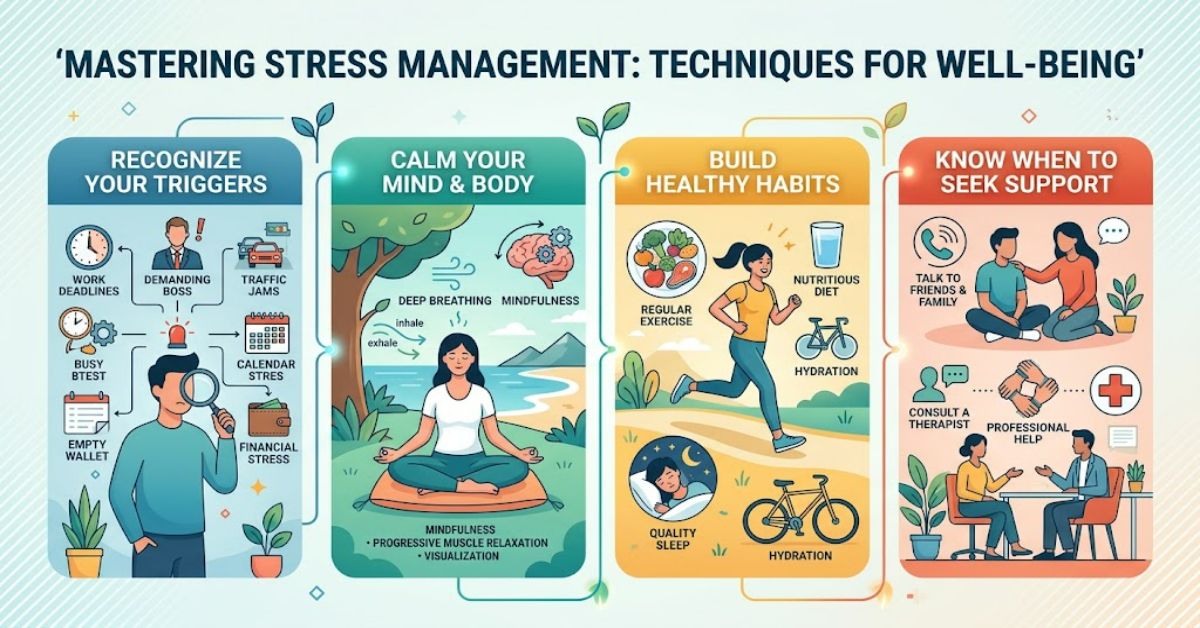
Common triggers include financial worries, work deadlines, family responsibilities, relationship difficulties and uncertainty about the future. Different people can respond to the same situation in different ways. Your reaction may also change depending on sleep, health, support networks and previous experiences.
Recognising these patterns is an important first step. You might notice headaches before a meeting, irritability after a poor night’s sleep or difficulty concentrating when several tasks compete for your attention. Such signs can help you identify when to pause and make adjustments.
There is no single technique that works for everyone. Some people benefit from walking outdoors, while others find that structured planning, slow breathing or speaking to someone they trust makes the greatest difference. Often, a combination of small changes is more practical than attempting a complete lifestyle overhaul.
The following guide explains how stress works, how to identify its causes and which evidence-informed strategies can help you manage it in everyday life.
Common Signs and Causes of Stress
Stress can affect the body, thoughts, emotions and behaviour. Recognising the signs early makes it easier to respond before pressure builds.
| Area | Possible signs |
| Physical | Headaches, muscle tension, tiredness or stomach discomfort |
| Emotional | Irritability, worry, frustration or feeling overwhelmed |
| Mental | Racing thoughts, poor concentration or indecision |
| Behavioural | Changes in sleep, appetite, social habits or alcohol use |
Common triggers include financial pressure, heavy workloads, caring responsibilities, health concerns and relationship problems. The Mental Health Foundation’s UK survey, published in 2018, found that 74% of respondents had felt so stressed during the previous year that they were overwhelmed or unable to cope. This is historical survey data, not a measure of current stress levels, but it illustrates why practical support matters.
One useful approach is to separate triggers into two groups: problems you can influence and circumstances you cannot immediately change. You may be able to reorganise your workload, for example, but you cannot always control another person’s behaviour. This distinction helps direct effort towards realistic solutions.
Five Practical Stress Management Techniques
1. Use slow, comfortable breathing
When you feel under pressure, pause and breathe gently. Allow your abdomen to move naturally, avoid forcing deep breaths and make your exhalation slightly longer if comfortable. Continue for a minute or two.
The aim is to create a brief pause rather than force yourself to feel calm. Stop if you become dizzy or uncomfortable and return to normal breathing.
2. Move your body regularly
Walking, cycling, swimming, dancing and other activities can support mood and general health. You do not need an intense workout to begin. A short walk between tasks or gentle stretching after sitting for a long time can provide a useful break.
Choose an activity that fits your ability and routine. Consistency is usually more practical than an ambitious plan that becomes difficult to maintain.
3. Make tasks manageable
A long list of responsibilities can make every task feel urgent. Write down what needs doing, identify the most important item and divide it into smaller steps.
For example, instead of planning to finish an entire report in one sitting, begin by outlining its sections. Set a realistic period for the first step, then review your progress.
4. Protect sleep and recovery time
Irregular sleep can make everyday challenges harder to manage. Try keeping a consistent bedtime, reducing stimulating activities before bed and allowing time to unwind.
If work messages repeatedly interrupt your rest, establish boundaries where possible. A routine is helpful, but avoid treating sleep as another performance target that creates more pressure.
5. Stay connected to supportive people
Talking to a trusted friend, relative, colleague or counsellor can help you organise your thoughts and feel less isolated. You do not always need advice; sometimes explaining the problem is useful in itself.
The World Health Organization’s guide, Doing What Matters in Times of Stress, also recommends skills such as grounding, making room for difficult emotions and stepping back from unhelpful thoughts.
Comparing Stress Relief Techniques
| Technique | Best suited to | Main consideration |
| Slow breathing | Moments of immediate tension | Keep breathing comfortable |
| Physical activity | Regular stress relief | Adapt intensity to your needs |
| Task planning | Workload and deadline pressure | Leave room for unexpected tasks |
| Mindfulness and grounding | Racing thoughts or distraction | Benefits may build with practice |
| Social support | Isolation and emotional strain | Choose someone you trust |
No single method works for everyone. A technique that helps before a presentation may not solve long-term financial pressure. The most effective approach often combines immediate calming strategies with changes that address the source of stress.
The Future of Stress Management in 2027
By 2027, digital wellbeing tools, guided breathing exercises and online psychological support may offer more ways to access stress-related resources. However, their usefulness will depend on accessibility, quality and individual needs.
Digital tools cannot resolve every underlying cause. Employers may need to address excessive workloads, while individuals facing financial insecurity may need practical or professional assistance alongside relaxation techniques. The WHO’s established self-help framework offers a reminder that small, repeated exercises can complement wider support.
Key Insights
- Identify the trigger before choosing a coping Stress Management technique.
- Use short exercises that fit into ordinary routines.
- Address practical problems instead of relying only on relaxation.
- Protect recovery time and maintain supportive relationships.
- Seek professional help if symptoms persist or interfere with daily life.
Conclusion
Stress is part of life, but it does not have to control every decision or routine. Learning to recognise warning signs, understand personal triggers and respond with practical techniques can make difficult periods more manageable. Small steps, such as taking a walk, organising responsibilities or practising comfortable breathing, can help create space to think clearly.
Long-term wellbeing also depends on the circumstances surrounding a person. Rest, supportive relationships, manageable workloads and access to professional care can all matter. Self-help strategies are useful, but they should not become another source of pressure or a reason to blame yourself when life remains difficult.
If stress continues for several weeks, affects sleep or relationships, or makes ordinary responsibilities hard to manage, consider speaking with a GP or qualified mental health professional. Seek urgent help if you feel unable to keep yourself safe.
Frequently Asked Questions
What is the best way to manage stress?
Start by identifying the main trigger. Then choose a practical response, such as breaking a task into smaller steps, taking a short walk or using comfortable breathing exercises.
How can I reduce stress quickly?
Pause, relax your shoulders, breathe gently and focus on what is happening around you. These steps may help you regain focus, although they cannot remove every cause of stress.
Can stress management improve sleep?
It may help when worry or tension interferes with rest. Consistent sleep habits and a relaxing evening routine can support better sleep, but persistent sleep problems deserve professional advice.
When should I seek help for stress?
Speak with a GP or mental health professional if stress persists, becomes difficult to manage or interferes with everyday activities.
Does exercise help with stress?
Regular physical activity can support mental and physical wellbeing. Choose an activity suited to your abilities and build it into your routine gradually.
References
- Mental Health Foundation. (2018). Stress: Are we coping? Mental Health Foundation.
- World Health Organization. (2020). Doing what matters in times of stress: An illustrated guide. World Health Organization.
Methodology
This article Stress Management draws on guidance from the World Health Organization and published information from the Mental Health Foundation. It combines these resources with general, practical examples and does not claim to report original clinical testing or personal experience. The 2018 survey figure is presented with its date to avoid implying that it represents current prevalence. Stress affects people differently, and these techniques are not a substitute for individual medical advice.