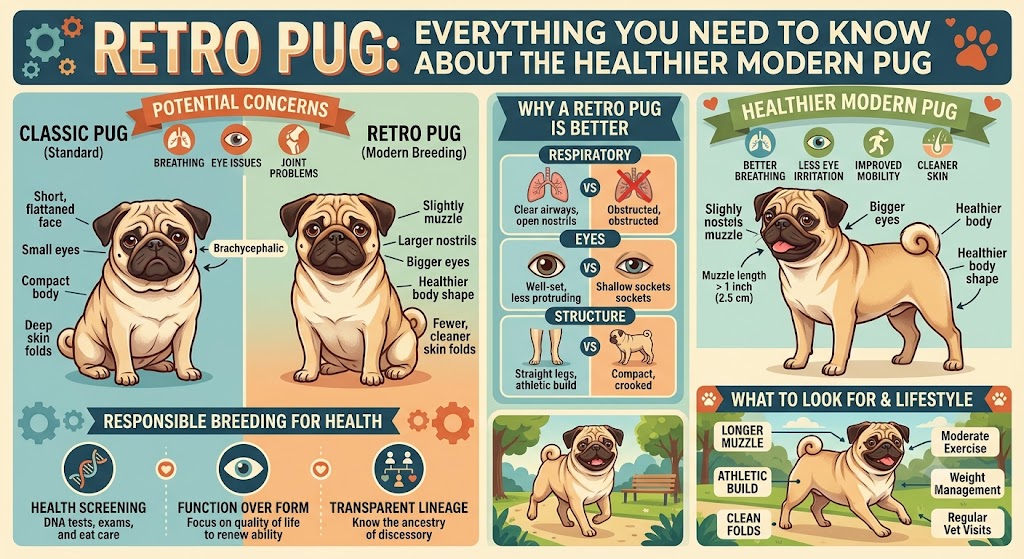
If you’ve recently heard the term retro pug, you’re probably wondering how it differs from the classic pug that has been a beloved companion for generations. A retro pug is a selectively bred dog—often created by crossing a pug with a Jack Russell Terrier or another healthy breed—to produce a dog with a longer snout, fewer facial wrinkles, and improved overall health. The goal is not to change the lovable personality of the pug but to reduce many of the physical problems associated with flat-faced breeds.
Traditional pugs are known for their affectionate nature, expressive eyes, and wrinkled faces. Unfortunately, those same features often contribute to breathing difficulties, overheating, eye injuries, and skin infections. The retro pug was developed to address these concerns while preserving the breed’s friendly temperament.
As awareness of responsible breeding grows, more prospective owners are considering healthier alternatives to extreme physical traits. Understanding what makes this modern variation different can help you decide whether it is the right pet for your home.
What Is a Retro Pug?
A retro pug is not currently recognised as an official pedigree breed by most kennel clubs. Instead, it refers to a healthier type of pug developed through careful crossbreeding or selective breeding.
The most common pairing is:
| Feature | Traditional Pug | Retro Pug |
| Nose length | Very short | Longer |
| Breathing | Often restricted | Generally improved |
| Wrinkles | Deep facial folds | Fewer wrinkles |
| Exercise ability | Limited | Better stamina |
| Heat tolerance | Lower | Improved |
The aim is to create a dog that maintains the affectionate personality of a pug while reducing inherited health concerns.
Why Were Retro Pugs Developed?
For decades, veterinarians have expressed concerns about brachycephalic (flat-faced) dog breeds. Their shortened skulls can cause breathing disorders known as Brachycephalic Obstructive Airway Syndrome (BOAS).
Common problems include:
- Difficulty breathing
- Loud snoring
- Exercise intolerance
- Heat exhaustion
- Eye injuries
- Skin infections between facial folds
Breeders interested in improving canine welfare began introducing healthier physical characteristics through selective breeding. The result is the retro pug, which often enjoys a better quality of life than its traditional counterpart.
Appearance
Although every dog is unique, retro pugs usually share several physical characteristics.
Typical Features
| Characteristic | Description |
| Height | 11–15 inches |
| Weight | 15–25 pounds |
| Lifespan | 12–15 years |
| Coat | Short and smooth |
| Colours | Fawn, black, silver, apricot |
| Muzzle | Noticeably longer than standard pugs |
The longer nose gives the face a more balanced appearance while improving airflow.
Personality and Temperament
Despite the physical differences, the retro pug retains many of the qualities that have made pugs popular family companions.
These dogs are generally:
- Friendly
- Loyal
- Intelligent
- Playful
- Social
- Affectionate with children
The influence of breeds like the Jack Russell Terrier may also make them slightly more energetic and curious than traditional pugs.
Most owners describe them as adaptable dogs that enjoy both active play and relaxing beside their families.
Health Benefits
One of the biggest reasons people choose a retro pug is improved health.
Improved Breathing
The longer muzzle allows air to move more freely through the nose and throat, reducing breathing difficulties.
Better Exercise Capacity
Many retro pugs can comfortably enjoy longer walks without becoming exhausted.
Reduced Eye Problems
Because the eyes do not protrude as prominently, they are generally less vulnerable to scratches and injuries.
Fewer Skin Issues
Reduced facial wrinkles decrease the likelihood of moisture becoming trapped, lowering the risk of skin infections.
While no dog is completely free from health problems, these improvements represent a significant step toward responsible breeding.
Grooming Requirements
The retro pug is relatively easy to maintain.
Weekly grooming should include:
- Brushing once or twice each week
- Cleaning the ears
- Trimming nails monthly
- Brushing teeth several times weekly
- Occasional bathing
Dogs with some facial wrinkles should still have those areas cleaned regularly to prevent irritation.
Exercise Needs
Unlike many traditional pugs, retro pugs usually enjoy moderate daily activity.
Recommended exercise includes:
- Two daily walks
- Interactive toys
- Puzzle games
- Backyard play
- Basic agility activities
Regular exercise helps maintain a healthy weight and provides important mental stimulation.
Training
Retro pugs respond well to positive reinforcement.
Training is most successful when sessions are:
- Short
- Reward-based
- Consistent
- Fun
Early socialisation with people, children, and other pets helps develop a confident, well-mannered adult dog.
Is a Retro Pug Right for You?
This breed may be an excellent fit if you want:
- A friendly companion
- A family dog
- Moderate exercise requirements
- Easier breathing than traditional pugs
- A playful yet affectionate personality
However, owners should still budget for routine veterinary care, quality food, and ongoing training.
The Future of Retro Pugs in 2027
Interest in healthier dog breeding continues to grow worldwide. Animal welfare organisations and veterinary professionals increasingly encourage breeding practices that prioritise health over exaggerated physical features.
By 2027, more breeders are expected to focus on improving genetic diversity, respiratory health, and overall wellbeing rather than maintaining extreme facial characteristics. Public awareness about inherited health conditions is also likely to influence purchasing decisions, encouraging responsible breeding standards across many companion dog breeds.
Key Takeaways
- Retro pugs are bred for improved health rather than exaggerated appearance.
- Longer noses help reduce breathing problems.
- They often enjoy better stamina than traditional pugs.
- Regular exercise and training remain important.
- Responsible breeders perform health testing before breeding.
- The breed combines the affectionate nature of pugs with better physical function.
Conclusion
The retro pug represents a thoughtful approach to preserving everything people love about pugs while reducing many of the health issues associated with extremely flat-faced dogs. Although they are not recognised as a separate pedigree breed, their growing popularity reflects a wider movement toward ethical and welfare-focused breeding.
Prospective owners should still research breeders carefully, request health records, and meet the puppy’s parents whenever possible. A healthy upbringing, proper nutrition, regular exercise, and preventive veterinary care all contribute to a long and happy life.
For families seeking a friendly, loving companion with improved breathing and greater activity levels, the retro pug offers an appealing alternative to the traditional pug while supporting a more responsible future for canine breeding.
FAQ
Are retro pugs healthier than standard pugs?
In many cases, yes. Their longer muzzle often reduces breathing difficulties and lowers the risk of several health problems associated with flat-faced breeds.
Is a retro pug recognised by kennel clubs?
Most major kennel clubs do not currently recognise the retro pug as a separate breed because it is generally produced through selective crossbreeding.
Do retro pugs shed?
Yes. Like traditional pugs, they have short coats and shed throughout the year, although regular brushing helps manage loose hair.
Are retro pugs good family pets?
Yes. They are typically affectionate, friendly, and enjoy spending time with adults and children alike.
How much exercise does a retro pug need?
Most benefit from around 45 to 60 minutes of moderate daily exercise, depending on age and overall health.
References
- Brachycephalic Working Group. (2024). Breeding healthier brachycephalic dogs.
- British Veterinary Association. (2024). Brachycephalic dog welfare resources.
- The Kennel Club. (2024). Health information for brachycephalic breeds.
- Royal Veterinary College. (2023). Research on canine brachycephalic obstructive airway syndrome.