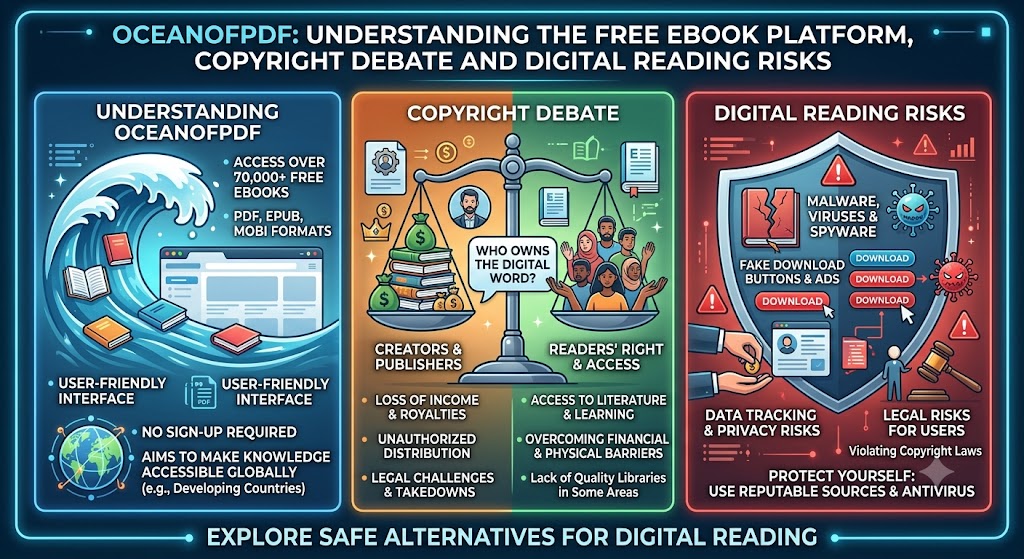
OceanofPDF became a widely discussed name in online reading communities because it offered free ebook downloads across numerous categories. The platform gained attention from readers searching for accessible digital copies of books, particularly in regions where purchasing physical or licensed ebooks could be difficult. However, the service also became controversial because many publishers and authors argued that books were distributed without proper authorisation.
The debate surrounding OceanofPDF represents a larger issue within the digital publishing industry: how can information become more accessible while protecting intellectual property rights? Since its emergence around 2018, the platform has been part of wider discussions about shadow libraries, copyright enforcement, and the changing economics of publishing.
Understanding this platform requires looking beyond simple questions about free books. It involves examining digital copyright law, reader behaviour, publishing business models, and the challenges faced by creators in an online environment where content can be copied and shared instantly.
What Is OceanofPDF and Why Did It Gain Popularity?
OceanofPDF was a website associated with free ebook downloads, offering users access to books in formats such as PDF and EPUB. Its appeal was largely based on convenience. Readers could search for titles, download files, and access literature without paying traditional retail prices.
The platform gained popularity among students, researchers, and casual readers who wanted easier access to books. In many developing markets, imported books and academic materials can be expensive, creating demand for alternative sources.
However, free availability created a major conflict. While readers viewed the platform as improving access to knowledge, publishers and authors viewed unauthorised distribution as a threat to creative industries.
| Aspect | Reader Perspective | Publisher Perspective |
| Cost | Free access to books | Lost sales revenue |
| Availability | Easier access worldwide | Reduced control over distribution |
| Convenience | Instant digital downloads | Increased copyright enforcement challenges |
| Education | Helpful for students | Potential impact on academic publishing models |
The Copyright Debate Behind OceanofPDF
The central issue surrounding OceanofPDF is copyright law. Books are protected intellectual property, meaning authors and publishers generally control how their works are reproduced and distributed.
In the UK, copyright protection is governed mainly by the Copyright, Designs and Patents Act 1988. Authors normally hold rights over reproduction, adaptation, and commercial distribution of their work.
Publishers argued that websites distributing copyrighted books without permission undermine the publishing ecosystem. Revenue from book sales supports writers, editors, translators, designers, and other professionals involved in producing literature.
The situation reflects a wider challenge across the internet. Similar debates have occurred around music sharing, film piracy, and unauthorised software distribution.
Accessibility Versus Author Rights
One reason platforms like OceanofPDF gain support is because they highlight genuine accessibility problems. Digital inequality remains a significant issue. Some readers cannot easily purchase books because of:
- High international shipping costs
- Limited ebook availability in certain countries
- Currency differences
- Educational resource shortages
However, accessibility solutions need sustainable models. Libraries, open-access publishing, subscription services, and affordable ebook platforms attempt to provide wider access while maintaining compensation systems.
The challenge is creating systems where readers benefit without removing income opportunities from creators.
Digital Publishing and the Rise of Alternative Reading Models
The publishing industry has changed significantly due to digital technology. Traditional publishers now compete with subscription platforms, self-publishing services, and online libraries.
| Digital Reading Model | Example Benefit | Main Challenge |
| Subscription services | Affordable access to many titles | Revenue sharing concerns |
| Public libraries | Free legal access | Limited availability |
| Open-access publishing | Knowledge sharing | Funding sustainability |
| Unauthorised platforms | Immediate free access | Copyright violations |
Platforms such as legal ebook marketplaces and library-based digital lending services demonstrate that readers increasingly expect instant access. The publishing industry has responded by improving digital distribution, pricing models, and regional availability.
Risks for Readers Using Unofficial Ebook Sources
Although free downloads may appear attractive, unofficial ebook platforms can create several risks.
Security Concerns
Websites offering free files may contain aggressive advertising, misleading download buttons, or potentially harmful files. Users cannot always verify whether downloaded content is safe.
Quality Issues
Unofficial copies may contain formatting problems, missing chapters, poor scanning quality, or incorrect editions.
Ethical Considerations
Readers must consider whether accessing unauthorised copies affects the people who created the work. A book represents the labour of authors, publishers, and many supporting professionals.
The Wider Impact on Authors and Publishing
Independent authors can be particularly affected by unauthorised distribution. Unlike major publishing companies, many independent writers rely heavily on direct sales, royalties, and digital purchases.
The Authors Guild and publishing organisations have repeatedly highlighted concerns about online piracy reducing earnings opportunities for creators.
At the same time, the popularity of free ebook platforms reveals a market demand that publishers cannot ignore. Readers clearly value affordability and accessibility.
A practical lesson for the industry is that reducing friction through reasonable pricing, regional availability, and library partnerships can help address some demand for unofficial alternatives.
The Future of OceanofPDF and Digital Book Access in 2027
By 2027, digital reading is expected to continue expanding through subscription models, library technology, and improved ebook distribution systems. Publishers are likely to focus on balancing accessibility with stronger copyright protection.
Artificial intelligence may also influence publishing through automated translation, personalised recommendations, and improved accessibility tools. However, copyright rules will remain central as technology makes content easier to reproduce.
Regulatory bodies and publishing organisations are expected to continue monitoring unauthorised digital distribution. The future direction will likely involve stronger enforcement combined with better legal access options.
Key Takeaways
- OceanofPDF represents the conflict between free information access and copyright protection.
- Digital readers increasingly expect affordable and instant book availability.
- Unauthorised ebook platforms create legal, ethical, and security concerns.
- Sustainable access models require cooperation between publishers, libraries, and technology companies.
- Copyright remains essential for protecting creative work.
- The publishing industry must continue adapting to digital consumer expectations.
Conclusion
OceanofPDF became a notable example of the challenges created by digital publishing. Its popularity demonstrated strong demand for affordable and accessible reading materials, especially among users facing financial or geographic barriers. However, the platform also highlighted the importance of protecting authors and publishers who depend on copyright-based income.
The future of digital reading will depend on finding a balance between openness and sustainability. Readers want convenience, but creators need fair compensation for their work. As technology continues changing how books are distributed, the publishing industry must develop solutions that support both access and creativity.
Frequently Asked Questions
What is OceanofPDF?
OceanofPDF was a website known for providing free ebook downloads. It became controversial because many books were allegedly distributed without permission from copyright holders.
Is OceanofPDF legal?
The legality of platforms offering copyrighted books without authorisation depends on copyright laws and permissions. Many publishers have considered such distribution a copyright infringement issue.
Why was OceanofPDF popular?
The platform gained attention because it provided free access to many books, especially for readers who found traditional ebook purchases expensive or unavailable.
Are free ebook websites safe?
Not always. Unofficial ebook websites may expose users to security risks, poor-quality files, or misleading advertisements.
What are legal alternatives to OceanofPDF?
Readers can use public libraries, authorised ebook stores, subscription services, and open-access platforms for legitimate access to digital books.
Methodology
This article was prepared using publicly available information about digital publishing, copyright frameworks, and online ebook distribution. Sources were reviewed from recognised publishing organisations and legal references. The analysis focuses on documented industry discussions rather than personal testing of the platform. Limitations include the changing availability of online services and evolving copyright enforcement practices.
References (APA Style)
Authors Guild. (2024). Copyright protection and challenges facing authors in the digital age. Authors Guild.
UK Government. (2024). Copyright, Designs and Patents Act 1988: Guidance. GOV.UK.
International Federation of Library Associations and Institutions. (2023). Digital access and copyright in libraries. IFLA.
World Intellectual Property Organization. (2023). Copyright and digital technologies. WIPO.