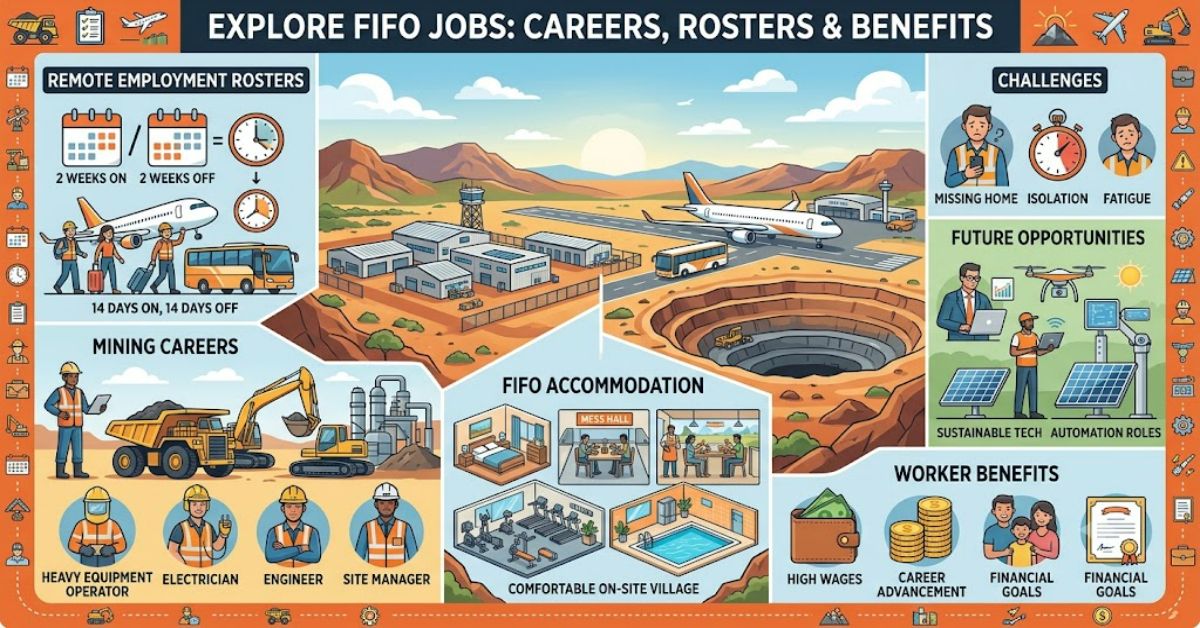
FIFO jobs refer to Fly-In, Fly-Out employment arrangements where companies transport workers to remote locations for scheduled shifts before returning them home during their break periods. This model is widely used in mining, oil and gas, renewable energy, construction, and remote infrastructure projects where permanent local staffing is difficult.
The concept developed strongly in Australia, particularly in Western Australia’s mining regions, where large resource projects required skilled workers in isolated areas. Instead of relocating employees permanently, companies created roster systems that allowed workers to travel between their homes and remote camps.
Today, FIFO roles cover a wide range of occupations, including engineers, heavy equipment operators, electricians, mechanics, chefs, cleaners, health workers, and camp support staff. Workers typically stay in company-provided accommodation while completing their roster, which may range from several days to multiple weeks.
The attraction is clear: many positions offer competitive salaries, paid travel, accommodation, and extended periods away from work. However, FIFO employment also involves challenges such as long periods away from family, demanding schedules, and adjustment difficulties.
Understanding how this employment system works helps job seekers decide whether remote rotational work matches their career goals and personal circumstances.
How FIFO Employment Works
FIFO employment follows a structured roster system. Instead of working a traditional Monday-to-Friday schedule, employees complete concentrated periods at remote sites followed by extended leave.
Common rosters include:
| Roster Pattern | Work Period | Time Off |
| 14/7 | 14 days onsite | 7 days at home |
| 8/6 | 8 days onsite | 6 days off |
| 21/7 | 21 days onsite | 7 days off |
| 2/2 | 2 weeks onsite | 2 weeks off |
The exact arrangement depends on the employer, project requirements, location, and role.
During their onsite period, workers usually receive:
- Accommodation in mining or project camps
- Meals and basic facilities
- Transport to and from the site
- Safety equipment and training support
The operational advantage for companies is flexibility. Organisations can access specialist workers without building permanent communities around every remote project.
Industries That Rely on FIFO Workers
Although mining is the most recognised sector, FIFO employment extends beyond resource extraction.
| Industry | Typical FIFO Roles |
| Mining | Operators, engineers, geologists, maintenance teams |
| Oil and gas | Technicians, safety officers, project specialists |
| Construction | Supervisors, tradespeople, infrastructure workers |
| Renewable energy | Wind farm technicians, electrical specialists |
| Remote services | Catering, cleaning, administration |
Large-scale projects often require temporary concentrations of expertise. FIFO systems allow companies to move skilled teams quickly while reducing permanent relocation costs.
Benefits of FIFO Employment
One of the biggest attractions of FIFO work is financial reward. Remote roles often include additional allowances because employers must compensate workers for challenging conditions.
Potential benefits include:
- Higher salaries compared with similar local roles
- Employer-funded travel
- Accommodation support
- Longer periods away from work
- Opportunities for career progression
For workers who value extended time off, a FIFO roster can provide more personal flexibility than traditional employment.
A worker completing a two-week roster may have almost half the year available outside scheduled shifts. This structure can suit people who want time for family responsibilities, travel, study, or personal projects.
Challenges and Risks of Remote Rotational Work
Despite the advantages, FIFO employment has significant lifestyle considerations.
Mental Health and Isolation
Remote camps can create social and emotional pressure. Workers may experience loneliness, fatigue, or difficulty maintaining relationships due to long absences.
The Australian Government’s resources sector research has highlighted the importance of workplace wellbeing programmes, fatigue management, and mental health support in remote industries.
Physical Demands
Many FIFO roles involve long shifts, sometimes exceeding traditional working hours. Workers must manage sleep patterns, physical recovery, and exposure to challenging environments.
Family Impact
Extended time away can affect relationships and parenting responsibilities. Successful FIFO workers often rely on strong communication routines and realistic expectations at home.
Practical Comparison: FIFO Versus Local Employment
| Factor | FIFO Employment | Local Employment |
| Location | Remote worksites | Near permanent residence |
| Accommodation | Usually provided | Worker manages housing |
| Schedule | Rotational shifts | Regular weekly timetable |
| Income Potential | Often higher | Usually more predictable |
| Lifestyle | Longer breaks but time away | More daily stability |
The decision depends on individual priorities. Some workers prefer concentrated work periods followed by long breaks, while others value daily family connection.
The Future of FIFO Jobs in 2027
The future of FIFO employment will be influenced by technology, labour demand, and workplace expectations.
Automation is already changing remote industries. Mining companies are increasingly using autonomous vehicles, remote monitoring systems, and digital control centres. However, skilled workers will remain essential for maintenance, technical decision-making, safety management, and specialised operations.
Renewable energy expansion may also create new remote employment opportunities. Large wind, solar, and infrastructure projects often require specialist teams in locations where local labour availability is limited.
By 2027, companies are likely to place greater emphasis on worker wellbeing, fatigue monitoring, and flexible roster design. Regulations and industry standards will continue encouraging safer approaches to remote employment.
However, FIFO employment will still face challenges. Labour shortages, housing pressures near major projects, and changing worker expectations may influence how companies structure future rosters.
Key Insights
- FIFO employment solves the challenge of staffing remote projects without requiring permanent relocation.
- High earnings often reflect compensation for demanding schedules and remote conditions.
- Worker wellbeing has become a central issue alongside productivity.
- Automation will change job requirements but not remove the need for skilled personnel.
- Renewable energy projects may become an important source of future remote employment.
- Successful FIFO workers usually develop strong financial and personal planning habits.
Methodology
This article was developed using publicly available information from government resources, industry reports, and established employment research covering remote work practices and resource-sector employment. Sources were selected to provide a balanced view of both the advantages and limitations of FIFO arrangements.
The analysis considers that FIFO experiences vary significantly depending on occupation, employer, location, roster pattern, and individual circumstances. Salary levels, workplace conditions, and employment availability can change according to market demand.
Frequently Asked Questions
What are FIFO jobs?
FIFO jobs are employment roles where workers travel to remote sites for scheduled shifts and return home during their rostered breaks.
Which industries offer FIFO employment?
Mining, oil and gas, construction, renewable energy, and remote support services commonly use FIFO workers.
Do FIFO workers receive accommodation?
Most FIFO positions include employer-provided camp accommodation and meals during onsite periods.
Are FIFO jobs only available in Australia?
No. FIFO-style employment exists internationally, especially in regions with remote mining, energy, and infrastructure projects.
Are FIFO jobs well paid?
Many FIFO positions offer competitive salaries because employers compensate workers for remote locations, travel requirements, and demanding schedules.
What skills are needed for FIFO work?
Requirements vary but often include trade qualifications, technical skills, safety certifications, and experience in relevant industries.
References
Australian Government. (2024). Resources and energy workforce information. Department of Industry, Science and Resources.
Safe Work Australia. (2024). Work health and safety guidance for remote and isolated work. Australian Government.
International Labour Organization. (2023). Working conditions and occupational safety in remote employment environments. ILO.