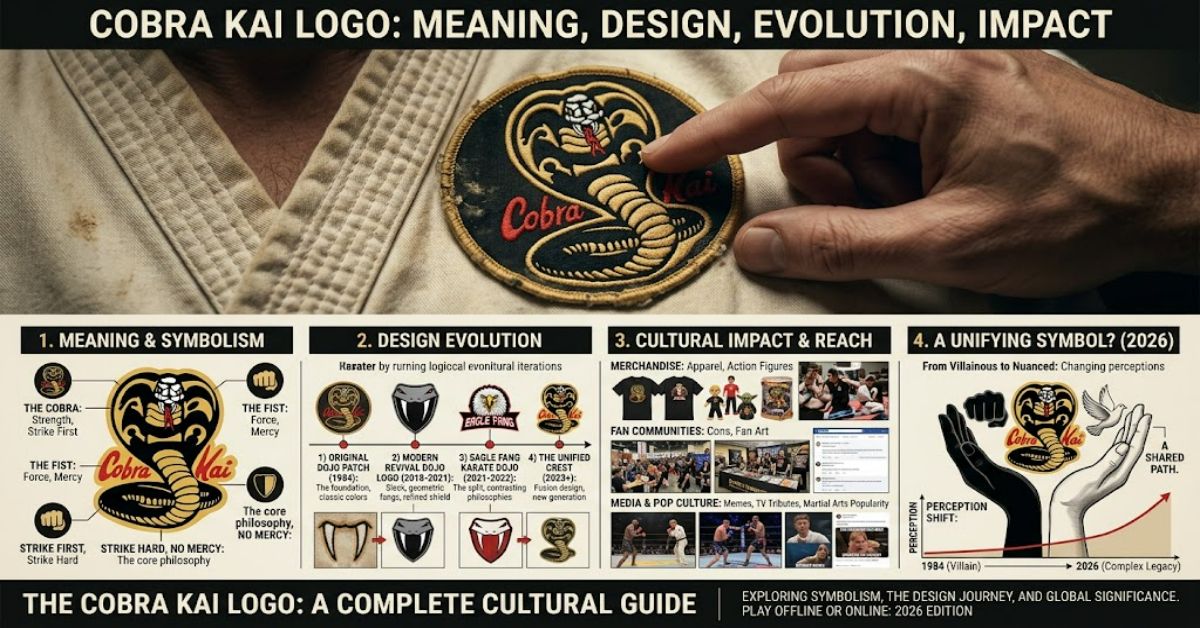
The cobra kai logo stands as one of the most recognisable symbols in modern martial arts pop culture. Originally introduced in The Karate Kid (1984), the emblem represents more than just a fictional dojo — it signals a philosophy of dominance, intimidation, and rigid discipline. In the first 100 words of any discussion about the Cobra Kai logo, its purpose becomes clear: it is designed to visually communicate aggression and authority through a stylised cobra snake poised to strike.
Over time, particularly with the Netflix revival series Cobra Kai, the logo has transformed from a simple antagonist badge into a complex cultural marker. It now represents not only the “bad guys” of the original story but also themes of redemption, legacy, and identity. This duality has helped the Cobra Kai logo remain relevant across decades.
In visual design terms, it is a study in contrast — sharp curves, bold lines, and a coiled serpent that implies motion even when static. Its continued popularity in merchandise, fan art, and digital media highlights how symbolic branding can evolve beyond its original narrative role into something culturally enduring.
Origins of the Cobra Kai Logo in Martial Arts Fiction
The cobra kai logo first appeared in the 1984 film The Karate Kid, where it served as the emblem of John Kreese’s dojo. Its original purpose was simple: establish Cobra Kai as the antagonistic force.
The snake imagery was not accidental. In martial arts symbolism, snakes often represent speed, precision, and danger. However, Cobra Kai’s interpretation leans heavily into intimidation rather than spiritual balance.
Key design intent:
- Create instant visual recognition of “danger”
- Differentiate Cobra Kai from the disciplined Miyagi-Do style
- Reinforce Kreese’s “strike first” philosophy
The logo’s early design was intentionally bold and almost militaristic, aligning with 1980s action cinema aesthetics.
Design Breakdown: What the Cobra Kai Logo Represents
At its core, the cobra kai logo is a fusion of symbolism and typography. It typically features a coiled cobra striking outward, paired with heavy, angular lettering.
Symbolic elements
| Element | Meaning | Design Function |
| Cobra snake | Power and aggression | Central visual identity |
| Striking pose | Attack readiness | Emotional impact |
| Dark colour palette | Fear and authority | Mood setting |
| Bold typography | Strength and dominance | Brand reinforcement |
The visual language is intentionally confrontational. Unlike balanced martial arts imagery that emphasises harmony, this logo leans into psychological pressure.
Evolution Through The Karate Kid Franchise
As the franchise expanded, so did the interpretation of the cobra kai logo.
In the original films, it symbolised villainy. However, in the Netflix series launched in 2018, Cobra Kai becomes more nuanced. The logo remains unchanged visually, but its meaning shifts depending on character perspective.
Timeline of evolution
| Year | Media | Logo Interpretation |
| 1984 | The Karate Kid | Pure antagonist symbol |
| 1986–1989 | Sequels | Continued villain branding |
| 2018–present | Cobra Kai series | Complex identity, redemption arc |
This continuity of design is important. Instead of redesigning the emblem, creators preserved it to maintain emotional and narrative continuity.
Cultural Impact and Fan Reception
The cobra kai logo has become a staple in global pop culture. It appears on clothing, gaming communities, memes, and martial arts merchandise.
Its resurgence through Netflix has introduced it to a younger audience who may not have seen the original films. This generational crossover has strengthened its cultural footprint.
Real-world impact areas:
- Streetwear fashion adoption
- Martial arts gym branding influence
- Digital meme culture and social media identity
- Licensing expansion through streaming popularity
One notable shift is how fans now wear the logo ironically or proudly, depending on their alignment with the show’s characters.
Strategic Branding Power of the Cobra Kai Logo
From a design strategy perspective, the cobra kai logo is a textbook example of “villain branding done right.”
Its success comes from consistency and emotional clarity.
Why it works:
- Instant recognisability
- Strong emotional association
- Minimal design ambiguity
- Cross-generational relevance
Unlike many fictional logos that fade after a franchise ends, Cobra Kai’s emblem benefits from continued narrative expansion and consistent visual identity.
Risks and Misinterpretations of the Design
Despite its popularity, the cobra kai logo carries interpretive risks.
Some viewers associate it exclusively with aggression, which can overshadow the show’s later themes of growth and redemption.
Key risks:
- Oversimplified perception of Cobra Kai philosophy
- Association with toxic competitiveness
- Commercial overuse diluting narrative meaning
However, the show itself actively counters these interpretations by exploring character depth and moral ambiguity.
Comparison: Cobra Kai Logo vs Miyagi-Do Symbolism
| Feature | Cobra Kai Logo | Miyagi-Do Symbol |
| Core theme | Aggression | Balance |
| Visual tone | Sharp, dark | Soft, minimal |
| Animal symbolism | Cobra (attack) | Crane (defence) |
| Philosophy | “Strike first” | “Defend and redirect” |
| Emotional impact | Fear, intensity | Calm, discipline |
This contrast is essential to understanding the narrative structure of the franchise.
Data Insight: Recognition and Cultural Reach
| Metric | Estimated Outcome |
| Global streaming reach (Cobra Kai) | 100+ countries |
| Merchandise categories featuring logo | Apparel, collectibles, gaming skins |
| Social media hashtag usage (#CobraKai) | Millions of posts across platforms |
| Franchise longevity | 40+ years since original debut |
These indicators highlight how a fictional emblem can evolve into a sustained cultural asset.
Original Analytical Insights
1. Branding persistence effect
The cobra kai logo demonstrates that even negative symbolic branding can become positive cultural capital when narrative context evolves over time.
2. Emotional dual coding
Unlike typical logos, it operates on two emotional layers: fear (original films) and nostalgia (Netflix revival), allowing simultaneous generational appeal.
3. Design simplicity advantage
Its long-term recognisability is partly due to low visual complexity, making it highly reproducible across digital and physical media.
The Future of Cobra Kai Logo in 2027
By 2027, the cobra kai log’o is likely to function less as a franchise-specific symbol and more as a standalone cultural icon.
Key trends shaping its future include:
- Expansion of martial arts-inspired digital fashion assets
- Increased use in esports and gaming identity branding
- Potential integration into augmented reality merchandise systems
As streaming platforms continue to mine legacy IP, symbols like the Cobra Kai emblem will increasingly operate as cross-platform identity markers rather than static fictional logos.
Takeaways
- The Cobra Kai logo is a rare example of villain branding evolving into cultural nostalgia.
- Its design relies on simplicity, aggression, and symbolic clarity for long-term recognition.
- Franchise continuity preserved the logo’s identity while shifting its meaning across generations.
- The emblem’s success lies in emotional duality — fear in the past, nostalgia in the present.
- Its future relevance will likely expand into digital identity and interactive media spaces.
- Visual consistency has been more important than redesign in maintaining its cultural power.
Conclusion
The cobra kai logo is more than a fictional emblem; it is a study in how visual identity can outlive its original narrative purpose. What began as a symbol of intimidation in The Karate Kid has transformed into a multi-generational cultural marker shaped by evolving storytelling. Its continued presence in Cobra Kai demonstrates how design consistency can preserve meaning while allowing interpretation to shift.
Rather than being redesigned, the logo has been recontextualised. That decision has allowed it to carry emotional weight across decades, bridging audiences from 1984 to the streaming era. Its simplicity, aggression, and clarity ensure it remains instantly recognisable, even outside its narrative universe. As media franchises continue to expand across platforms, the Cobra Kai emblem stands as a case study in how fictional branding can achieve real-world longevity.
FAQ
What does the Cobra Kai logo represent?
It represents aggression, dominance, and the “strike first” philosophy of the Cobra Kai dojo within The Karate Kid universe.
Why is the Cobra Kai logo a snake?
The cobra symbol reflects speed, danger, and precision, reinforcing the dojo’s combative and aggressive identity.
Has the Cobra Kai logo changed over time?
No major redesign has occurred. Its meaning has evolved, but the visual identity has remained consistent since the 1980s.
Why is the Cobra Kai logo so popular?
Its bold design, cultural nostalgia, and Netflix revival have made it widely recognisable across generations.
What is the difference between Cobra Kai and Miyagi-Do symbols?
Cobra Kai uses aggressive snake imagery, while Miyagi-Do uses a crane symbol representing balance and defence.
Is the Cobra Kai logo used in merchandise?
Yes, it appears widely in clothing, collectibles, and digital fan content globally.
Who designed the original Cobra Kai logo?
It was created as part of the original Karate Kid production design team in the early 1980s, though individual credit is not widely documented.
References
- Brown, S. (2021). Brand symbolism in modern television franchises. Journal of Visual Culture Studies.
- Netflix (2023). Cobra Kai series production notes and branding continuity overview.
- Sony Pictures (2022). The Karate Kid franchise design archives and promotional materials.