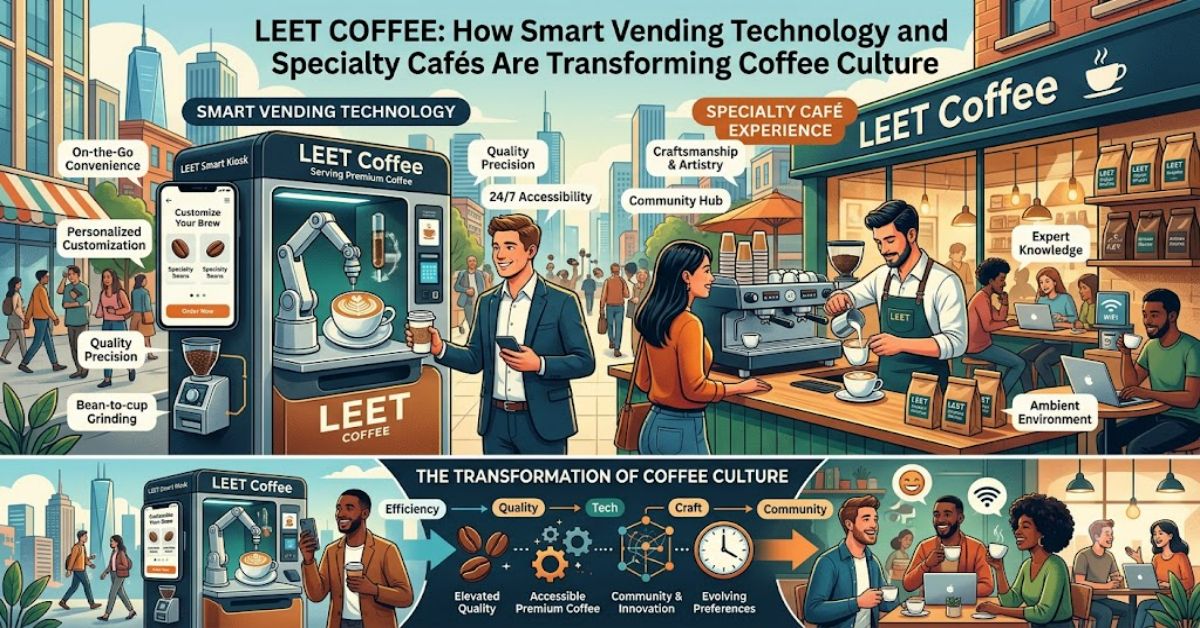
LEET Coffee represents a new generation of coffee experiences shaped by technology, convenience, and specialty beverage culture. The name refers to two notable coffee concepts in the Middle East: a smart vending platform in Kuwait focused on automated coffee preparation and a specialty café brand in Saudi Arabia offering premium coffee experiences.
The growth of coffee culture across the Gulf region has created opportunities for both technology-led and hospitality-focused businesses. Consumers are no longer choosing coffee only for caffeine; they increasingly value quality, convenience, atmosphere, personalisation, and brand identity.
In Kuwait, smart vending solutions demonstrate how automation can improve access to freshly prepared beverages in locations where speed and availability matter. In Saudi Arabia, specialty cafés represent a wider cultural shift towards curated coffee experiences, where brewing methods, bean origins, and customer engagement influence purchasing decisions.
The global coffee industry has experienced significant transformation over the past decade. According to the International Coffee Organization, consumer preferences have increasingly moved towards premium products, sustainability considerations, and differentiated coffee experiences.
LEET Coffee sits at the intersection of these trends. Its relevance comes from combining traditional coffee appreciation with modern digital expectations. However, operating in this space requires careful attention to consistency, equipment reliability, customer experience, and competitive positioning.
This article examines the technology, business approach, market influence, and future potential of LEET Coffee within the Middle Eastern coffee ecosystem.
What Is LEET Coffee?
The term LEET Coffee describes two different but connected interpretations within the regional coffee market.
One focuses on smart coffee technology, where automated systems use advanced equipment to prepare beverages with minimal human involvement. The other represents a specialty café approach centred around quality coffee preparation and customer experience.
Both models respond to the same consumer demand: better coffee experiences delivered through modern methods.
LEET Coffee Smart Vending Technology in Kuwait
Smart vending has become increasingly important in markets where consumers prioritise speed and accessibility.
Traditional coffee shops depend heavily on:
- Staff availability
- Physical locations
- Operating hours
- Customer queues
Smart coffee vending systems provide an alternative by allowing consumers to purchase freshly prepared beverages through automated machines.
These platforms typically combine:
- Digital payment systems
- Automated brewing technology
- Touchscreen ordering
- Remote monitoring
- Inventory management
The technology allows businesses to install coffee services in locations such as:
- Offices
- Universities
- Transport areas
- Shopping centres
- Corporate buildings
How Smart Coffee Systems Work
A modern automated coffee machine operates through several connected systems.
| Technology Component | Function |
| Automated brewing unit | Prepares consistent beverages |
| Digital interface | Allows customer ordering |
| Payment integration | Enables cashless transactions |
| Remote monitoring | Tracks machine performance |
| Inventory sensors | Helps manage supplies |
The main advantage is operational efficiency. A machine can provide coffee without requiring a full café team, reducing labour requirements and allowing longer service availability.
Specialty Café Culture and LEET Coffee in Saudi Arabia
Saudi Arabia has experienced substantial growth in specialty coffee culture.
Coffee consumption in the region has strong cultural roots, particularly through traditional Arabic coffee traditions. Modern specialty cafés have expanded this relationship by introducing international brewing methods, premium beans, and contemporary café environments.
A specialty café focuses on factors such as:
- Coffee origin
- Roasting profile
- Brewing technique
- Barista expertise
- Customer education
Unlike automated models, cafés create value through human interaction and atmosphere.
The Experience Economy Behind Specialty Coffee
Modern coffee businesses compete on more than product quality.
Customers increasingly evaluate:
- Interior design
- Brand personality
- Social atmosphere
- Digital presence
- Sustainability practices
A café becomes a lifestyle destination rather than simply a place to buy a drink.
Comparing Smart Coffee Technology and Specialty Cafés
| Feature | Smart Coffee Vending | Specialty Café |
| Main advantage | Speed and convenience | Experience and craftsmanship |
| Human involvement | Limited | High |
| Operating model | Technology-driven | Hospitality-driven |
| Best locations | Offices, public spaces | Retail areas and communities |
| Customer relationship | Transaction-focused | Experience-focused |
Both approaches address different consumer needs rather than directly replacing each other.
Technology’s Role in Coffee Innovation
The coffee industry is increasingly adopting digital tools to improve efficiency and customer engagement.
Technology applications include:
- Mobile ordering
- Customer loyalty platforms
- Automated preparation
- Data analytics
- Digital payments
For smart coffee systems, data can provide insights into:
- Peak purchasing times
- Popular drinks
- Equipment performance
- Supply requirements
For cafés, digital tools can improve:
- Customer retention
- Marketing campaigns
- Personalised offers
The combination of physical products and digital experiences is becoming a defining feature of modern food and beverage businesses.
Business Strategy Behind LEET Coffee’s Dual Model
The two LEET Coffee concepts highlight two different strategies for entering the coffee market.
Convenience-Based Strategy
The smart vending approach focuses on accessibility.
Its value proposition is:
- Faster service
- Lower staffing requirements
- Wider placement opportunities
- Consistent preparation
This model is particularly relevant in urban environments where consumers want quality coffee without waiting.
Premium Experience Strategy
The specialty café approach focuses on emotional connection.
Its value proposition includes:
- Premium products
- Coffee knowledge
- Community building
- Brand identity
This approach depends heavily on customer loyalty and reputation.
Market Impact in the Middle East Coffee Industry
The Middle East has become an important region for coffee innovation.
Several factors are influencing growth:
Young Consumer Demographics
Younger consumers increasingly seek:
- New experiences
- Digital convenience
- Premium products
- Social spaces
Growth of Specialty Coffee
Specialty coffee has expanded as consumers become more knowledgeable about:
- Bean varieties
- Brewing methods
- Roasting techniques
Smart Retail Development
Automation is becoming more common across sectors including:
- Food service
- Retail
- Banking
- Transportation
Coffee vending technology fits within this broader movement towards self-service experiences.
Risks and Challenges Facing Modern Coffee Platforms
Although technology creates opportunities, businesses must manage several challenges.
Maintaining Beverage Quality
Coffee quality depends on multiple variables:
- Bean freshness
- Water quality
- Temperature control
- Brewing precision
Automation must maintain consistency to compete with skilled baristas.
Customer Perception
Some consumers associate premium coffee with human craftsmanship.
Automated systems may need stronger branding and education to demonstrate quality.
Operational Reliability
Smart machines require:
- Regular maintenance
- Software updates
- Technical support
- Supply management
Equipment failure can directly affect customer satisfaction.
Original Insights: Hidden Factors Influencing Coffee Technology Success
1. Convenience Alone Does Not Create Loyalty
Automated coffee systems can attract customers through speed, but long-term loyalty usually requires additional value such as taste consistency, personalisation, or rewards.
2. Coffee Brands Must Balance Technology and Human Connection
The strongest future models may combine automation for efficiency with human storytelling around coffee origins, preparation, and culture.
3. Location Strategy Matters More Than Machine Availability
A smart coffee machine placed in a high-traffic environment may outperform a technically superior system in a low-demand location.
Structured Insight Table: Evaluating LEET Coffee’s Market Position
| Factor | Opportunity | Challenge |
| Automation | Faster service and scalability | Maintenance requirements |
| Specialty coffee | Premium customer loyalty | Strong competition |
| Digital payments | Easier transactions | Cybersecurity concerns |
| Regional growth | Expanding coffee culture | Changing consumer preferences |
The Future of LEET Coffee in 2027
By 2027, coffee businesses in the Middle East are likely to continue combining technology with premium experiences.
Several developments may influence the sector:
Smarter Coffee Machines
Artificial intelligence and connected devices may improve:
- Beverage personalisation
- Predictive maintenance
- Customer recommendations
Increased Premium Consumption
Consumers are expected to continue exploring higher-quality coffee experiences as specialty culture develops.
Stronger Sustainability Expectations
Coffee businesses will face increasing pressure to consider:
- Responsible sourcing
- Packaging waste
- Energy efficiency
The future direction of LEET Coffee will depend on how effectively it balances convenience, quality, and customer connection.
Key Takeaways
- LEET Coffee reflects changing coffee habits across the Middle East.
- Smart vending technology improves accessibility and operational efficiency.
- Specialty cafés create value through craftsmanship and experience.
- Digital tools are becoming essential in modern coffee businesses.
- Quality consistency remains a major challenge for automated coffee systems.
- Successful coffee brands must combine convenience with emotional connection.
Conclusion
LEET Coffee represents two important developments shaping the modern coffee industry: automation-driven convenience and premium specialty experiences. Both approaches respond to changing consumer expectations across the Middle East, where coffee culture continues to expand through innovation and tradition.
Smart vending technology offers opportunities for wider accessibility, while specialty cafés provide deeper customer relationships through atmosphere, expertise, and craftsmanship. Neither model exists in isolation; the future of coffee may depend on combining digital efficiency with authentic human experiences.
As consumers become more selective, coffee businesses will need to focus on consistency, quality, and meaningful engagement. Technology can improve how coffee is delivered, but lasting success will depend on creating experiences that customers value.
Frequently Asked Questions
What is LEET Coffee?
LEET Coffee refers to modern coffee concepts in the Middle East, including smart vending technology in Kuwait and specialty café operations in Saudi Arabia.
How does smart coffee vending work?
Smart coffee vending machines use automated brewing systems, digital ordering interfaces, and payment technology to prepare beverages efficiently.
Are automated coffee machines replacing cafés?
Automated systems provide convenience but do not fully replace cafés, which offer social experiences, human interaction, and specialised preparation.
Why is specialty coffee growing in Saudi Arabia?
Specialty coffee is growing because consumers increasingly value premium products, unique experiences, and knowledge about coffee preparation.
What are the benefits of smart coffee technology?
Benefits include faster service, reduced staffing requirements, wider availability, and improved operational monitoring.
What challenges do coffee technology companies face?
Key challenges include maintaining quality, ensuring machine reliability, managing costs, and building customer trust.
Methodology
This article was developed using publicly available information about coffee industry trends, specialty coffee growth, automation technology, and digital retail developments.
The analysis considers broader market patterns rather than unpublished internal company data. Specific LEET Coffee features, locations, and services should be verified through official company sources before publication.
Sources were selected to provide context on coffee consumption, technology adoption, and regional market development. Limitations include the availability of independently verified operational data for specific brands.
This article was drafted with AI assistance and requires editorial review to confirm all brand-specific details before publication.
References
Market Overview. International Coffee Organization.
Specialty Coffee Association. (2024). Specialty Coffee Industry Trends and Market Insights. Specialty Coffee Association.
Grand View Research. (2024). Coffee Market Size, Share and Trends Analysis Report. Grand View Research.
McKinsey & Company. (2023). The Economic Potential of Generative AI and Digital Transformation. McKinsey Global Institute.
Food and Agriculture Organization of the United Nations. (2023). Coffee Value Chains and Sustainability Overview. FAO.
Editorial Verification Note: All company-specific details, market statistics, and references should be independently verified against primary sources before publication.