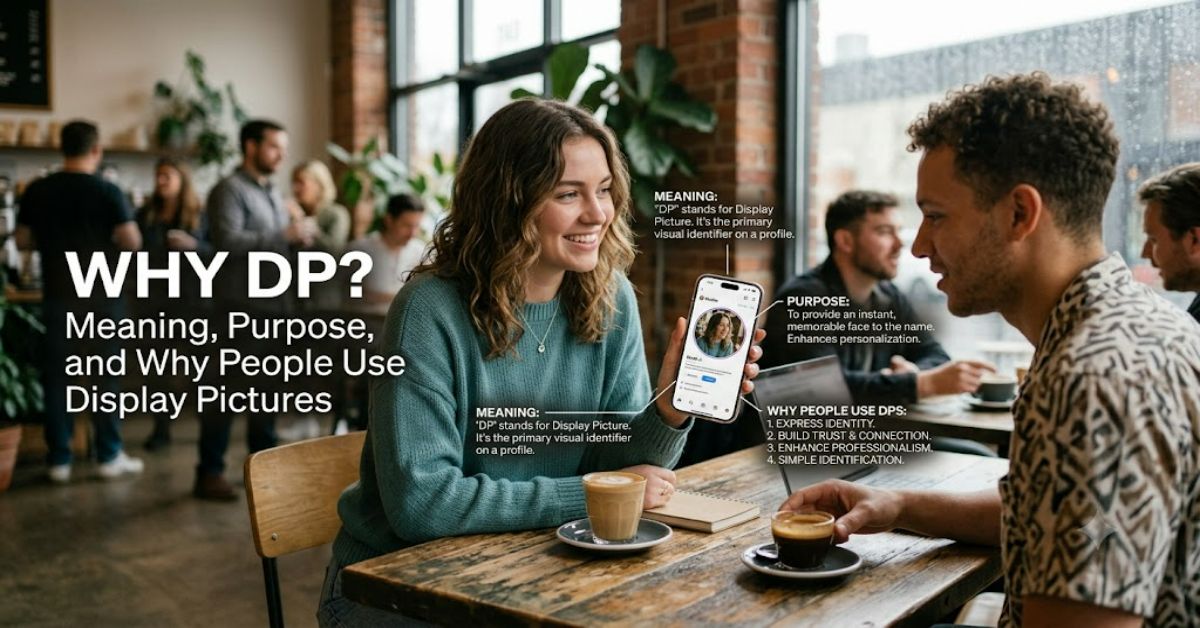
If you’ve ever wondered why DP is such a common term online, the answer is surprisingly simple. DP stands for Display Picture, which is the profile image displayed on platforms like WhatsApp, Facebook, Telegram, Instagram, and many other social media or messaging applications. Although it may seem like a small feature, a display picture plays a significant role in how people identify, remember, and interact with one another online.
Long before profile photos became standard, digital communication relied mainly on usernames. Today, visual identity has become equally important. A familiar face or recognizable image helps contacts instantly know who they’re talking to while making conversations feel more personal.
Whether you’re chatting with friends, networking professionally, or building a personal brand, your DP often creates the first impression before anyone reads your message.
What Does DP Mean?
DP stands for Display Picture.
It refers to the image attached to your account that appears beside your name in messaging apps and social media platforms.
Common platforms using DPs include:
- Telegram
- Signal
- Discord
- Microsoft Teams
- Slack
Although Instagram and X (formerly Twitter) often call it a “profile picture,” many users still casually refer to it as a DP.
Why Do People Use a DP?
A display picture serves several important purposes beyond simply showing your face.
Identification
Friends, colleagues, and family members can recognise you immediately, especially when many contacts have similar names.
Personal Expression
People often choose photos that reflect:
- Their personality
- Hobbies
- Travel experiences
- Favourite sports
- Pets
- Artwork
- Inspirational quotes
A DP becomes a small visual introduction before any conversation begins.
Building Trust
Accounts without profile photos sometimes appear inactive, fake, or unfamiliar. A genuine display picture often makes conversations feel more authentic.
How DPs Influence First Impressions
Psychologists have long recognised that people form first impressions quickly, even in digital spaces. Your display picture becomes one of the first visual cues others notice.
For example:
| Type of DP | Common Impression |
| Professional headshot | Reliable and business-oriented |
| Casual smiling photo | Friendly and approachable |
| Travel image | Adventurous personality |
| Pet photo | Warm and relaxed |
| Logo or brand image | Business or organisation |
| No photo | Anonymous or inactive account |
While these impressions are not always accurate, they often influence how others approach a conversation.
Why People Frequently Change Their DP
Many users update their display picture regularly.
Common reasons include:
- Birthday celebrations
- Graduation
- Weddings
- Vacations
- Festivals
- Personal achievements
- Seasonal themes
- Simply wanting a fresh look
Changing a DP also allows people to mark important milestones without writing a lengthy status update.
DP Across Different Platforms
Different platforms encourage different styles of display pictures.
| Platform | Typical DP Style | Primary Purpose |
| Personal photo | Family and friends | |
| Personal or lifestyle | Social networking | |
| Professional headshot | Career networking | |
| Discord | Avatar or artwork | Community identity |
| Telegram | Flexible | Personal messaging |
| Slack | Professional photo | Workplace communication |
Choosing an appropriate DP depends largely on the audience using that platform.
The Benefits of Having a Good Display Picture
A quality profile picture offers several advantages.
Better Recognition
Contacts quickly identify your messages.
Stronger Communication
People generally feel more comfortable interacting with accounts that have authentic profile images.
Professional Branding
For freelancers, entrepreneurs, and job seekers, a polished headshot can strengthen credibility.
Personal Identity
A display picture helps represent who you are, even before your first message is read.
Risks and Privacy Considerations
Although DPs are useful, they also involve privacy considerations.
Some people avoid using personal photos because of:
- Identity theft
- Image misuse
- Fake profile creation
- Privacy concerns
- Public visibility
Most platforms now allow users to control who can view their display picture, such as everyone, contacts only, or nobody.
Before uploading a photo, it’s worth reviewing your privacy settings.
Tips for Choosing a Good DP
A strong display picture doesn’t require expensive photography.
Consider these simple guidelines:
- Use a clear, high-resolution image.
- Choose good natural lighting.
- Keep your face visible if using a personal photo.
- Avoid excessive filters.
- Match the image to the platform.
- Update it occasionally to keep your profile current.
For professional networks, simple backgrounds and genuine expressions usually work best.
Why Businesses Also Care About DPs
Display pictures aren’t only for individuals.
Businesses use logos, branded graphics, and team photos to:
- Increase brand recognition
- Build customer trust
- Maintain visual consistency
- Improve communication across messaging platforms
Many customers recognise companies by their profile image before reading the business name.
The Future of DP in 2027
By 2027, display pictures are expected to become more dynamic. AI-assisted profile enhancements, animated avatars, and privacy-focused identity verification may become increasingly common across messaging platforms. At the same time, concerns over deepfakes and impersonation are likely to encourage stronger verification systems, allowing users to prove account authenticity without sacrificing privacy. Despite these technological changes, the core purpose of a DP—helping people recognise and connect with one another—is unlikely to change.
Key Takeaways
- DP stands for Display Picture.
- A profile photo improves recognition and communication.
- Different platforms encourage different DP styles.
- Professional headshots work best for business networks.
- Privacy settings should always be reviewed before uploading personal photos.
- Updating your DP can reflect life events and personal milestones.
Conclusion
Understanding why DP matters goes beyond simply knowing what the abbreviation stands for. A display picture has become an essential part of online identity, helping people recognise contacts, establish trust, and express personality across social media and messaging platforms. Whether it’s a family photo on WhatsApp, a polished headshot on LinkedIn, or a creative avatar on Discord, the image you choose communicates something about you before a single message is exchanged.
At the same time, users should balance self-expression with privacy. Choosing an appropriate image and managing visibility settings can help maintain both authenticity and security. As online communication continues to evolve, the humble display picture will remain one of the simplest yet most effective ways to personalise digital interactions.
Frequently Asked Questions
What does DP stand for?
DP stands for Display Picture, which is the profile image shown on messaging apps and social media accounts.
Why is DP important?
A DP helps people recognise you quickly, builds trust, and adds personality to your online profile.
Is DP the same as a profile picture?
Yes. While some platforms officially use the term “profile picture,” many users still call it a DP.
Can I hide my DP from others?
Yes. Most messaging apps, including WhatsApp, allow you to limit who can see your display picture through privacy settings.
Should I use the same DP everywhere?
Not necessarily. A professional platform like LinkedIn usually benefits from a business-style headshot, while social platforms allow for more casual or creative images.