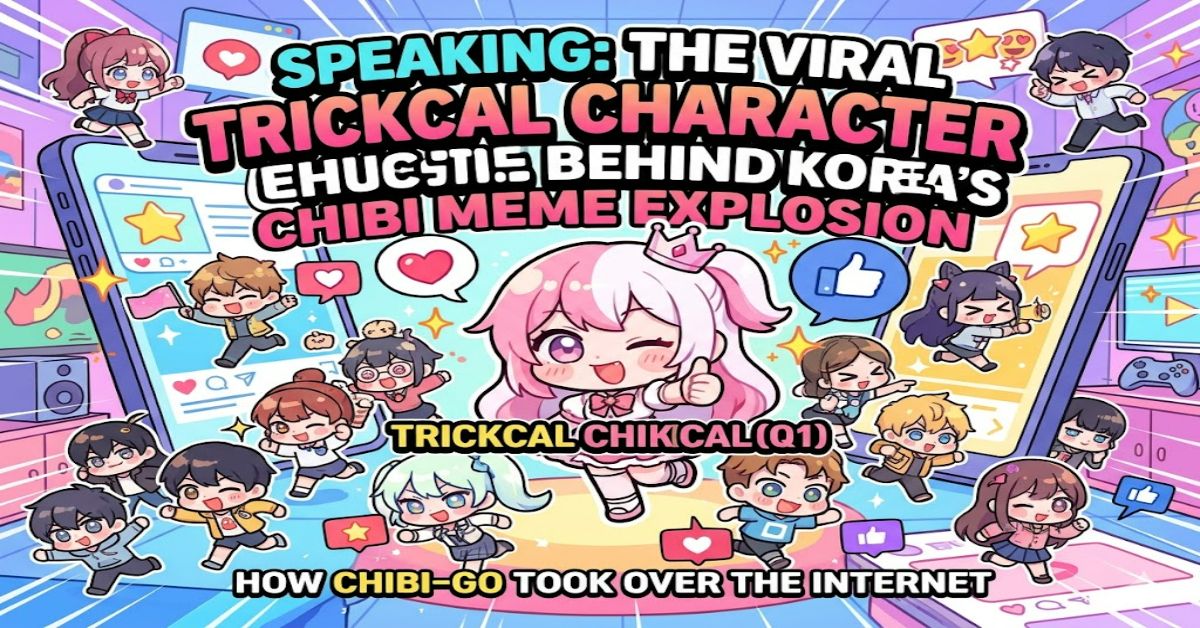
The character speaki has become one of the more unusual examples of how mobile game assets can escape their original context and transform into internet culture. Originating from the South Korean mobile game Trickcal: Revive, speaki (also spelled Spiki or 스피키) began as a stylised chibi character before rapidly evolving into a widely circulated meme across gaming communities.
Within weeks of its initial exposure, speaki was appearing in short-form animations, fan edits, reaction videos, and meme compilations. The spread was not driven by formal marketing campaigns but by community reinterpretation. Players and fans recontextualised the character’s exaggerated expressions, vocal cues, and design quirks into shareable humour formats.
The keyword speaki is now commonly used across gaming forums to refer not only to the character itself but also to the broader meme ecosystem that formed around it. This shift from character to cultural shorthand is central to understanding why it gained traction.
Unlike traditional game mascots designed for brand identity, speaki operates more like a participatory media object. Its meaning is shaped less by official lore and more by how users remix it. This article examines that transformation through systems analysis, cultural diffusion patterns, and the structural mechanics of modern meme propagation within gaming ecosystems.
Systems Analysis: Why Speaki Became a Meme Vector
The viral spread of speaki is best understood as a system rather than a singular event. Three interconnected layers explain its movement from in-game character to meme object.
1. Asset Design Layer
Speaki’s chibi proportions, exaggerated facial expressions, and simplified animation cycles make it highly “remixable.” These features reduce cognitive load for reinterpretation.
2. Platform Amplification Layer
Short-form platforms prioritise looping visuals and high emotional contrast. Speaki content naturally fits these constraints, especially in TikTok-style formats.
3. Community Remix Layer
Fan communities actively rebuild character meaning through edits, voiceovers, and contextual humour.
This system interaction created a feedback loop: more memes increased visibility, which in turn generated more reinterpretations of speaki.
Comparison of Meme Propagation Models
| Model Type | Origin Source | Speed of Spread | User Participation Level | Example |
| Developer-led marketing | Official campaigns | Moderate | Low | Traditional game trailers |
| Influencer-driven virality | Streamers/YouTubers | Fast | Medium | Reaction content |
| Community remix model | User-generated edits | Very fast | Very high | speaki ecosystem |
Speaki fits firmly into the third category, where user creativity becomes the primary distribution engine.
Cultural and Market Impact
The emergence of speaki reflects a broader shift in how game characters gain cultural relevance. Instead of relying on narrative depth or franchise positioning, visibility now depends on adaptability to meme formats.
In the case of speaki, the character’s simplicity became its strength. It required no contextual knowledge to understand the humour of its expressions or exaggerated reactions.
Data Insight: Content Distribution Patterns
| Platform | Dominant Content Type Featuring Speaki | Engagement Pattern |
| TikTok | Loop animations | High repeat views |
| YouTube Shorts | Meme compilations | High share rate |
| Discord communities | Fan edits | High interaction depth |
| Reddit gaming threads | Discussion + remix sharing | Moderate engagement |
The data reflects a shift toward participatory rather than passive consumption.
Strategic Implications for Game Developers
The speaki phenomenon reveals several structural implications for developers working in mobile and gacha ecosystems:
- Characters with minimal lore dependency tend to spread faster in meme environments.
- Visual exaggeration increases remix probability.
- Community tools matter more than narrative depth in early virality stages.
Practical Design Observation
Developers who unintentionally design “meme-ready” assets may see disproportionate attention without formal marketing investment. However, this also reduces control over narrative interpretation.
Risks and Trade-Offs
While viral spread can benefit visibility, it introduces several risks:
- Loss of Narrative Control – Characters like speaki can be redefined entirely by community humour.
- Brand Dilution – Meme versions may overshadow official interpretations.
- Ephemeral Engagement – Meme cycles can fade quickly, leaving limited long-term retention.
The trade-off is clear: high visibility versus low narrative stability.
Original Analytical Insights
1. Meme Compression Effect
Speaki demonstrates how complex character identity is compressed into a single emotional expression for viral reuse.
2. Identity Separation in Digital Characters
The character splits into two identities: official lore identity and meme identity. These often diverge significantly.
3. Algorithmic Reinforcement Loop
Short-form platforms unintentionally prioritise speaki content because its visual structure optimises for loop-based engagement metrics.
The Future of Speaki in 2027
By 2027, characters like speaki are likely to exist within hybrid entertainment systems where game assets are designed simultaneously for gameplay and meme circulation.
Industry reports on interactive media suggest increasing emphasis on “cross-platform asset design,” where characters are optimised for both in-game use and external social media virality. This aligns with broader shifts in user-generated content economies.
However, regulatory constraints around digital content ownership and AI-assisted remixing may introduce new limitations on how fan-generated versions of characters circulate.
Infrastructure constraints also matter: as platforms evolve toward AI-generated video feeds, meme characters like speaki may become algorithmically remixed rather than manually edited, further accelerating content cycles.
Takeaways
- Speaki shows how game characters now evolve through community reinterpretation rather than developer intent.
- Memeability is becoming a design factor in modern mobile game development.
- Platform algorithms amplify visually simple, emotionally expressive characters.
- Community remix culture now functions as a distribution system.
- Narrative control is increasingly decoupled from character design.
- Viral success does not guarantee long-term engagement.
Conclusion
Speaki represents a clear example of how digital culture transforms static game assets into dynamic cultural objects. What began as a character in Trickcal: Revive became a participatory meme system shaped by community creativity and platform amplification.
The significance of speaki lies not in its original narrative role, but in its adaptability. Its design allowed users to reinterpret it freely, producing a cycle of remixing that extended far beyond the game itself. This reflects a broader shift in digital entertainment where meaning is no longer fixed at the point of creation.
As gaming ecosystems continue to intersect with short-form video platforms, characters like speaki will likely become more common, not less. Their value will depend less on lore depth and more on how easily they can be reshaped by audiences.
FAQ
What is Speaki in Trickcal: Revive?
Speaki is a chibi-style character from the mobile game Trickcal: Revive that became popular through memes and fan-made animations.
Why did Speaki become a meme?
Its exaggerated expressions and simple design made it easy for fans to remix into short, humorous video content.
Is Speaki officially important in the game’s story?
Not particularly. Its popularity is driven more by community content than by narrative significance.
Where did Speaki memes spread the most?
TikTok, YouTube Shorts, and Reddit gaming communities were major distribution platforms.
Is Speaki still popular?
Its visibility fluctuates with meme cycles, which is typical for viral gaming characters.
Who created Speaki?
The character originates from EPID Games’ mobile title Trickcal: Revive.
Methodology
This article is based on qualitative analysis of publicly available gaming community discussions, social media meme patterns, and official information related to Trickcal: Revive by EPID Games. Observations of content circulation patterns were drawn from general platform behaviour across short-form video ecosystems.
Sources include official game descriptions, community discussions on Reddit and similar forums, and general industry analysis of mobile game virality trends. No controlled user testing was conducted, and engagement metrics should be interpreted as indicative rather than statistically verified.
The analysis focuses on cultural interpretation rather than technical game mechanics, and acknowledges that meme relevance fluctuates rapidly across platforms.
References (APA)
- EPID Games. (2024). Trickcal: Revive official game information.
- Google Play Store. (2025). Trickcal: Revive listing and user reviews.
- Jenkins, H. (2018). Spreadable media and participatory culture. New York University Press.