Recognising red flags in men is about identifying consistent behaviours that suggest a relationship may become unhealthy, controlling, or emotionally damaging. While everyone has flaws and occasional bad days, patterns such as ignoring personal boundaries, manipulating emotions, displaying excessive jealousy, or consistently disrespecting others deserve attention. Understanding these warning signs early allows people to make informed decisions before becoming deeply invested in a relationship.
Many unhealthy relationships do not begin with obvious abuse. Instead, problematic behaviour often develops gradually through small acts of control, inconsistent communication, emotional manipulation, or attempts to isolate a partner. These behaviours can be difficult to recognise because they may be disguised as affection, concern, or protectiveness.
Relationship psychologists generally encourage evaluating patterns over isolated incidents. A disagreement or misunderstanding does not automatically indicate a toxic relationship. However, repeated disrespect, dishonesty, intimidation, or manipulation should never be ignored.
This guide explores common warning signs, explains why they matter, and offers practical advice for distinguishing between ordinary relationship challenges and behaviours that may indicate deeper concerns.
What Are Relationship Red Flags?
Relationship red flags are recurring behaviours that suggest someone may struggle with healthy communication, emotional regulation, respect, or accountability.
These warning signs often appear during the early stages of dating but may become more noticeable as emotional commitment increases.
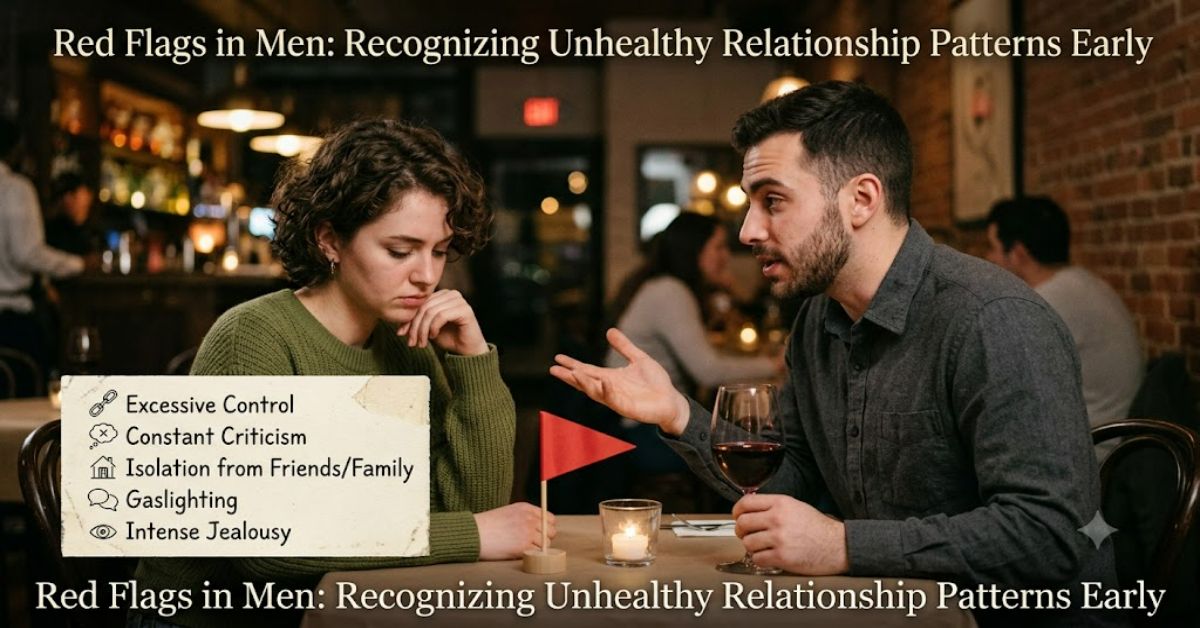
Common examples include:
- Ignoring personal boundaries
- Controlling behaviour
- Persistent dishonesty
- Emotional manipulation
- Extreme jealousy
- Lack of accountability
- Disrespect towards others
- Isolating a partner from family or friends
Not every disagreement signals a serious problem. The concern arises when these behaviours become consistent patterns.
Common Red Flags to Watch For
Disregard for Personal Boundaries
Healthy partners respect emotional, physical, and personal boundaries.
Someone who repeatedly pressures you to share private information, move faster than you’re comfortable with, or ignores requests to stop certain behaviours may be demonstrating a lack of respect.
Boundaries exist to protect emotional wellbeing, not to create distance.
Controlling Behaviour
Control often develops gradually.
Examples include:
- Monitoring your whereabouts
- Demotionalanding constant updates
- Criticising your clothing or appearance
- Attempting to influence friendships
- Making financial decisions without discussion
Control is often mistaken for care during the early stages of a relationship.
Inconsistent Communication
Everyone becomes busy occasionally.
However, regularly disappearing without explanation, sending mixed messages, or alternating between intense affection and emotional distance can create confusion and emotional dependency.
Consistency builds trust.
Disrespect Towards Others
How someone treats strangers, service workers, former partners, or family members often reveals long-term behavioural patterns.
Respect should not be reserved only for romantic partners.
Refusing Accountability
Healthy people apologise when they make mistakes.
Someone who always blames others, refuses responsibility, or portrays themselves as the victim in every conflict may struggle with emotional maturity.
Comparison Table: Healthy Behaviours vs Red Flags
| Healthy Behaviour | Potential Red Flag |
| Respects boundaries | Ignores or pressures boundaries |
| Encourages independence | Attempts to control decisions |
| Honest communication | Frequent lying or secrecy |
| Takes responsibility | Blames everyone else |
| Resolves conflict calmly | Uses intimidation or manipulation |
| Supports friendships | Tries to isolate partner |
Why These Patterns Matter
Most unhealthy relationships do not become toxic overnight.
Small behaviours often escalate over time.
For example, frequent jealousy may initially appear flattering but can eventually develop into controlling behaviour. Likewise, constant criticism may gradually damage confidence and increase emotional dependence.
Recognising early warning signs allows people to establish boundaries before unhealthy dynamics become deeply established.
Strategic Insights: Looking Beyond Individual Incidents
One of the biggest mistakes people make is evaluating isolated events instead of behavioural patterns.
A partner forgetting an important date is different from repeatedly dismissing your feelings.
Similarly:
- One argument is normal.
- Constant verbal insults are not.
- Occasional stress is understandable.
- Chronic intimidation is not.
The key question is whether behaviour improves after honest communication or continues despite repeated conversations.
Insight Table: Behaviour and Possible Meaning
| Behaviour | Possible Concern |
| Constant jealousy | Insecurity or controlling tendencies |
| Love bombing | Emotional manipulation |
| Frequent criticism | Undermining confidence |
| Silent treatment | Emotional control |
| Gaslighting | Psychological manipulation |
| Refusing compromise | Lack of respect for equality |
Risks and Trade-Offs
While recognising warning signs is valuable, it’s equally important not to label every imperfection as a red flag.
Healthy relationships involve:
- Disagreements
- Misunderstandings
- Personal growth
- Learning communication skills
Context matters.
Someone having a stressful week differs significantly from someone consistently displaying manipulative or abusive behaviour.
Looking for repeated patterns rather than isolated mistakes helps avoid unfair assumptions.
Real-World Impact
Relationship researchers consistently highlight that emotional abuse often develops gradually rather than suddenly.
Early intervention—whether through honest conversations, setting boundaries, or seeking professional guidance—can prevent more serious problems later.
For individuals already experiencing fear, intimidation, or coercive control, professional support services can provide confidential advice and safety planning.
Healthy relationships encourage confidence, independence, and mutual respect rather than fear or uncertainty.
The Future of Relationship Awareness in 2027
Growing awareness of emotional wellbeing, healthy boundaries, and psychological safety is likely to continue through 2027.
Mental health education, digital wellbeing initiatives, and increased public discussion about coercive control may help more people identify unhealthy behaviours earlier.
Technology may also influence dating through AI-assisted compatibility tools and safety features on dating platforms. However, no technology can replace personal judgement, open communication, and healthy boundaries.
Relationship education is increasingly focusing not only on recognising red flags but also on developing “green flags”—behaviours that promote trust, empathy, accountability, and emotional security.
Key Takeaways
- Look for repeated behavioural patterns rather than isolated incidents.
- Healthy relationships respect boundaries and encourage independence.
- Manipulation often develops gradually.
- Honest communication should improve conflicts over time.
- Trust your instincts when behaviour consistently makes you feel unsafe or disrespected.
- Healthy relationships are based on mutual respect rather than control.
Conclusion
Recognising red flags in men is not about judging every mistake or expecting perfection. Instead, it involves paying attention to recurring behaviours that undermine trust, respect, and emotional wellbeing.
Strong relationships are built through honesty, accountability, empathy, and mutual support. When someone repeatedly ignores boundaries, manipulates emotions, or attempts to control important aspects of your life, those behaviours deserve careful consideration.
At the same time, healthy relationships require communication and understanding. Not every disagreement signals incompatibility, and personal growth remains possible when both partners are willing to listen, apologise, and change.
The most reliable approach is to evaluate consistent patterns, maintain clear personal boundaries, and seek trusted support if a relationship begins affecting your emotional or physical safety.
Frequently Asked Questions
What are the biggest red flags in men?
Some of the most common include controlling behaviour, dishonesty, emotional manipulation, disrespect for boundaries, extreme jealousy, and refusing to accept responsibility for mistakes.
Can someone change after showing red flags?
People can change if they genuinely recognise harmful behaviour, accept accountability, and commit to consistent improvement. Lasting change usually requires sustained effort rather than promises alone.
Is jealousy always a red flag?
Occasional jealousy is a normal emotion. It becomes concerning when it leads to possessiveness, controlling behaviour, monitoring, or attempts to isolate a partner.
How can I tell the difference between a mistake and a red flag?
Mistakes are occasional and followed by accountability and change. Red flags are repeated patterns that continue despite conversations and clear boundaries.
What are green flags in a healthy relationship?
Green flags include honest communication, respect for boundaries, emotional consistency, accountability, empathy, and support for your independence.
Methodology
This article is based on established relationship psychology principles, guidance from mental health organisations, and educational resources discussing healthy relationships, emotional abuse, boundaries, and communication. It distinguishes between isolated interpersonal conflicts and recurring behavioural patterns. Individual relationships vary, and this guide is intended for educational purposes rather than as a substitute for professional counselling or crisis support.
Editorial Disclosure
This article Red Flags in Men was drafted with AI assistance and should be reviewed by a human editor before publication. All external references, internal links, and supporting sources should be independently verified before publishing.
References
- NHS. (2024). Domestic abuse: Recognising the signs.
- Women’s Aid. (2024). Healthy and unhealthy relationships.
- Relate. (2024). Relationship advice and communication.
- National Domestic Abuse Helpline. (2024). Recognising coercive and controlling behaviour.