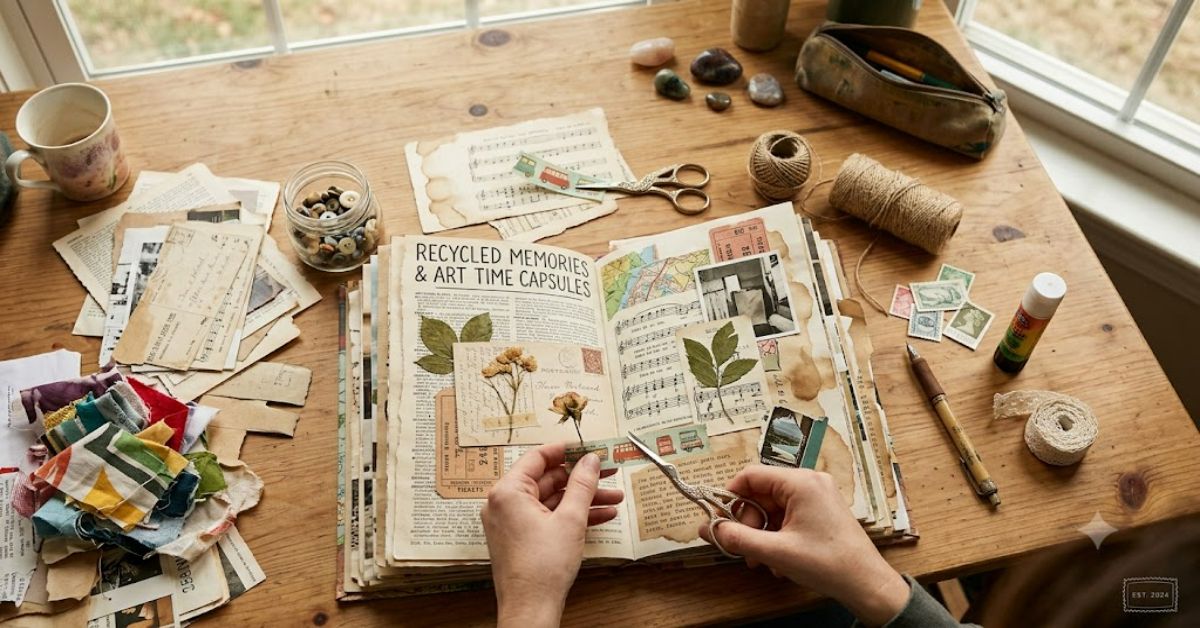
Junk journaling is a handmade creative practice that transforms discarded and found materials into artistic memory books. Unlike a traditional diary with blank pages designed for writing, a junk journal is built from recycled and collected items such as ticket stubs, old book pages, receipts, packaging, fabric scraps, photographs, and handwritten notes.
The appeal of this craft comes from its ability to preserve personal stories while giving overlooked objects a second life. A cinema ticket from a memorable evening, a postcard from a journey, or a piece of packaging from a meaningful gift can become part of a visual timeline.
The concept has gained popularity among artists, scrapbook enthusiasts, and sustainability-focused creators because it combines creativity with emotional preservation. Platforms such as YouTube, Pinterest, and Instagram have helped introduce millions of people to handmade journaling techniques, including paper layering, collage composition, stamping, and vintage-inspired design.
Although the name may suggest disorder, successful projects rely on thoughtful curation. The “junk” refers not to worthless materials but to items that might otherwise be thrown away. Through artistic arrangement, these objects gain new meaning.
This article explores the history, methods, benefits, challenges, and future direction of this growing creative movement.
What Is Junk Journaling and Why Has It Become Popular?
A junk journal is essentially a handmade book created from mixed media materials. The structure can include handmade pages, envelopes, pockets, fold-outs, tags, and decorative elements.
The craft sits between several creative disciplines:
| Creative Area | Connection With Junk Journaling |
| Scrapbooking | Preserving memories through photographs and decorations |
| Collage Art | Combining different visual materials into one composition |
| Bookmaking | Creating handmade journals and binding structures |
| Sustainable Craft | Reusing materials instead of discarding them |
One reason for its popularity is accessibility. Traditional art forms often require expensive supplies, but this craft encourages creators to begin with materials already available at home.
The practice also reflects a wider cultural interest in slow creativity. Similar to knitting, pottery, and analogue photography, it encourages people to spend time making something physical in an increasingly digital environment.
The Creative Process Behind Handmade Journals
Creating a journal usually begins with collecting materials. However, experienced creators often avoid collecting without purpose. Instead, they consider colour palettes, themes, and emotional connections.
Common materials include:
- Old magazines and newspapers
- Vintage-style papers
- Used envelopes
- Fabric pieces
- Maps
- Packaging labels
- Receipts
- Dried flowers
- Handwritten notes
The next stage involves designing the journal structure. Some creators make themed journals based on travel, seasons, family history, or personal goals.
A typical workflow includes:
- Selecting a theme or visual direction.
- Preparing recycled materials.
- Creating page layouts.
- Adding pockets, inserts, and decorative layers.
- Personalising pages with writing or artwork.
This process demonstrates that creativity is not only about producing something new. It can also involve recognising hidden value in existing objects.
Sustainability and the Environmental Impact of the Craft
One of the strongest arguments supporting this hobby is its relationship with reuse. Modern consumer culture produces large amounts of paper and packaging waste. Creative reuse provides a small-scale method of extending the lifespan of everyday materials.
However, sustainability depends on behaviour. Buying large quantities of craft supplies marketed as “vintage” can reduce the environmental benefit. A balanced approach focuses on using existing resources first.
| Sustainability Factor | Positive Impact | Possible Limitation |
| Material reuse | Reduces waste from paper products | Excessive collecting can create clutter |
| Handmade production | Encourages slower consumption | Requires time and patience |
| Personalisation | Creates long-lasting emotional value | Finished journals may require storage space |
A significant insight is that the environmental value of the practice comes less from the final product and more from changing how people view ordinary objects. A receipt becomes a memory marker rather than disposable waste.
Psychological Benefits of Creative Journaling
Creative activities are increasingly studied for their relationship with wellbeing. Writing, drawing, and crafting can support reflection and emotional processing.
A handmade journal provides several benefits:
- Memory preservation: Personal experiences become physical records.
- Mindful activity: The process encourages concentration and slower thinking.
- Creative confidence: Beginners can experiment without strict artistic rules.
Unlike highly structured creative hobbies, junk journaling allows imperfection. Torn edges, faded paper, and uneven handwriting often become part of the aesthetic.
This acceptance of imperfections connects with broader movements that value authenticity over polished digital presentation.
Challenges and Common Mistakes Beginners Face
Despite its welcoming nature, newcomers often encounter practical difficulties.
One common issue is collecting too many materials without using them. The excitement of finding interesting papers or objects can quickly create storage problems.
Another challenge is comparison. Social media often shows highly developed journals created by experienced artists. Beginners may feel discouraged when their first attempts appear simpler.
| Challenge | Practical Solution |
| Too many supplies | Create projects using existing materials first |
| Lack of ideas | Start with simple themes such as seasons or memories |
| Fear of mistakes | Treat imperfections as part of the design |
| Limited time | Create small journal sections instead of full books |
The most effective approach is focusing on personal meaning rather than copying online trends.
The Cultural Influence of Junk Journaling Communities
Online communities have played a major role in expanding interest in this craft. Creators share tutorials, material ideas, and finished projects across social platforms.
The community aspect is important because the craft combines individual expression with shared learning. Beginners can observe techniques, while experienced artists can exchange ideas.
The rise of digital communities has created an interesting contrast: people use online platforms to celebrate a handmade activity centred on physical materials.
The Future of Junk Journaling in 2027
By 2027, junk journaling is likely to remain connected with wider trends in sustainability, personal wellbeing, and analogue creativity.
Digital tools may influence the craft through printable designs, AI-assisted pattern creation, and online workshops. However, the physical nature of the hobby remains its strongest appeal.
Future growth may come from environmentally conscious consumers seeking alternatives to fast digital consumption. Brands may also explore recycled paper products and ethical craft materials.
The challenge will be maintaining authenticity. If the practice becomes heavily commercialised, it risks moving away from its original purpose: meaningful creativity using available resources.
Key Takeaways
- Junk journaling transforms ordinary materials into personalised creative archives.
- The practice combines elements of collage, bookmaking, and memory preservation.
- Sustainability depends on mindful reuse rather than excessive purchasing.
- Imperfection is an important part of the artistic style.
- Online communities have accelerated global interest in handmade journaling.
- The future of the craft will likely balance digital influence with physical creativity.
Conclusion
Junk journaling represents a creative approach to preserving memories while rethinking the value of everyday objects. By combining recycled materials, artistic expression, and personal storytelling, it offers an accessible way for people to create something meaningful.
The popularity of this craft reflects a wider desire for slower, more intentional activities in a digital world. Although challenges such as over-collecting and social media comparison exist, the core idea remains simple: materials do not need to be expensive or perfect to become valuable.
Whether used as a personal diary, artistic project, or family keepsake, a handmade journal provides a lasting connection between creativity and memory.
Frequently Asked Questions
What is the purpose of a junk journal?
A junk journal preserves memories and creative ideas using recycled and found materials. It acts as a personalised art book rather than a traditional diary.
Is junk journaling expensive to start?
No. Beginners can create journals using household materials such as packaging, old papers, envelopes, and unused stationery.
What materials can be used in a handmade journal?
Common materials include paper scraps, fabric, photographs, tickets, postcards, receipts, and magazine pages.
Is junk journaling environmentally friendly?
It can be environmentally beneficial when creators prioritise reuse and avoid unnecessary purchasing of new supplies.
How is junk journaling different from scrapbooking?
Scrapbooking usually focuses on organised photo preservation, while junk journaling often uses mixed media, storytelling, and artistic experimentation.
Methodology
This article was prepared using information from established craft education resources, sustainability research, and documented creative practices. The analysis focused on the relationship between handmade journaling, material reuse, personal expression, and online creative communities.
Limitations include the subjective nature of artistic practices and differences between individual creative approaches. Future research may provide additional insight into the psychological benefits of creative hobbies.
References
Merriam-Webster. (2024). Junk journal and creative writing terminology resources.
Ellen MacArthur Foundation. (2023). Circular economy principles and material reuse.
Craft Industry Alliance. (2023). Trends in handmade crafts and creative communities.