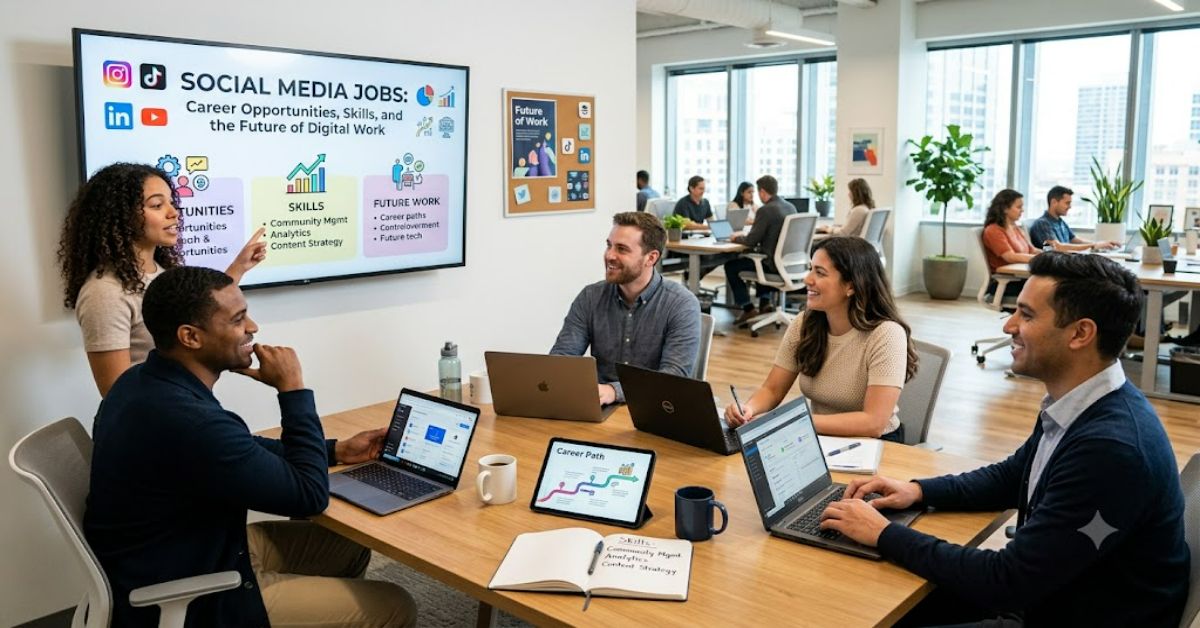
Social media jobs have become an important part of the modern digital economy, creating opportunities for professionals across marketing, communication, technology, entertainment, and business sectors. These roles range from entry-level internships and content assistant positions to highly technical automation specialists and social media managers responsible for large-scale campaigns.
The growth of online platforms has changed how organisations communicate with customers. Businesses no longer rely only on traditional advertising channels; they use social networks to build communities, increase brand awareness, collect customer insights, and drive sales.
A successful social media professional today requires more than creativity. Employers increasingly look for people who understand audience behaviour, platform algorithms, analytics dashboards, content strategy, and digital reputation management.
The rise of creator economies, influencer marketing, and community-driven branding has expanded the employment market. Companies across industries, from retail and finance to entertainment and technology, require specialists who can manage digital conversations and translate online engagement into measurable business results.
This article explores the different career paths available, the skills required, challenges within the industry, and how these roles may develop by 2027.
What Are Social Media Jobs?
Social media jobs involve managing, creating, analysing, or improving an organisation’s presence across digital platforms. These roles support communication strategies by connecting brands with audiences through platforms such as Instagram, LinkedIn, TikTok, Facebook, YouTube, and emerging digital communities.
The field includes both creative and technical responsibilities.
Common responsibilities include:
- Creating and scheduling content
- Managing online communities
- Analysing engagement data
- Developing campaign strategies
- Monitoring brand reputation
- Running paid social advertising
- Using automation and AI tools
The industry has developed significantly since businesses began recognising social platforms as essential marketing channels rather than optional communication tools.
Types of Social Media Careers Available
The job market offers diverse opportunities across different skill levels.
| Role | Main Responsibilities | Required Skills |
| Social Media Assistant | Content scheduling and basic engagement | Writing, organisation, platform knowledge |
| Social Media Manager | Strategy, campaigns, reporting | Leadership, analytics, communication |
| Content Strategist | Planning content direction | Research, storytelling, audience analysis |
| Community Manager | Building relationships with users | Communication, moderation, problem-solving |
| Social Media Analyst | Measuring performance data | Analytics, reporting, data interpretation |
| Social Media Automation Specialist | Managing AI tools and workflows | Technology, automation, marketing systems |
This variety makes the sector accessible for beginners while also providing advanced career paths for experienced professionals.
Skills Needed for Successful Social Media Careers
Although creativity remains important, modern employers increasingly prioritise measurable skills.
Content Strategy and Communication
Strong professionals understand how different audiences behave across platforms. A campaign that succeeds on LinkedIn may require a different approach from one designed for TikTok or Instagram.
Effective communication includes:
- Clear writing
- Visual storytelling
- Brand voice development
- Audience research
Data Analysis and Performance Measurement
Businesses now expect social campaigns to deliver measurable outcomes.
Important metrics include:
| Metric | Purpose |
| Engagement rate | Measures audience interaction |
| Conversion rate | Shows whether content generates actions |
| Reach | Tracks audience exposure |
| Customer sentiment | Evaluates public perception |
Understanding analytics helps professionals move from creating content to making strategic decisions.
How Social Media Jobs Support Business Growth
Social media professionals contribute directly to customer acquisition, brand loyalty, and market research.
A company’s online presence provides valuable consumer insights. Comments, reviews, and discussions reveal customer preferences and concerns that can influence product development.
For example, global brands increasingly use community feedback to improve products and adjust marketing strategies. This demonstrates that social media roles are becoming closer to business intelligence positions rather than simple communication roles.
Advantages and Challenges of Social Media Careers
Like any digital profession, this field offers opportunities alongside challenges.
| Advantages | Challenges |
| Remote working possibilities | Constant platform changes |
| Multiple career paths | High competition |
| Creative opportunities | Pressure to produce continuous content |
| Growing business demand | Algorithm uncertainty |
One often overlooked challenge is emotional workload. Community managers may handle customer complaints, public criticism, and crisis communication, requiring strong emotional intelligence.
Another important factor is platform dependency. Changes to algorithms can suddenly affect visibility, making professionals who understand multiple platforms more valuable.
The Impact of Artificial Intelligence on Social Media Careers
Artificial intelligence is changing how professionals approach digital marketing and communication.
AI tools can assist with:
- Content idea generation
- Audience research
- Performance forecasting
- Workflow automation
- Customer response management
However, AI does not remove the need for human expertise. Successful campaigns still require creativity, cultural awareness, ethical judgement, and an understanding of audience emotions.
The most valuable professionals will likely be those who combine human creativity with technical efficiency.
The Future of Social Media Jobs in 2027
By 2027, social media careers are expected to become more specialised. Companies will increasingly seek professionals who understand automation, artificial intelligence, data privacy, and community-building strategies.
Several trends are likely to influence the industry:
Greater focus on authenticity:
Audiences are becoming more sceptical of overly polished brand communication. Organisations will need professionals who can create genuine conversations.
Growth of AI-assisted marketing:
Automation will handle repetitive tasks, allowing specialists to focus on strategy and creative decision-making.
Expansion of niche communities:
Brands may invest more in smaller, highly engaged audiences rather than only chasing large follower numbers.
Regulatory changes, including stronger digital privacy requirements in regions such as the UK and European Union, will also influence how companies collect and use audience data.
Key Takeaways
- Social media careers now include creative, analytical, and technical roles.
- Data interpretation is becoming as important as content creation.
- AI will support professionals but will not replace strategic thinking.
- Community management is becoming a valuable business function.
- Continuous learning is essential because platforms and tools change frequently.
Conclusion
Social media jobs have evolved from simple content publishing roles into complex digital careers involving strategy, technology, analytics, and communication. Businesses increasingly depend on skilled professionals to manage online communities, understand customer behaviour, and create meaningful digital experiences.
The industry provides opportunities for both newcomers and experienced professionals, but success requires adaptability. Those who combine creativity with analytical thinking and technological awareness will be better positioned as the digital workplace continues to develop.
As businesses continue investing in online relationships, social media professionals will remain important contributors to brand growth, customer engagement, and digital transformation.
Frequently Asked Questions
What qualifications are needed for social media jobs?
Many roles value practical experience, communication skills, digital marketing knowledge, and familiarity with analytics tools. Formal qualifications can help but are not always required.
Are social media jobs suitable for beginners?
Yes. Entry-level roles such as social media assistants and content coordinators provide opportunities to build experience and develop specialised skills.
Can social media jobs be remote?
Many social media positions support remote or hybrid working because most tasks involve digital platforms and online collaboration tools.
What is the highest-paying social media career?
Senior roles such as social media strategist, digital marketing manager, and social media director generally offer higher salaries due to their strategic responsibilities.
Will AI replace social media professionals?
AI will automate some tasks, but human creativity, communication skills, and strategic decision-making remain essential.
Methodology
This article was developed using analysis of digital marketing trends, employment patterns, creator economy research, and publicly available technology industry information.
Sources considered include reports from recognised digital research organisations, employment studies, and technology industry publications.
The analysis has limitations because individual salaries, hiring trends, and platform requirements vary by country, industry, and employer. Readers should verify current job requirements through relevant employment platforms and professional organisations.
References
DataReportal. (2024). Digital 2024 Global Overview Report.
Ofcom. (2024). Online Nation Report. Office of Communications, United Kingdom.
LinkedIn Economic Graph. (2024). Workforce and Skills Insights.
European Commission. (2022). Digital Services Act: Regulation on Digital Services.