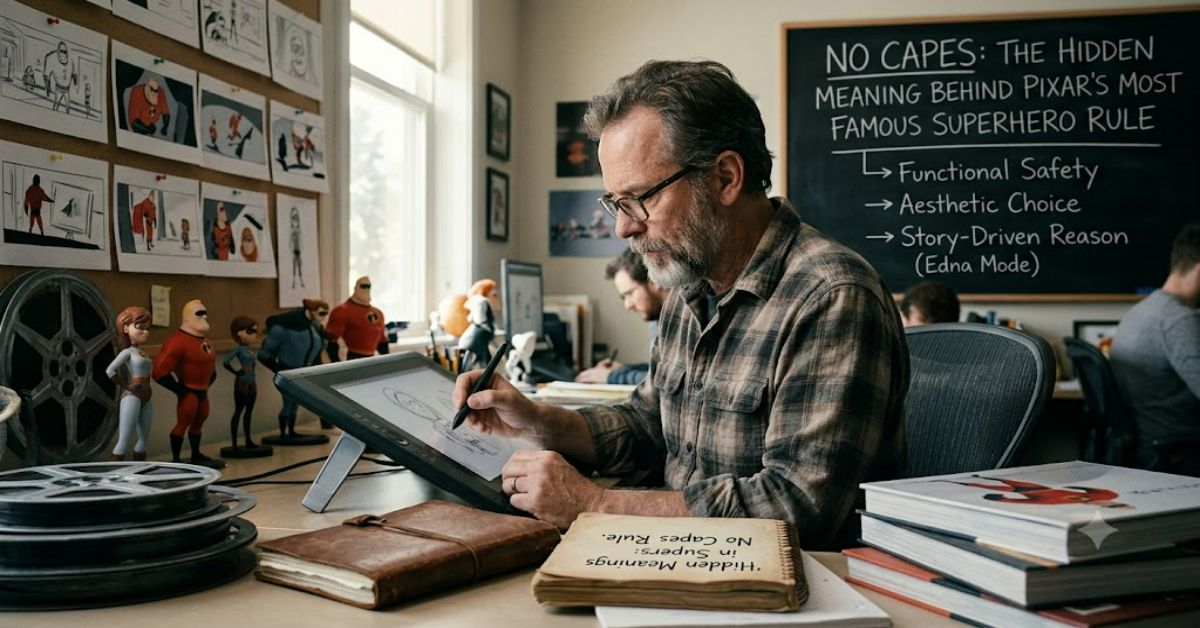
Few animated movie moments have achieved the cultural recognition of Edna Mode’s passionate warning: “No capes!” Featured in Pixar’s 2004 film The Incredibles, the phrase became an instant fan favourite because it perfectly captures the character’s confidence, precision, and unconventional wisdom.
The no capes philosophy comes from Edna Mode, the eccentric costume designer responsible for creating superhero outfits that combine style with functionality. Her argument is simple: dramatic clothing choices can become dangerous when heroes face real-world threats. She explains that several superheroes, including Thunderhead and Stratogale, died because their capes became caught in missiles, jet turbines, or other hazards.
Although the scene is humorous, it represents a deeper idea found throughout superhero storytelling: appearance must serve purpose. Pixar used Edna’s rule to challenge the traditional image of superheroes wearing flowing costumes and to show that innovation often requires removing unnecessary elements.
The Origin of Edna Mode’s Famous Rule
When The Incredibles was released on 5 November 2004, Pixar presented a superhero story with a different focus. Instead of only celebrating extraordinary powers, the film examined identity, family responsibility, and the consequences of living as a hero.
Edna Mode stands apart because she approaches superhero costumes like an engineer rather than a traditional fashion designer. She considers movement, durability, flexibility, and safety.
Her criticism of capes is based on a practical design principle: every feature added to equipment introduces potential failure points.
In real-world engineering, designers often follow similar thinking. Aviation, automotive manufacturing, and protective equipment industries regularly remove unnecessary complexity because additional components can create additional risks.
Why “No Capes” Works as More Than a Joke
The brilliance of the scene is that the audience initially sees Edna’s warning as comedy.
Her dramatic delivery, confident personality, and exaggerated examples create humour. However, the logic behind her argument is surprisingly reasonable.
A cape may look impressive, but from a practical perspective it can create several problems:
| Design Element | Potential Issue |
| Long flowing fabric | Can become trapped in machinery |
| Loose materials | Can restrict movement |
| Decorative features | May reduce functionality |
| Heavy accessories | Can affect speed and agility |
The joke succeeds because it combines fantasy with realistic problem-solving.
Edna Mode as a Symbol of Practical Creativity
Edna Mode represents a different type of genius.
Many superhero stories focus on strength, intelligence, or supernatural abilities. Edna’s expertise comes from observation and design thinking.
She understands that a hero’s equipment should support their mission rather than create unnecessary danger.
This reflects a broader creative principle: good design is often invisible. The best tools, clothing, and technology work so naturally that users barely notice them.
The character also challenges assumptions about fashion. Instead of treating costumes as decoration, she views them as performance systems.
Real-World Design Lessons Behind “No Capes”
The popularity of Edna’s philosophy extends beyond animation because the principle applies to many industries.
Modern designers frequently consider:
- User safety.
- Material performance.
- Environmental conditions.
- Failure prevention.
- Practical usability.
A visually impressive product is not always an effective one. Designers must balance appearance with function.
This lesson explains why the phrase continues to resonate with audiences years after the film’s release.
The Cultural Impact of the No Capes Moment
The scene became one of Pixar’s most quoted moments because it is easy to understand while containing multiple layers.
| Area | Impact |
| Film culture | Recognised as a memorable Pixar scene |
| Internet culture | Became a popular meme and reference |
| Design discussions | Used as an example of functional thinking |
| Fan communities | Inspired discussions about superhero costumes |
The phrase became a shortcut for explaining why practicality sometimes matters more than tradition.
The Future of No Capes in 2027
As superhero films continue evolving, audiences are increasingly interested in realistic character design and believable world-building. Costume choices are now often analysed through the lens of technology, movement, and storytelling.
By 2027, superhero media is likely to continue exploring functional designs rather than relying only on classic comic aesthetics. Advances in digital effects may create more realistic costume systems, but Edna Mode’s central message will remain relevant: design should have a purpose.
The uncertain element is whether future superhero stories will continue balancing realism with the visual traditions that define the genre.
Key Takeaways
- “No capes!” is both a comedy moment and a design philosophy.
- Edna Mode represents practical creativity and engineering-focused thinking.
- Functional design often requires removing unnecessary features.
- Pixar used humour to introduce a realistic approach to superhero equipment.
- The phrase became a lasting cultural reference because it applies beyond fiction.
Conclusion
Edna Mode’s “No capes!” warning remains one of Pixar’s most memorable contributions to popular culture because it combines humour, personality, and practical wisdom. What appears to be a simple joke about superhero clothing actually reflects a deeper understanding of design: every choice has consequences.
The success of the scene comes from its ability to connect fantasy with reality. Superheroes may possess impossible abilities, but they still require thoughtful equipment and careful decisions. By turning costume design into a matter of safety and performance, The Incredibles created a lesson that extends beyond animation.
Years after the film’s release, the phrase continues to represent smart design, creative problem-solving, and the idea that sometimes removing something is the best improvement.
FAQ
What does “No capes” mean in The Incredibles?
It refers to Edna Mode’s belief that superhero costumes should avoid dangerous features that can create safety risks during missions.
Who says “No capes” in The Incredibles?
Edna Mode, the superhero costume designer voiced by Brad Bird.
Why does Edna Mode dislike capes?
She explains that capes caused several superhero deaths because they became caught in dangerous machinery and weapons.
Is the no capes rule realistic?
While superheroes are fictional, the principle reflects real-world safety and engineering concepts.
What is Edna Mode’s role in the film?
She designs superhero costumes and helps the Parr family prepare for their return to hero work.
Methodology
This article was developed using information from Pixar’s The Incredibles, documented film discussions, and established principles of product and costume design. The analysis separates fictional elements from real-world design concepts and focuses on why the scene became culturally significant.
References
- Bird, B. (Director). (2004). The Incredibles. Pixar Animation Studios.
- Pixar Animation Studios. (2004). The Incredibles Production Notes.
- American Film Institute. (2008). AFI’s 10 Top 10: Animation and Film Rankings.
Editorial Disclosure:
This article was drafted with AI assistance and should be reviewed and verified by the RubbleMagazine.co.uk editorial team before publication.