The nonbinary flag is a widely recognized symbol used to represent people who identify outside the traditional gender binary of male and female. When people search for the meaning of the nonbinary flag, they are often seeking to understand both its visual symbolism and the broader identity it represents.
Nonbinary identities exist under the broader transgender and gender-diverse umbrella, but not all nonbinary individuals identify as transgender. The flag itself was created to provide a distinct and inclusive representation for those whose gender identity does not fit within conventional categories.
In modern discussions about gender identity, symbols like the nonbinary flag play an important role in visibility and awareness. They help communities express identity, foster understanding, and create recognition in both social and cultural spaces.
This article explains what the nonbinary flag means, how it originated, what each color represents, and why it remains an important symbol in gender diversity conversations today.
What Is the Nonbinary Flag?
The nonbinary flag is a pride flag designed specifically for individuals who do not identify strictly as male or female.
Core Purpose
- Represent nonbinary gender identities
- Provide visibility within LGBTQ+ communities
- Offer a distinct identity symbol separate from the transgender flag
- Promote inclusion and awareness
It is commonly displayed during Pride events, advocacy campaigns, and educational discussions about gender diversity.
Design and Colors of the Nonbinary Flag
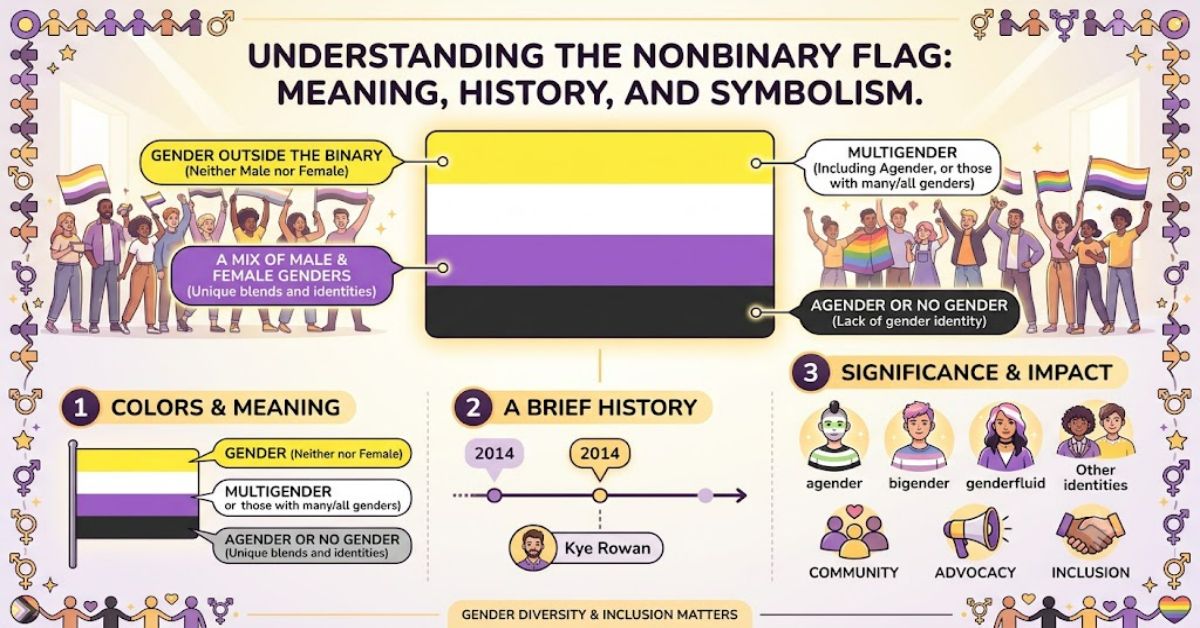
The flag consists of four horizontal stripes, each with a specific meaning.
Color Breakdown
| Color | Meaning |
| Yellow | Represents genders outside the binary |
| White | Represents people with multiple or all genders |
| Purple | Represents a mix of male and female identities |
| Black | Represents agender or absence of gender |
Each color was chosen to represent different aspects of nonbinary experiences, rather than a single uniform identity.
History of the Nonbinary Flag
The nonbinary flag was created in 2014 by activist Kye Rowan.
Background
- Designed to complement, not replace, the genderqueer flag
- Created due to lack of representation within existing pride flags
- Intended to be simple, recognizable, and inclusive
The flag quickly gained adoption within online communities and later became widely used in LGBTQ+ activism and Pride events.
Nonbinary Identity Explained
To understand the flag, it is important to understand the identity it represents.
What Nonbinary Means
Nonbinary refers to gender identities that are not exclusively male or female.
This may include:
- Genderfluid identities
- Agender identities
- Bigender identities
- Demigender identities
Nonbinary identity is about personal experience of gender rather than biological sex or societal roles.
Why the Nonbinary Flag Matters
The flag is more than a symbol—it serves as a tool for visibility and inclusion.
Key Importance
- Encourages social recognition of gender diversity
- Supports mental health by validating identity
- Provides community belonging
- Helps in education about gender identity
Symbols like flags play a crucial role in identity formation and social acceptance.
Cultural and Social Impact
The nonbinary flag has become widely recognized in global LGBTQ+ spaces.
Observed Impacts
- Increased awareness of nonbinary identities
- Representation in media and digital platforms
- Inclusion in Pride merchandise and campaigns
- Growing acceptance in educational environments
It has also contributed to broader conversations about gender-neutral language and inclusive policies.
Common Misunderstandings
1. Nonbinary Means the Same Thing for Everyone
Nonbinary identity is broad and varies widely between individuals.
2. It Is a New Concept
Nonbinary gender identities have existed across cultures for centuries.
3. It Is Just a Trend
Gender identity is a deeply personal and social experience, not a trend.
Information Gain: Key Insights
1. Symbol Design Was Intentional for Accessibility
The flag uses simple horizontal stripes to ensure easy reproduction across digital and physical platforms.
2. Nonbinary Identity Is Culturally Diverse
Different cultures historically recognized third-gender or gender-diverse identities long before modern terminology.
3. Visibility Directly Impacts Social Acceptance
Studies in gender research show that visibility tools like flags improve awareness and reduce stigma over time.
Future of Nonbinary Representation in 2027
Nonbinary representation is expected to grow significantly in the coming years.
Expected Trends
- More inclusive gender options in digital systems
- Expansion of gender-neutral policies in workplaces
- Greater media representation of nonbinary characters
- Broader global awareness of gender diversity
The nonbinary flag will likely remain a core visual symbol in these developments.
Key Takeaways
- The nonbinary flag represents gender identities outside the male-female binary.
- It uses four colors, each symbolizing different aspects of gender diversity.
- It was created in 2014 by activist Kye Rowan.
- It plays an important role in visibility and inclusion.
- Nonbinary identity is diverse and culturally widespread.
Conclusion
The nonbinary flag is a powerful symbol of gender diversity and inclusion. It represents individuals whose identities fall outside traditional binary definitions of male and female, offering visibility and recognition in a world where gender has often been narrowly defined.
Beyond its colors and design, the flag carries deep cultural significance. It reflects the lived experiences of nonbinary individuals and supports broader conversations about identity, acceptance, and equality. As society continues to evolve, symbols like the nonbinary flag will remain important in promoting understanding and inclusion across communities.
Frequently Asked Questions
What does the nonbinary flag represent?
It represents people who do not identify strictly as male or female.
Who created the nonbinary flag?
It was created in 2014 by activist Kye Rowan.
What do the colors of the flag mean?
Yellow represents genders outside the binary, white represents multiple genders, purple represents a mix of male and female, and black represents absence of gender.
Is nonbinary the same as transgender?
Not always. Some nonbinary people identify as transgender, but not all do.
Why is the nonbinary flag important?
It provides visibility, representation, and inclusion for gender-diverse individuals.
Methodology
This article is based on widely accepted LGBTQ+ educational resources, gender studies references, and historical information regarding pride flag development. The explanation focuses on cultural meaning, symbolism, and social context rather than medical or legal interpretation.
Editorial Disclosure
This article was drafted with AI assistance and should be reviewed for cultural sensitivity and editorial accuracy before publication.