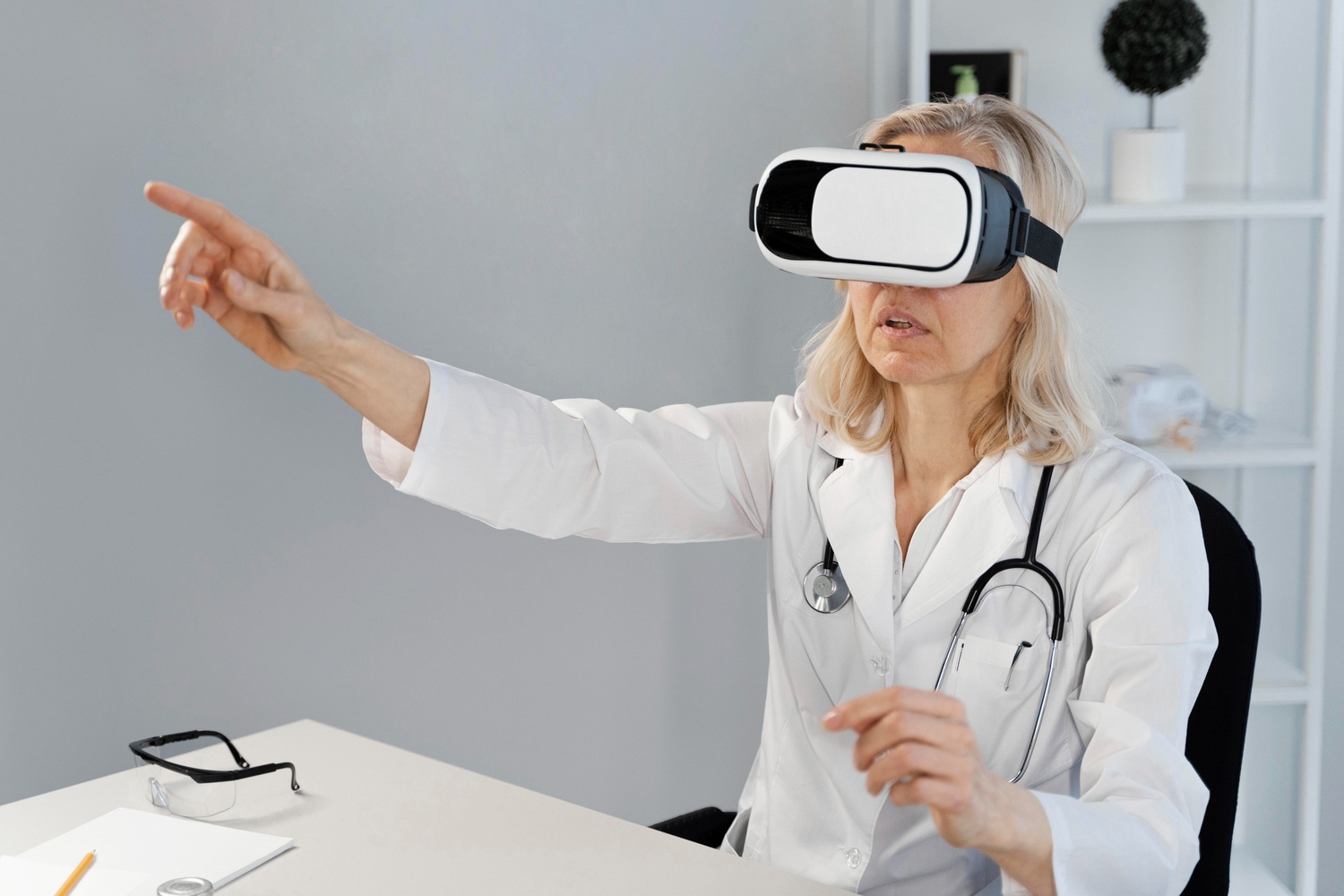
Healthcare today faces unprecedented challenges. Rapidly advancing medical knowledge, increasing patient expectations, and resource constraints demand innovative approaches to both care delivery and professional training. IMETS, a leader at the intersection of medicine and technology, leverages its expertise to provide cutting-edge solutions that transform healthcare education and practice. Through immersive technologies such as virtual reality (VR), augmented reality (AR), and artificial intelligence (AI), IMETS is reshaping the way medical professionals learn, practice, and interact with complex clinical scenarios.
Traditional medical training relies heavily on textbooks, lectures, and in-person mentorship. While foundational, these approaches are often insufficient for mastering rare procedures, high-stakes decision-making, or the nuanced understanding required in modern medicine. IMETS addresses this gap by offering immersive learning experiences where medical professionals can safely practice, experiment, and refine their skills. Virtual simulations provide realistic, repeatable scenarios, from surgical procedures to emergency response, allowing learners to build confidence and competency without risking patient safety.
Beyond education, IMETS’s technological platforms support clinical applications, including surgical planning, 3D anatomy visualization, and remote mentorship. By combining medical expertise with digital innovation, IMETS enables healthcare systems to improve efficiency, accuracy, and accessibility. This article explores IMETS’s role in advancing medical education, its technological solutions, real-world applications, challenges, and the future of healthcare in an increasingly digital world.
The Evolution of Medical Education
Medical education is undergoing a profound transformation. Traditional pedagogical methods, while valuable, often struggle to prepare students for the dynamic and complex environments of modern healthcare. Virtual reality and other immersive technologies have emerged as essential tools, providing realistic simulations that allow learners to engage actively with clinical content.
Immersive platforms recreate high-fidelity medical scenarios, from surgical operations to patient interactions. Students can manipulate virtual instruments, explore anatomical structures in three dimensions, and encounter clinical decision-making challenges. These experiences provide immediate feedback, enabling learners to correct errors and refine techniques. Repetition, realism, and interactivity, hallmarks of VR training, contribute to faster skill acquisition and deeper understanding compared to conventional methods.
Moreover, AI integration within these platforms enhances personalization. Training modules can adapt in real time to a learner’s performance, offering targeted challenges and insights. This combination of immersive technology and adaptive learning bridges the gap between theoretical knowledge and practical competency, ensuring that healthcare professionals are better prepared for clinical realities.
IMETS’s Approach to Immersive Learning
IMETS’s philosophy centers on the integration of deep medical knowledge with advanced digital tools. The organization prioritizes the use of 3D simulation and VR to transform how learners engage with medical content. By moving beyond passive instruction, IMETS creates interactive, practice-oriented experiences that promote experiential learning.
Through its platforms, IMETS addresses critical gaps in traditional education, including access to rare clinical cases and complex procedures. Virtual simulations allow learners to repeat procedures multiple times, observe outcomes, and adjust techniques in a controlled environment. This approach not only strengthens technical skills but also improves cognitive understanding, fostering better clinical judgment.
In addition to enhancing skill acquisition, IMETS’s tools democratize access to high-quality medical education. Institutions lacking physical simulation labs can provide equivalent, scalable training through virtual platforms. Standardized simulations ensure consistent instruction across diverse settings, leveling the playing field for learners worldwide.
Practical Applications in Healthcare
IMETS’s solutions extend beyond training. In clinical settings, AR and VR technologies support surgical planning, intraoperative guidance, and patient education. Surgeons can visualize internal anatomy in three dimensions, overlaying critical information on the operative field to improve precision and safety. Patients can also benefit from interactive visualizations, gaining a clearer understanding of procedures and outcomes.
Remote collaboration is another key advantage. Specialists can guide trainees or colleagues in distant locations, providing real-time mentorship and decision support. This capability is particularly valuable in underserved regions, where access to expert guidance is limited.
The integration of digital tools also supports data-driven medicine. AI-powered systems analyze patient information and clinical workflows, offering insights that enhance decision-making. As healthcare becomes increasingly complex, these technologies enable practitioners to interpret large datasets, plan treatments, and monitor outcomes with greater accuracy.
Challenges and Ethical Considerations
Despite the promise of immersive technologies, challenges remain. High-fidelity VR systems require significant investment, and disparities in access may limit adoption. Ensuring that simulation-based learning translates effectively to real-world performance necessitates ongoing validation and research.
Ethical considerations are also critical. Learner data, simulation records, and AI analyses must be managed to protect privacy and comply with regulations. Additionally, prolonged use of immersive systems may have psychological or physical impacts that require careful monitoring.
Addressing these challenges requires a balanced approach, combining technological innovation with robust standards, ethical guidelines, and equitable access to ensure that benefits are widely realized.
The Future of Medical Education and Practice
The integration of technology and medicine points toward a future where healthcare professionals are trained and supported by immersive, adaptive platforms. As VR, AR, and AI tools become more sophisticated and accessible, they will complement traditional education, offering richer, more flexible learning experiences.
IMETS exemplifies this future by demonstrating how medical expertise, when combined with digital innovation, can improve both training and patient care. Its solutions create a continuous learning environment, fostering adaptability, technical proficiency, and clinical confidence. By bridging the gap between knowledge and practice, IMETS is shaping a healthcare workforce equipped to meet the demands of a rapidly evolving world.
Conclusion
IMETS represents a convergence of medical expertise and technological innovation. Through immersive simulations, AI-enhanced learning, and interactive platforms, the organization is redefining healthcare education, training, and practice. By providing safe, repeatable, and realistic experiences, IMETS empowers medical professionals to acquire skills and judgment more efficiently, bridging the gap between theory and application. As these tools evolve, they promise to enhance clinical outcomes, broaden access to quality training, and prepare healthcare professionals for a future defined by both complexity and opportunity.
Frequently Asked Questions
What is IMETS?
IMETS combines medical knowledge with immersive technologies to provide advanced educational and training solutions for healthcare professionals.
How does VR improve medical training?
VR allows learners to practice procedures, explore anatomy, and experience clinical scenarios safely and repeatedly, enhancing skills and judgment.
Is immersive technology cost-effective?
While initial costs are high, immersive platforms reduce long-term expenses by standardizing training and minimizing reliance on physical resources.
Can AR assist in surgeries?
Yes. AR overlays digital information on real-world views, improving surgical precision and situational awareness.
What challenges exist for adopting immersive technologies?
Barriers include cost, unequal access, the need for validation research, and ethical considerations around privacy and psychological effects.