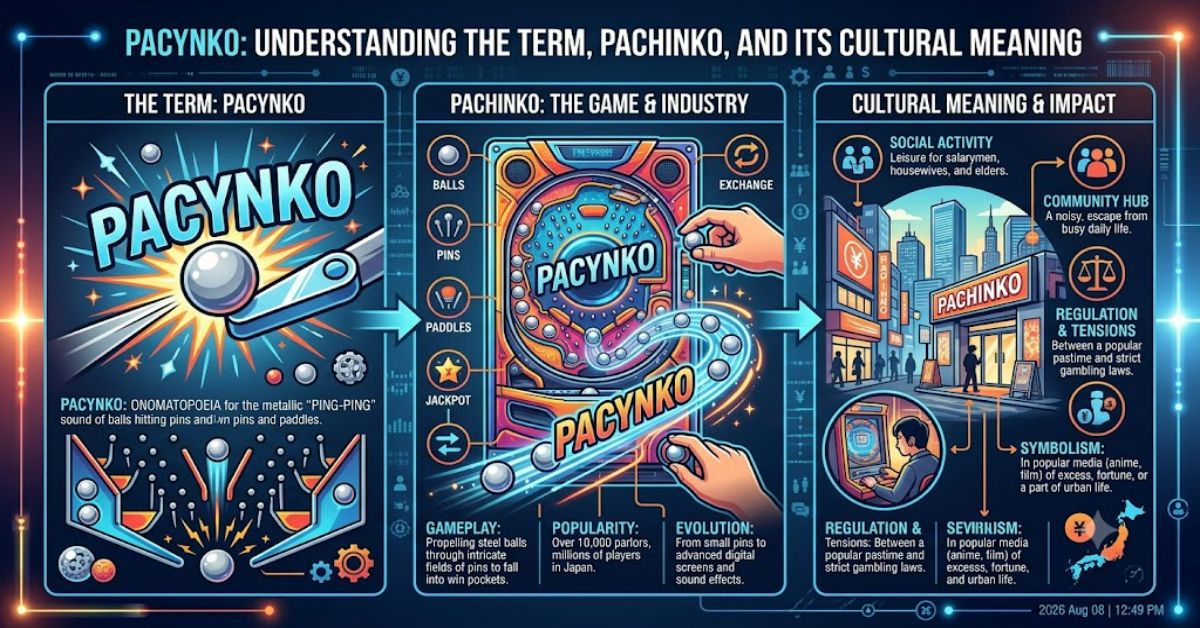
The term “Pacynko” is most likely a typo or alternative spelling for Pachinko. Searches for the unusual spelling can therefore produce confusing or unrelated results, particularly because the word resembles names and other transliterations.
For readers looking for a book, television series or cultural story, Pachinko is the relevant term. Written by Min Jin Lee, the novel was published in 2017 and became widely recognised for its portrayal of Korean families living in Japan. Lee’s official biography identifies Pachinko as one of her major novels and notes that it became a National Book Award finalist.
The distinction matters because correcting the spelling changes the search journey. Someone typing “Pacynko” may actually be trying to find information about the novel, its characters, the Apple TV+ series, or the historical experiences represented in the story.
Pachinko: The Book Behind the Search
Pachinko is a work of historical fiction centred on a Korean family and its descendants. Rather than concentrating on one isolated event, the novel follows lives shaped by migration, social prejudice, economic uncertainty and changing political circumstances.
The story begins in Korea and moves into Japan, where Korean residents faced discrimination and difficult questions about identity and belonging. Across generations, characters must make choices about family, work, education, nationality and survival.
This broad historical scope is one reason the book has remained culturally significant. Lee does not treat migration as a single journey with a clear beginning and ending. Instead, its consequences continue through children and grandchildren.
| Element | Pachinko |
| Author | Min Jin Lee |
| Publication | 2017 |
| Genre | Historical fiction |
| Central themes | Family, migration, identity, discrimination |
| Main geographical settings | Korea, Japan and the United States |
| Major adaptation | Apple TV+ television series |
Lee’s own website lists international publishers for Pachinko, including Head of Zeus in the UK, demonstrating the book’s broad international publishing reach.
Why the Story Matters Culturally
One of the strongest features of Pachinko is its treatment of identity as something shaped by circumstances rather than a simple label.
Characters may be Korean by heritage while living in Japan for much of their lives. Their relationship with language, nationality and community can therefore become complicated. The novel uses family history to show how political and social forces can affect ordinary decisions.
That makes the book relevant beyond its historical setting. Questions about diaspora, assimilation and belonging remain important in many societies today.
The story also gives considerable attention to women and family responsibility. Sunja, the central character, is not presented simply as someone affected by historical events. Her choices influence the survival and direction of later generations.
This approach gives the novel both a historical and personal dimension.
From Novel to Television Series
Apple TV+ premiered its Pachinko adaptation on 25 March 2022. The series was created by Soo Hugh and was deliberately produced across Korean, Japanese and English. Apple described the story as moving between Korea, Japan and America while following themes of love, loss, war and survival.
The multilingual format is particularly important. Rather than forcing the story into a single dominant language, the production uses language as part of its cultural setting.
The first season consisted of eight episodes, with the initial three released on the premiere date and subsequent episodes released weekly through 29 April 2022. Apple renewed the programme for a second season on 29 April 2022.
| Feature | Novel | Television adaptation |
| Format | Historical fiction | Serial television drama |
| Creator | Min Jin Lee | Soo Hugh |
| Release | 2017 | 2022 |
| Languages | English-language novel | Korean, Japanese and English |
| Storytelling | Long-form literary narrative | Visual, multi-generational drama |
The adaptation also demonstrates how literary stories can gain new audiences when transferred to television without losing their cultural specificity.
Three Important Insights About Pacynko
1. The spelling can hide the real search intent.
“Pacynko” is likely to lead people towards Pachinko, so understanding the intended term is more useful than treating the spelling as the name of a separate cultural work.
2. Pachinko is more than a family story.
Its family structure provides a way to examine larger issues, including migration, discrimination, economic survival and intergenerational identity.
3. The television adaptation adds linguistic context.
Using Korean, Japanese and English allows the production to communicate cultural differences through dialogue itself rather than relying only on visual setting or exposition.
The Future of Pachynko-Related Searches in 2027
By 2027, searches surrounding “Pacynko” are likely to remain connected primarily to Pachinko, particularly as interest in international television, Asian literature and diaspora narratives continues.
The wider significance may be less about the misspelling itself and more about how audiences discover cultural works. Search engines increasingly connect spelling variants with recognised entities, meaning users searching for “Pacynko” may still be directed towards information about Pachinko.
Min Jin Lee’s continuing literary profile may also support renewed interest. Her official website lists American Hagwon, scheduled for publication on 29 September 2026, as her third novel and identifies Pachinko as part of her broader literary work.
Key Takeaways
- Pacynko is most likely an incorrect spelling of Pachinko.
- Pachinko was written by Min Jin Lee and published in 2017.
- The novel explores Korean migration and life in Japan across generations.
- Apple TV+ premiered its adaptation in March 2022.
- The television series uses Korean, Japanese and English.
- The story remains relevant because of its themes of identity, family and belonging.
Conclusion
“Pacynko” is best understood as a likely spelling variation of Pachinko, rather than as a distinct major literary or television title. The intended subject is probably Min Jin Lee’s acclaimed novel or its Apple TV+ adaptation.
Pachinko stands out because it combines an intimate family narrative with wider questions about migration, discrimination, identity and historical memory. The 2017 novel established the story’s literary importance, while the 2022 television adaptation introduced it to a broader global audience through a multilingual production.
For anyone searching the unusual term “Pacynko”, correcting the spelling to “Pachinko” is the most useful first step. From there, readers can explore the novel, its television adaptation and the historical context that gives both versions their lasting significance.
Frequently Asked Questions
Is Pacynko the same as Pachinko?
Most likely. “Pacynko” appears to be a spelling variation or typing error for Pachinko, Min Jin Lee’s 2017 novel and the subsequent Apple TV+ drama.
What is Pachinko about?
Pachinko follows a Korean family across several generations, particularly through experiences in Korea and Japan. Its themes include migration, identity, discrimination, family and survival.
Who wrote Pachinko?
Pachinko was written by Min Jin Lee. Her official biography identifies the novel as a National Book Award finalist and one of her major works.
When did the Pachinko TV series come out?
The Apple TV+ adaptation premiered globally on 25 March 2022.
What languages are spoken in Pachinko?
The television adaptation is presented in Korean, Japanese and English, reflecting the story’s multiple cultural settings.
Is Pachinko based on a true story?
It is historical fiction rather than a direct true story. The characters are fictional, but the novel draws on real historical experiences involving Koreans in Japan and the wider history of migration and discrimination.
Methodology
This article treats “Pacynko” as a likely spelling variation and evaluates the more established subject, Pachinko. Information was checked against Min Jin Lee’s official website and Apple TV Press materials concerning the novel and television adaptation.
The analysis does not claim that “Pacynko” has only one possible meaning; a surname or unrelated term could use the spelling. The primary limitation is therefore search ambiguity. No firsthand testing, interviews or original field reporting were conducted, so none are presented as such.
Editorial disclosure: This article was drafted with AI assistance and should be independently reviewed for factual accuracy, citations and editorial suitability before publication.
References
Apple. (2022, January 26). Apple’s highly anticipated drama “Pachinko” set to premiere globally March 25, 2022. Apple TV Press.
Apple. (2022, April 29). Apple TV+ renews acclaimed, sweeping drama series “Pachinko” for second season. Apple TV Press.
Lee, M. J. (n.d.). About. Min Jin Lee.
Lee, M. J. (n.d.). Pachinko. Min Jin Lee.
Lee, M. J. (n.d.). Profiles. Min Jin Lee.