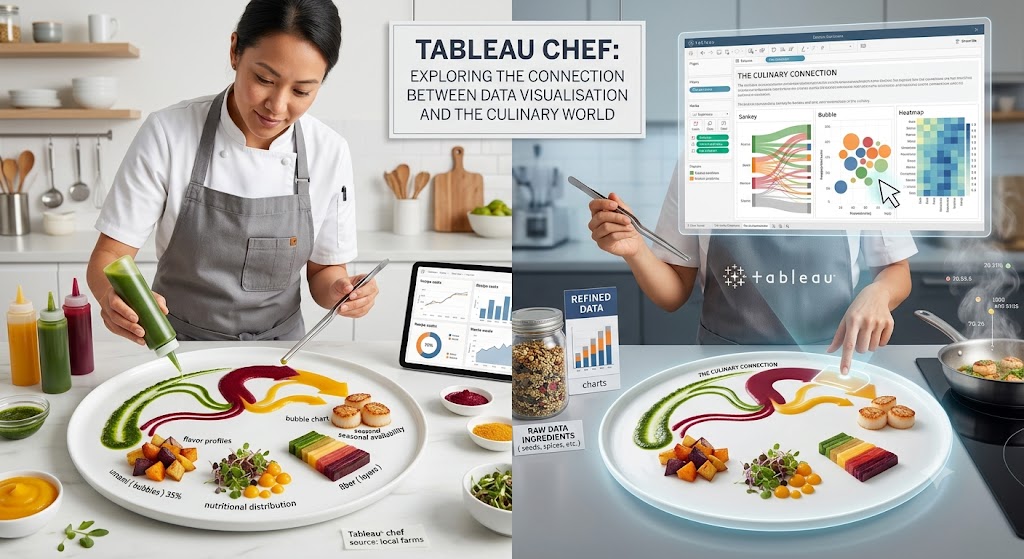
The phrase tableau chef can be confusing because it does not refer to a single person, software feature, or restaurant. Instead, it is a search term that brings together two very different worlds: Tableau, the popular data visualisation platform, and the culinary industry. Depending on the context, someone searching for “tableau chef” may be looking for Tableau dashboards analysing cooking competitions, restaurant performance reports created with Tableau, or chefs associated with establishments that use the name Tableau.
As businesses increasingly rely on data to make informed decisions, the food and hospitality industry has also embraced analytics. Restaurants, cafés, hotels, and catering companies now use business intelligence tools to understand customer behaviour, improve operations, and increase profitability. Tableau has become one of the leading platforms for transforming raw numbers into interactive charts and dashboards, making it easier for chefs and restaurant managers to identify trends and improve performance.
Understanding the Meaning of Tableau Chef
Unlike terms with a single definition, tableau chef has multiple interpretations. The most common meaning relates to Tableau software being used within the culinary or hospitality industry. Another interpretation comes from Tableau Public, where data enthusiasts create dashboards based on television cooking competitions such as Top Chef. Some online searches may also lead to restaurants or hospitality businesses that include the word “Tableau” in their branding.
This variety of meanings explains why search results can appear unrelated at first glance. Understanding the intended context helps readers find the information most relevant to their interests.
Tableau in the Hospitality Industry
Tableau is widely recognised as a business intelligence and data visualisation platform. It allows organisations to collect information from multiple sources and present it through interactive graphs, maps, and dashboards.
Restaurants generate large amounts of valuable data every day. Customer orders, payment methods, inventory records, reservations, delivery times, and employee schedules all provide useful information that can improve decision-making.
By presenting this information visually, Tableau enables restaurant owners and chefs to identify patterns that would be difficult to recognise in spreadsheets alone.
Common Restaurant Uses of Tableau
| Business Area | How Tableau Helps |
| Sales Reporting | Tracks daily, weekly, and monthly revenue |
| Menu Analysis | Identifies best-selling dishes |
| Inventory | Monitors ingredient usage and reduces waste |
| Customer Trends | Analyses dining preferences and repeat visits |
| Staff Performance | Measures productivity and scheduling efficiency |
These dashboards allow managers to make evidence-based decisions rather than relying solely on intuition.
Why Data Matters to Modern Chefs
Professional chefs are responsible for much more than preparing high-quality food. Today’s kitchens operate as businesses where efficiency, consistency, and profitability are equally important.
Data can help chefs answer practical questions such as:
- Which dishes generate the highest profit?
- Which ingredients create unnecessary waste?
- What time of day requires additional staff?
- Which menu items are rarely ordered?
- How do seasonal changes affect customer demand?
Instead of replacing creativity, analytics supports better operational planning while allowing chefs to focus on delivering excellent dining experiences.
Tableau Public and Culinary Visualisations
One interesting reason people search for tableau chef is the availability of creative projects on Tableau Public.
The Tableau Public community frequently publishes interactive dashboards based on publicly available datasets. Food enthusiasts have used the platform to analyse cooking competitions, restaurant reviews, and culinary trends.
For example, dashboards built around Top Chef allow viewers to explore contestant performance, elimination history, challenge wins, judging scores, and season comparisons. These visualisations transform entertainment data into engaging, interactive stories.
Such projects also demonstrate how Tableau can be used beyond traditional business reporting.
Benefits of Using Tableau for Restaurants
The hospitality industry operates with narrow profit margins, making accurate decision-making essential.
Some of the key advantages include:
Improved Decision-Making
Managers can identify sales trends quickly instead of manually reviewing reports.
Reduced Food Waste
Ingredient usage reports help kitchens purchase supplies more efficiently.
Better Customer Experience
Analysing customer behaviour allows restaurants to improve menus and service quality.
Operational Efficiency
Dashboards highlight staffing requirements during busy periods and identify operational bottlenecks.
Performance Monitoring
Restaurant owners can track key performance indicators from one central dashboard.
These benefits make business intelligence increasingly valuable for restaurants of all sizes.
Challenges of Restaurant Analytics
Although Tableau offers powerful analytical capabilities, successful implementation depends on several factors.
Accurate data collection is essential. Incorrect inventory records or incomplete sales information can produce misleading dashboards and poor business decisions.
Training also presents a challenge. Restaurant staff must understand both the software and the business metrics being analysed.
Smaller restaurants may also find licensing costs difficult to justify if they have limited reporting needs.
Finally, businesses must protect customer information by following appropriate data security and privacy practices when analysing transaction records.
Future Trends for Tableau in Hospitality
Technology continues to reshape the restaurant industry, and analytics is expected to become even more important in the coming years.
Artificial intelligence may help restaurants forecast demand more accurately, allowing kitchens to prepare appropriate inventory levels while reducing waste.
Real-time dashboards could monitor customer satisfaction, delivery performance, and kitchen efficiency simultaneously.
As digital ordering, online reservations, and contactless payments continue to expand, the amount of available restaurant data will also increase. Platforms like Tableau are well positioned to help businesses transform this information into practical insights.
Key Takeaways
- Tableau chef is a search term with several possible meanings rather than one official definition.
- Tableau software is widely used to analyse restaurant operations and hospitality performance.
- Interactive dashboards help businesses improve menu planning, inventory management, and customer service.
- Tableau Public contains creative projects analysing culinary competitions such as Top Chef.
- Data analytics supports chefs by improving operational decisions while allowing greater focus on food quality.
- Future hospitality analytics will likely combine artificial intelligence with real-time business intelligence to improve efficiency and customer satisfaction.
Conclusion
The growing interest in tableau chef reflects the increasing relationship between technology and the culinary world. While the phrase may refer to different concepts depending on the search context, it most commonly highlights how Tableau is used to analyse restaurant operations, hospitality performance, or cooking competition data.
Modern chefs and restaurant managers rely on more than culinary expertise alone. Data-driven decision-making has become an important part of running successful food businesses, helping organisations understand customer preferences, control costs, and improve operational efficiency.
As digital technologies continue to influence the hospitality sector, platforms like Tableau will remain valuable tools for transforming complex datasets into meaningful insights. Whether someone is exploring restaurant analytics or interactive visualisations of popular cooking shows, the connection between data and food is becoming stronger, making tableau chef an increasingly relevant topic for professionals and enthusiasts alike.