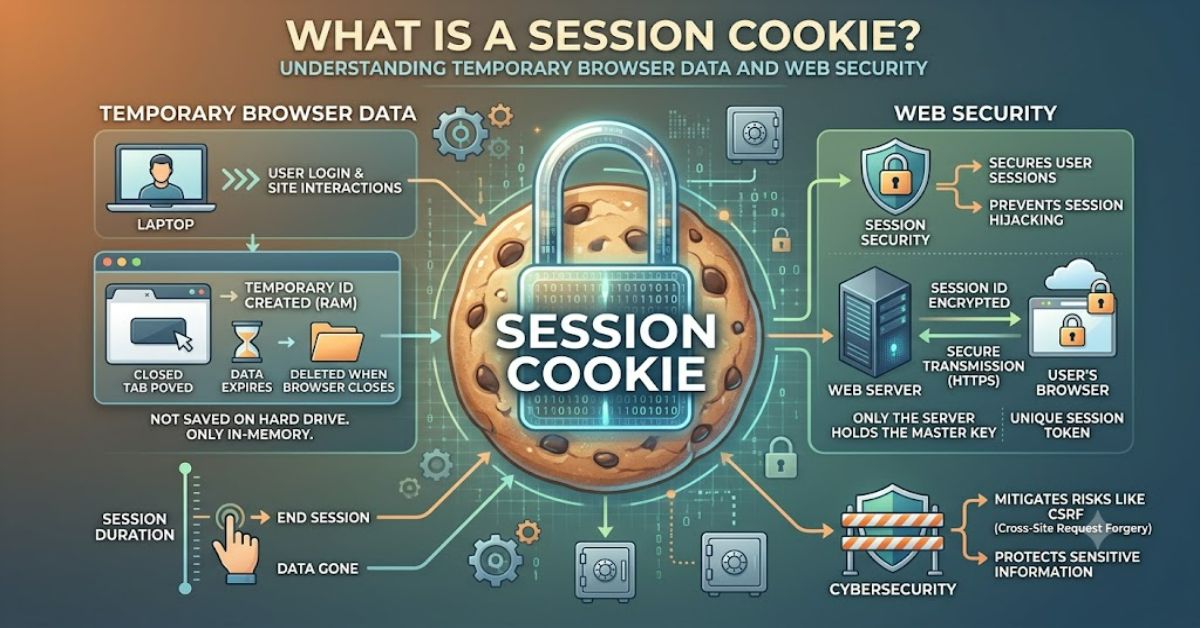
Understanding what is a session cookie helps explain one of the basic technologies that makes modern websites function smoothly. A session cookie is a temporary data file stored in a browser’s memory that allows a website to remember user actions during a single browsing session. Unlike persistent cookies that remain stored for days, months, or years, session cookies normally disappear when the user closes the browser.
These small pieces of data allow websites to provide continuity. Without them, many online experiences would become fragmented. A shopping website might forget items added to a basket, a banking portal might repeatedly request authentication, and a web application might lose track of a user’s progress.
Session cookies work by creating a temporary connection between a visitor’s browser and a website’s server. They are widely used across industries, including ecommerce, finance, education platforms, and cloud-based software services.
However, their convenience also creates important questions about privacy, security, and technical implementation. Developers must correctly configure cookie attributes such as Secure, HttpOnly, and SameSite to reduce risks.
This article explains how session cookies operate, their practical uses, security considerations, and how evolving privacy standards may influence their future.
How Session Cookies Work
A session cookie operates through communication between a browser and a website server. When a user visits a website, the server may generate a unique session identifier and send it to the browser.
The browser temporarily stores this identifier and sends it back with future requests during the same visit. This allows the server to recognise that different requests belong to the same user session.
For example:
- A user logs into an online account.
- The website creates a temporary session identifier.
- The browser stores the session cookie.
- The user moves between pages without logging in repeatedly.
- The cookie disappears after the browser session ends.
The cookie itself usually does not contain sensitive information such as passwords. Instead, it often contains a reference value that allows the server to retrieve stored session information.
Session Cookies vs Persistent Cookies
Although both types improve website functionality, they serve different purposes.
| Feature | Session Cookie | Persistent Cookie |
| Storage duration | Ends when browser closes | Remains for a set period |
| Main purpose | Temporary user interaction | Long-term preferences |
| Common examples | Login sessions, shopping carts | Language settings, saved preferences |
| Storage location | Often browser memory | Browser storage |
| Privacy impact | Usually lower duration exposure | Longer tracking potential |
The key difference is lifespan. A session cookie is designed for short-term interaction, while persistent cookies are created for remembering users over multiple visits.
Common Uses of Session Cookies
Session cookies support many everyday online activities.
Online Shopping
Retail websites rely on temporary sessions to remember products added to a basket. Without this functionality, customers would lose their selected items while browsing different pages.
Account Authentication
Many secure platforms use session management after login. Once a user successfully authenticates, the session cookie helps maintain access during navigation.
Online Forms
Complex forms, applications, and booking systems may use temporary cookies to maintain progress between pages.
Personalised Website Experiences
Some websites temporarily store information about a user’s current interaction, allowing smoother navigation.
| Website Type | Session Cookie Function |
| Ecommerce | Maintains shopping basket contents |
| Banking | Supports secure account access |
| Education platforms | Tracks learning sessions |
| Software applications | Maintains user state |
Security Risks and Technical Considerations
Although session cookies are temporary, they still require careful security management.
The main risk is session hijacking. This occurs when an attacker gains access to a valid session identifier and attempts to impersonate the user.
Developers reduce these risks through several security controls:
Secure attribute: Ensures cookies are only transmitted through encrypted HTTPS connections.
HttpOnly attribute: Prevents JavaScript from accessing cookies, reducing exposure from certain cross-site scripting attacks.
SameSite attribute: Controls whether cookies are sent during cross-site requests, helping defend against cross-site request forgery attacks.
A practical insight for developers is that cookie duration alone does not determine security. A short-lived cookie with poor configuration can still create vulnerabilities.
Privacy and Regulatory Considerations
Privacy regulations have changed how organisations manage cookies. In the United Kingdom, businesses must consider requirements under the Privacy and Electronic Communications Regulations (PECR) and UK GDPR when using cookies.
Essential cookies that are necessary for website functionality generally receive different treatment from optional tracking cookies. Session cookies used purely for maintaining user functionality often fall into the essential category.
However, organisations must still provide clear information about cookie usage through privacy notices and cookie policies.
The important distinction is purpose. A cookie supporting a user’s shopping basket operates differently from a cookie designed for behavioural advertising.
Real-World Impact of Session Cookies
Modern digital services depend heavily on temporary session management. From government portals to streaming platforms, users expect websites to remember their activity instantly.
A failure in session management can damage user experience and create security problems. For example, an ecommerce platform that loses session information may increase abandoned purchases, while poor authentication handling can expose customer accounts.
Technology teams often evaluate session systems using factors such as:
- Response time
- Server load
- Authentication reliability
- Security configuration
- User experience consistency
Session management has therefore become a core part of web application architecture.
The Future of Session Cookies in 2027
By 2027, session cookies are likely to remain important, but their role may continue changing due to privacy-focused technologies and browser restrictions.
Major browsers have already introduced stronger controls over tracking technologies. Organisations are increasingly adopting privacy-by-design approaches, reducing unnecessary data collection.
Future developments may include:
- Greater adoption of server-side session management
- More advanced authentication methods
- Increased use of privacy-preserving technologies
- Stricter browser controls over cross-site tracking
However, essential session functionality will remain difficult to replace because websites still need reliable ways to maintain secure user interactions.
The future challenge will be balancing convenience, security, and privacy.
Key Takeaways
- Session cookies are temporary browser files used during a single browsing session.
- They help websites remember actions such as logins and shopping basket activity.
- They usually expire when the browser closes.
- Security depends on correct technical configuration rather than short lifespan alone.
- Privacy regulations influence how organisations handle cookie technologies.
- Session management remains essential for modern web applications.
Conclusion
Session cookies are a fundamental part of everyday internet use. They provide websites with temporary memory, allowing users to move through pages smoothly without repeating actions.
While they are often invisible to users, these small data files support important functions across ecommerce, banking, education, and software platforms. Their temporary nature reduces long-term storage risks, but proper security controls remain essential.
As privacy expectations continue to grow, developers must carefully balance functionality with responsible data practices. Session cookies will likely continue evolving alongside web security standards, remaining an important technology for delivering reliable online experiences.
Frequently Asked Questions
What is a session cookie used for?
A session cookie allows websites to temporarily remember user activity during one visit. Common uses include maintaining login sessions, shopping baskets, and form progress.
How long does a session cookie last?
A session cookie usually lasts only until the user closes their browser. After the browsing session ends, the cookie is automatically deleted.
Are session cookies safe?
Session cookies are generally safe when websites use secure configurations such as HTTPS, HttpOnly settings, and appropriate access controls.
What is the difference between a session cookie and a tracking cookie?
A session cookie supports website functionality during a visit, while tracking cookies are typically designed to monitor behaviour across websites.
Can users disable session cookies?
Yes, users can block cookies through browser settings, but disabling them may prevent some websites from working correctly.
Methodology
This article was developed using established web technology documentation, browser security guidance, and privacy regulation principles. Information was reviewed against recognised technical concepts including HTTP cookie behaviour, browser storage practices, and security attributes.
The analysis focuses on general web standards rather than a specific software platform. Cookie implementation varies between organisations, meaning individual websites may configure session systems differently.
References
Mozilla Developer Network. (2024). HTTP cookies and web storage documentation.
Internet Engineering Task Force. (2023). HTTP State Management Mechanism (RFC 6265bis).
Information Commissioner’s Office. (2024). Cookies and similar technologies guidance.
Google Developers. (2024). SameSite cookies explained.
OWASP Foundation. (2024). Session Management Cheat Sheet.