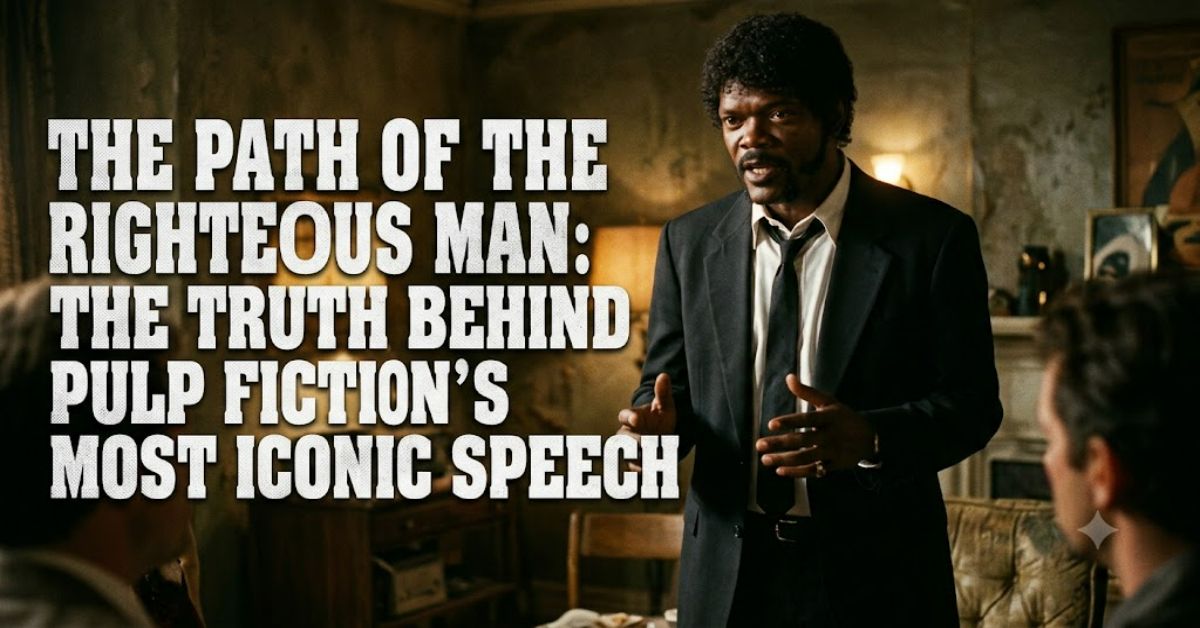
Few movie speeches have become as instantly recognisable as the path of the righteous man delivered by Jules Winnfield in Quentin Tarantino’s 1994 classic Pulp Fiction. Performed with remarkable intensity by Samuel L. Jackson, the monologue has been quoted, analysed, and parodied for decades.
Many viewers assume it comes directly from the Bible. While it references Ezekiel 25:17, the version heard in the film is largely fictional. Tarantino expanded a short biblical verse into a poetic reflection on justice, revenge, redemption, and personal change. More importantly, the speech becomes central to Jules’ character arc, transforming from a routine intimidation tactic into a genuine expression of self-discovery.
The Real Origin of the Speech
One of the biggest myths surrounding the speech is that it is an exact biblical quotation. In reality, only the final portion resembles Ezekiel 25:17. The famous opening—”The path of the righteous man is beset on all sides by the inequities of the selfish and the tyranny of evil men”—does not appear in the Bible.
Instead, Tarantino adapted elements from earlier cinema and reshaped them into dialogue that felt ancient, authoritative, and unforgettable. The result is a speech that sounds biblical without being a faithful scripture quotation.
Film Version vs Biblical Verse
| Feature | Pulp Fiction | Ezekiel 25:17 |
| Length | Extended monologue | Brief scripture |
| Focus | Morality and redemption | Divine judgement |
| Purpose | Character development | Religious teaching |
| Popularity | Global pop culture | Biblical reference |
The comparison highlights how creative writing transformed a relatively obscure verse into one of cinema’s defining moments.
Why the Speech Matters
Early in the film, Jules recites the speech before killing his victims. He later admits he never truly considered its meaning. It simply sounded intimidating.
Everything changes after the apartment shooting in which multiple bullets fail to hit him. Jules interprets the event as a miracle, prompting him to question his violent lifestyle.
This moment redefines the speech. Rather than presenting himself as the righteous man, Jules begins wondering whether he has actually been “the tyranny of evil men.” That reversal gives the monologue emotional depth and transforms it into a story about redemption rather than revenge.
Samuel L. Jackson’s Unforgettable Performance
Exceptional dialogue alone rarely becomes legendary. Samuel L. Jackson’s delivery elevated the speech into cinematic history.
His calm opening, deliberate pacing, expressive pauses, and explosive conclusion create an atmosphere of suspense that few performances have matched. Every word feels purposeful, allowing the audience to experience the weight of the monologue rather than simply hear it.
Film students and aspiring actors continue studying this scene because it demonstrates how performance can completely transform written dialogue.
Lasting Cultural Influence
The speech has remained influential for over three decades because it extends far beyond the film itself.
It has inspired references in television comedies, dramatic series, video games, music lyrics, internet memes, and advertising campaigns. Countless creators borrow its rhythm or parody its dramatic style, proving that its cultural relevance extends well beyond Pulp Fiction.
Its continued popularity also reflects the timeless themes it explores. Questions about justice, morality, forgiveness, and personal growth resonate with every generation, making the speech feel as meaningful today as it did in 1994.
The Future of the Topic in 2027
Classic films increasingly find new audiences through streaming platforms, digital restoration projects, and social media discussions. By 2027, Pulp Fiction is likely to remain a staple of film education because its storytelling structure, dialogue, and character development continue to influence modern filmmakers.
As younger audiences revisit classic cinema through online platforms, discussions about the true meaning of Jules’ speech are expected to continue, reinforcing its place as one of the greatest monologues ever written.
Key Takeaways
- The speech is only loosely based on Ezekiel 25:17.
- Quentin Tarantino transformed scripture into memorable cinematic dialogue.
- Jules’ interpretation changes dramatically during the film.
- Samuel L. Jackson’s performance made the speech iconic.
- The monologue remains one of the most analysed scenes in modern cinema.
Conclusion
More than thirty years after Pulp Fiction premiered, the path of the righteous man remains one of the most celebrated speeches in film history. Its enduring appeal lies not simply in its memorable wording but in what it represents. The monologue captures the tension between justice and vengeance, power and humility, violence and redemption.
Although many viewers still mistake it for a direct biblical quotation, its true significance comes from Quentin Tarantino’s creative storytelling and Samuel L. Jackson’s extraordinary performance. Together, they transformed a fictional adaptation into a cultural landmark that continues to inspire filmmakers, critics, and audiences around the world.
FAQ
Is the speech a real Bible verse?
No. It is loosely inspired by Ezekiel 25:17 but contains substantial original dialogue written for Pulp Fiction.
Who delivers the speech?
Jules Winnfield, portrayed by Samuel L. Jackson.
Why is the speech so famous?
Its powerful writing, unforgettable delivery, and role in Jules’ character development have made it one of cinema’s most iconic moments.
What does the speech symbolise?
It symbolises Jules’ journey from violence towards self-reflection, redemption, and moral responsibility.
Was the speech written by Quentin Tarantino?
Yes. While inspired by scripture and earlier films, the famous version heard in Pulp Fiction was adapted by Quentin Tarantino and Roger Avary.
References
- The Holy Bible (Ezekiel 25:17).
- Tarantino, Q. (Director). (1994). Pulp Fiction. Miramax Films.
- Roger Ebert. Pulp Fiction Review.
- American Film Institute. 100 Movie Quotes.
Methodology
This article was developed using information from the film Pulp Fiction, biblical text (Ezekiel 25:17), recognised film criticism, and established historical sources discussing Quentin Tarantino’s screenplay and Samuel L. Jackson’s performance. The analysis focuses on the speech’s literary structure, cinematic role, and cultural influence while distinguishing verified facts from common misconceptions.