Physical therapy, traditionally rooted in hands-on care, manual assessments, and clinic-based exercises, is experiencing a technological renaissance. Within the first hundred words, the shift answers the growing need for precision, accessibility, and patient engagement. Innovations in PT technology — including sensors, artificial intelligence, immersive virtual environments, and robotics — are redefining rehabilitation. These tools provide objective data, track patient progress in real-time, and offer personalized care, fundamentally changing how patients recover from injuries, surgeries, and chronic conditions.
PT technology encompasses a wide range of devices and systems designed to augment evaluation, treatment, and monitoring in physical therapy. Wearable sensors, motion-capture systems, and AI-driven platforms provide clinicians with detailed insights into movement patterns, muscle activation, and functional performance. This data-driven approach allows for individualized treatment plans and more accurate tracking of patient progress. The integration of digital tools with traditional clinical expertise enables a hybrid model that is both efficient and patient-centered.
As the global population ages and the incidence of musculoskeletal and neurological disorders rises, PT technology plays a crucial role in improving rehabilitation outcomes and expanding access. Beyond injury recovery, these technologies are increasingly applied in preventive care, performance enhancement, and chronic disease management. This article explores the innovations, clinical impact, and challenges of PT technology while highlighting the human stories behind its transformative role in modern rehabilitation.
Wearables and Real-Time Feedback
Wearable technology has emerged as one of the most tangible and impactful innovations in physical therapy. Devices ranging from smartwatches to pressure-sensing insoles provide continuous data on movement, posture, and muscle activity. These devices bridge the gap between in-clinic care and home rehabilitation, offering actionable insights for both therapists and patients.
Traditional assessments, once limited to visual observation and manual measurement, are now complemented by wearable data that quantifies movement with precision. Instrumented shoe insoles, for example, measure weight distribution during walking, helping guide gait and balance interventions. Electromyography (EMG) sensors track muscle activation, providing real-time feedback to improve movement quality and prevent compensatory patterns.
Wearables also enhance patient engagement by visualizing progress through interactive apps, charts, and gamified experiences. This real-time feedback motivates patients to adhere to exercise programs and allows therapists to adjust plans remotely, ensuring continuous care and improved outcomes.
Artificial Intelligence and Personalized Care
Artificial intelligence (AI) and machine learning are transforming physical therapy by enabling personalized care plans and predictive insights. AI systems analyze large datasets to identify subtle movement deficiencies, forecast recovery trajectories, and recommend optimized treatment strategies.
In practice, AI automates labor-intensive tasks such as motion analysis and documentation, freeing therapists to focus on direct patient care. Digital platforms combine AI with motion-tracking sensors to provide real-time corrective feedback during home exercises, ensuring proper form and reducing injury risk.
AI-driven virtual rehabilitation platforms allow clinicians to manage larger patient caseloads efficiently while providing individualized care. These technologies augment, rather than replace, human expertise, creating a collaborative ecosystem between data-driven insights and clinician judgment.
Virtual and Augmented Reality in Rehabilitation
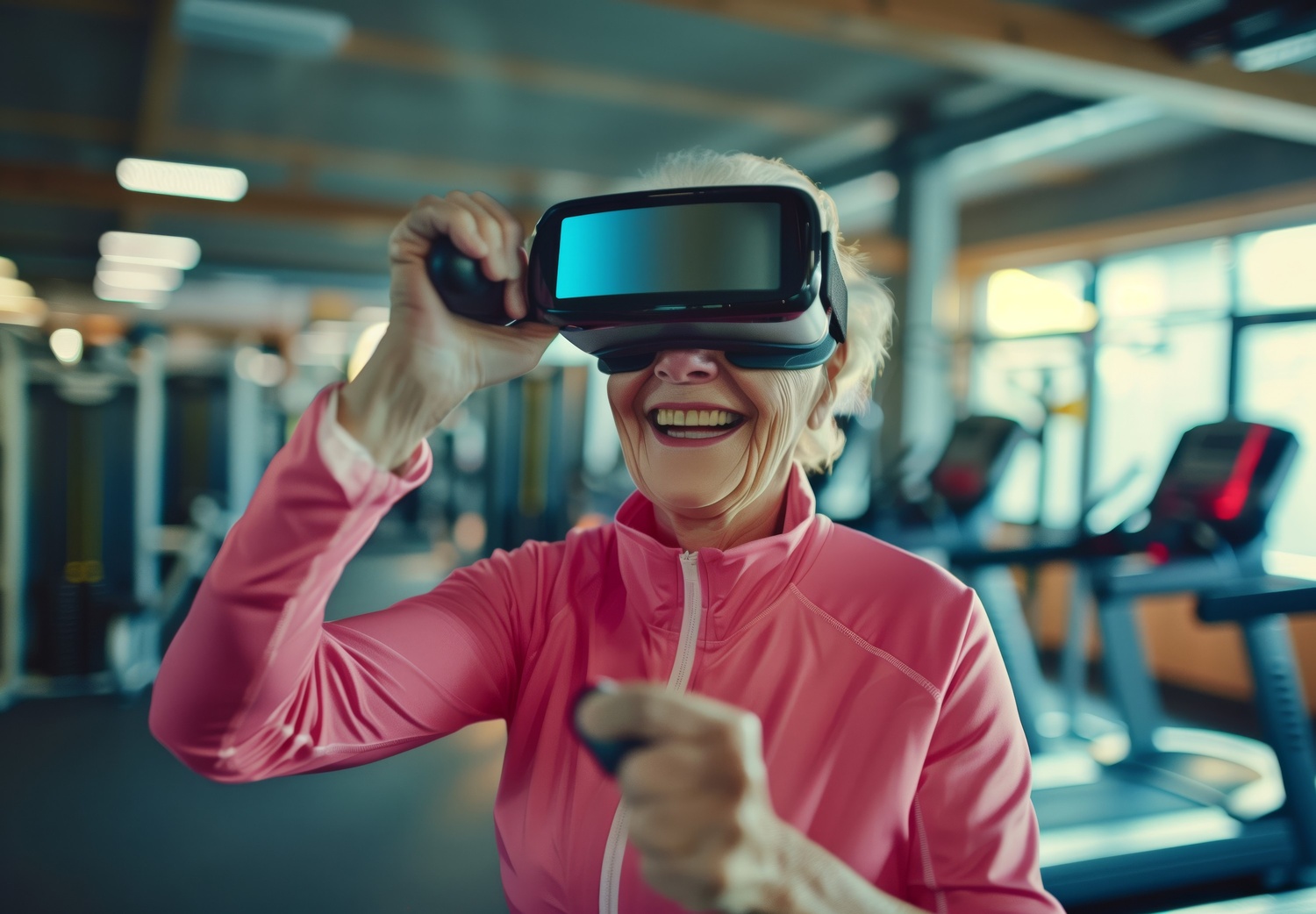
Virtual reality (VR) and augmented reality (AR) are redefining rehabilitation exercises by creating immersive, engaging, and interactive environments. VR simulates functional tasks such as walking, reaching, or balancing in safe, controlled digital settings, enhancing motor learning and adherence.
AR overlays visual cues onto the real world, guiding correct movement patterns and improving outcomes, particularly in neurological conditions such as Parkinson’s disease. Gamified VR experiences make repetitive exercises enjoyable, motivating patients to participate consistently.
The combination of VR and robotics further enhances therapy outcomes, particularly in upper-limb rehabilitation post-stroke. By integrating sensory feedback with precise motion assistance, these technologies accelerate recovery and make therapy more effective.
Robotics and Exoskeletons
Robotics represents one of the most striking applications of PT technology, enabling precise, repetitive, and controlled movement training. Rehabilitation robots range from upper-limb devices that guide arm movements to full-body exoskeletons that assist walking in patients with mobility impairments.
Powered exoskeletons detect user intentions and amplify movement safely, aiding patients with spinal cord injuries or paralysis. These devices allow for intensive, repetitive training that would be challenging for therapists to deliver manually, improving motor learning and functional recovery.
As robotics evolve, adaptive control systems and integrated sensors allow devices to respond dynamically to patient progress, creating personalized therapy sessions that optimize rehabilitation outcomes.
Remote Care and Hybrid Models
The expansion of telehealth has led to remote and hybrid models of physical therapy, allowing patients to receive care outside traditional clinical settings. Remote therapeutic monitoring (RTM) and digital Home Exercise Programs (HEPs) enable continuous engagement and tracking, reducing barriers such as transportation and scheduling conflicts.
Clinicians can monitor performance data collected from wearables and adjust treatment plans during virtual sessions. Hybrid models improve access for patients in rural areas, those with mobility limitations, or individuals with demanding schedules, ensuring consistent care and better adherence.
Challenges and Ethical Considerations
Despite its transformative potential, PT technology faces several challenges. High costs for robotics, VR systems, and advanced sensors may limit accessibility, creating disparities in care availability. Clinicians require training to integrate digital tools effectively, and data privacy concerns must be rigorously addressed as sensitive health information flows through apps and cloud platforms.
Maintaining the human connection between therapist and patient remains essential. While AI and automation enhance efficiency, the therapeutic relationship is critical to motivation, engagement, and patient-centered care. Achieving balance between technology integration and human touch is an ongoing consideration in modern physical therapy practice.
Conclusion
PT technology is reshaping rehabilitation by combining precision, personalization, and engagement. Wearables, AI, VR, robotics, and remote monitoring allow for data-driven, interactive, and accessible therapy. These innovations improve outcomes while expanding care to patients beyond traditional clinic walls. The challenge moving forward lies in ensuring equitable access, safeguarding patient data, and preserving the human connection central to physical therapy. As the field continues to evolve, PT technology promises a future where recovery is more effective, engaging, and patient-centered.
FAQs
What is PT technology?
PT technology encompasses devices and systems that enhance evaluation, treatment, and monitoring in physical therapy.
How do wearables support rehabilitation?
Wearables provide real-time data on movement and muscle activity, helping therapists tailor exercises and monitor progress.
Can AI replace physical therapists?
AI augments therapists by analyzing data and personalizing care but does not replace clinical judgment and human interaction.
Is virtual reality effective for recovery?
VR creates immersive exercises that increase engagement, motivation, and motor learning, especially in neurological rehabilitation.
Are robotic devices widely accessible?
Robotic tools are increasingly used in specialized clinics, though high costs limit widespread adoption.